
Eastern Yellow-billed Hornbill (Tockus flavirostris).

Photo@Peter Cavanagh

Yellow-billed is a species of hornbill found in Eastern Africa, preferring dry and semi-arid areas like savannahs and shrublands,and forages on the ground for seeds,insects,and small animals.

They are usually found in resident pairs or small family flocks, often follow groups of Dwarf Mongooses in search of prey and in returned,the hornbill provides security to the mongoose by sounding an alarm when a predator approaches a feeding party of Dwarf Mongooses.

This hornbill exhibit Sexual dimorphisms where males have a larger bill and pinkish bare skin on the throat; females have a smaller bill and black bare skin.
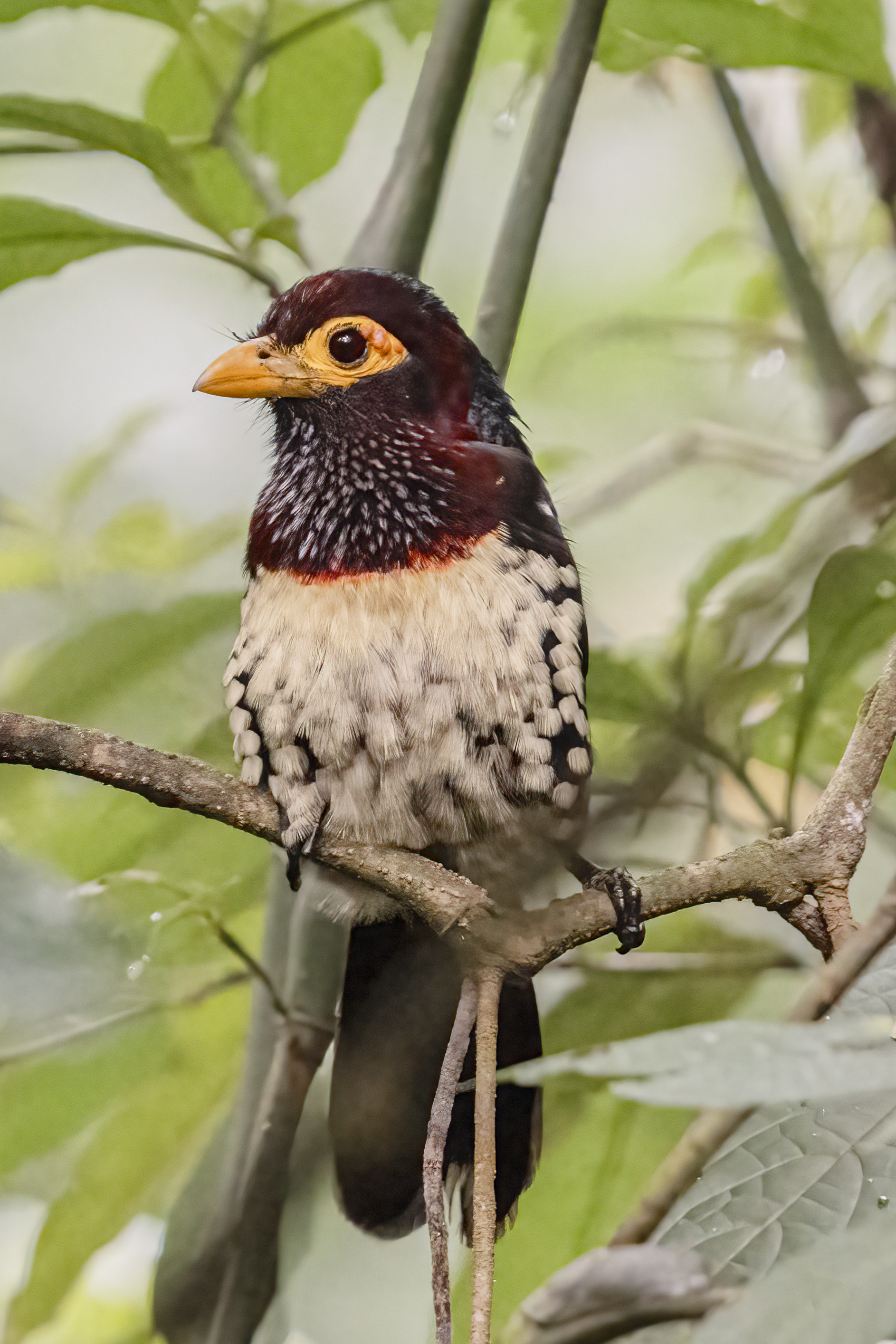
Eastern Yellow-billed Barbet (Trachyphonus purpuratus).

Photo by Peter Cavanagh

The Eastern Yellow-billed Barbet is a species of bird found primarily in sub-Saharan Africa.typically found in open woodlands and Forest edges. It prefers areas with a mix of trees, often near rivers or streams, where there is plenty of cover and food resources.Perhaps the most striking feature is its bright yellow bill, which is large and robust. The plumage is a mix of colors, with greenish,yellow, and brownish tones. The head is marked with a dark crown, and the body has a blend of green, yellow, and blackish hues.

Both males and females look similar, with no significant size or color differences.This omnivore feeder often forages alone or in pairs. It feeds by pecking at fruit or insects on the trunks and branches of trees.While often seen alone or in pairs, Yellow-billed Barbets can sometimes form small flocks, especially during non-breeding seasons.These birds have adapted well to a variety of habitats, even tolerating some degree of human-modified environments like gardens or plantations.The Yellow-billed Barbet is an excellent example of a resilient, colorful species that contributes to avian diversity of Africa’s tropical rain forest..