

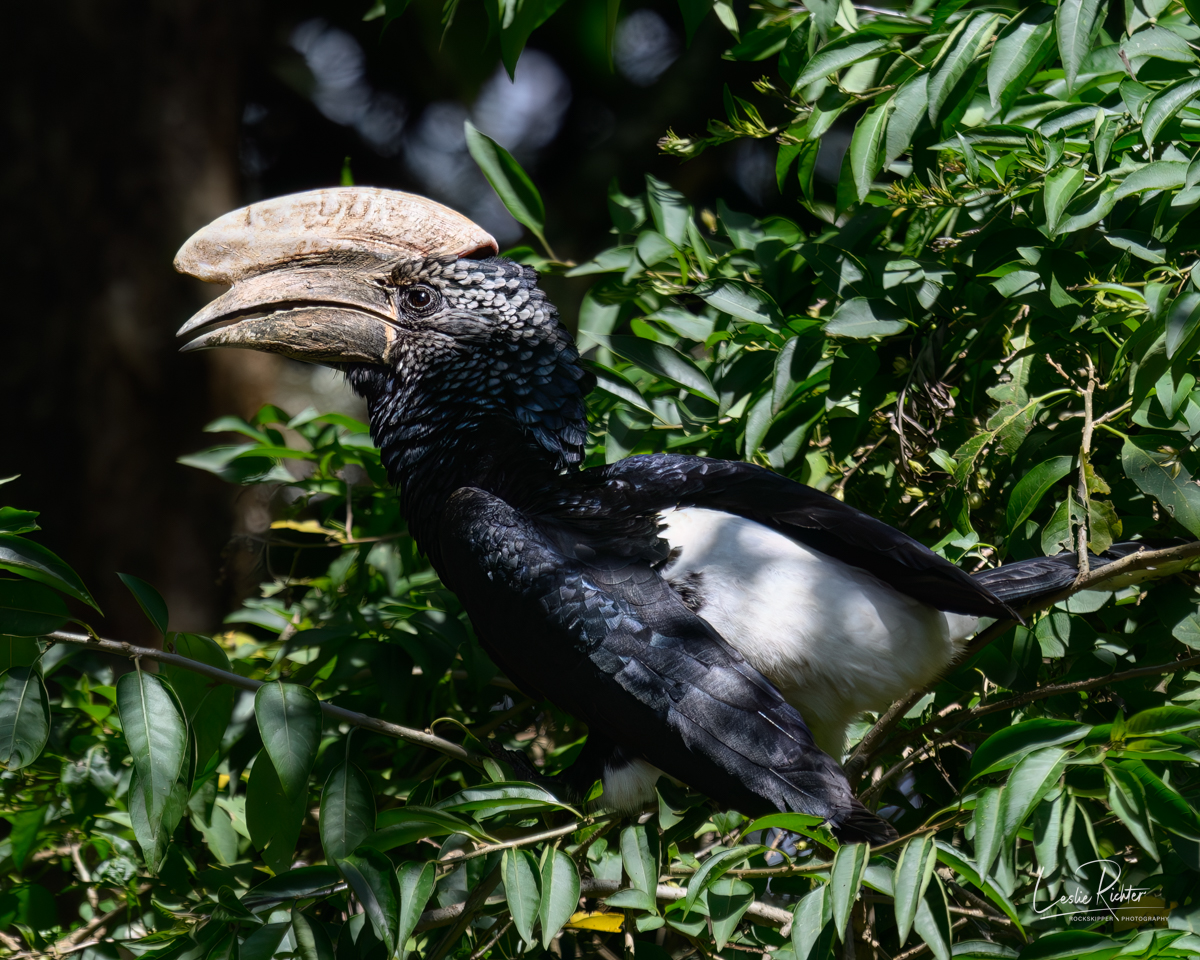
The Silvery-cheeked Hornbill (Bycanistes brevis) is one of the most striking and recognizable birds of the African forests. Known for its large curved bill, impressive casque, and loud wingbeats, this hornbill is an important species in the ecosystems of eastern and central Africa. Its presence in forested landscapes signals healthy habitats rich in fruiting trees and biodiversity.Its most distinctive feature is the large ivory-colored bill topped with a hollow structure called a casque. This casque amplifies the bird’s calls and helps make the hornbill easily recognizable.
The Silvery-cheeked Hornbill is widely distributed across eastern Africa. It is commonly found in countries such as Kenya, Tanzania, Uganda, and parts of Ethiopia. It inhabits tropical forests, woodlands, and coastal forests, usually preferring tall trees where it can nest and feed.Because hornbills depend heavily on large trees, they are sensitive to deforestation. The loss of forests reduces their nesting sites and food sources.
One of the most fascinating aspects of hornbill biology is their nesting behavior. During the breeding season, the female Silvery-cheeked Hornbill enters a natural cavity in a large tree. She then seals herself inside using mud, fruit pulp, and droppings, leaving only a narrow slit.While the female remains sealed inside the nest for several weeks, the male brings food through the small opening. This protects the female and the chicks from predators. Once the chicks grow large enough, the female breaks out of the nest cavity and both parents continue feeding the young.
The Silvery-cheeked Hornbill plays a vital ecological role in African forests. By spreading seeds over wide areas, it contributes to forest regeneration and the survival of many tree species. Because of this role, hornbills are often referred to as “farmers of the forest.”
The Silvery-cheeked Hornbill is more than just a spectacular bird; it is a key part of the African forest ecosystem. Its unique appearance, unusual nesting behavior, and role in seed dispersal make it one of the most fascinating birds of the region. Protecting forests will ensure that this magnificent hornbill continues to thrive for generations to come.

 Kenya Birding