Wildlife Photography at Lake Nakuru: The Yellow-billed Stork

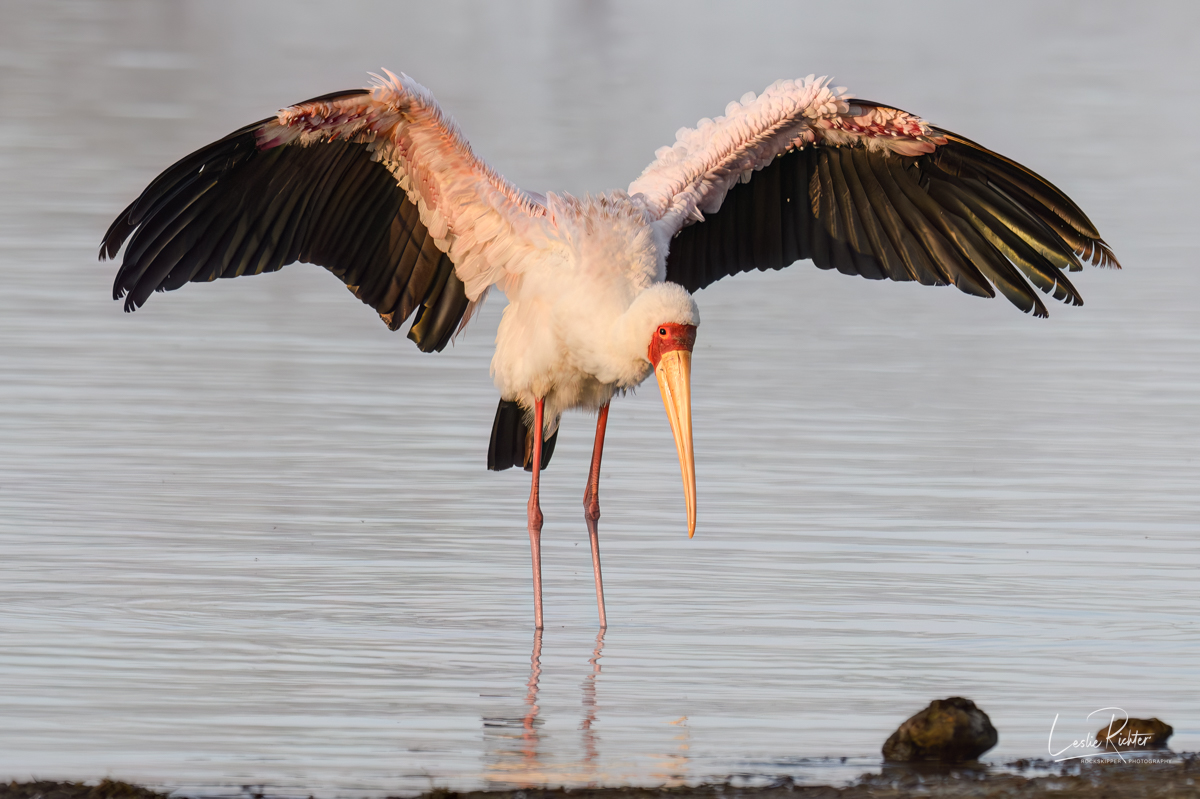
Lake Nakuru National Park, nestled in Kenya’s Great Rift Valley, is one of Africa’s most celebrated wildlife destinations — famed for its incredible birdlife and shimmering alkaline waters that attract tens of thousands of flamingos, pelicans, ibises, herons, and storks year-round. Among these waterbirds, the Yellow-billed Stork (Mycteria ibis) stands out as a graceful and captivating subject for photographers and nature lovers alike.

On the muddy shallows and marshy edges of Lake Nakuru, the Yellow-billed Stork can often be seen wading quietly, its long yellow bill probing the shallow water for fish, frogs, and other aquatic prey. The bird’s striking white plumage contrasted with black flight feathers and that iconic yellow bill makes it a rewarding subject for wildlife photography.

Photographers visiting the lake frequently capture these elegant storks in natural light, either alone or moving slowly in small groups along the shoreline. One such photograph showed a Yellow-billed Stork standing serenely at the water’s edge, the curved bill poised as if painted against the backdrop of the glittering lake — a perfect example of the park’s rich biodiversity.

The Narina Trogon:A Jewel of the African Forests.

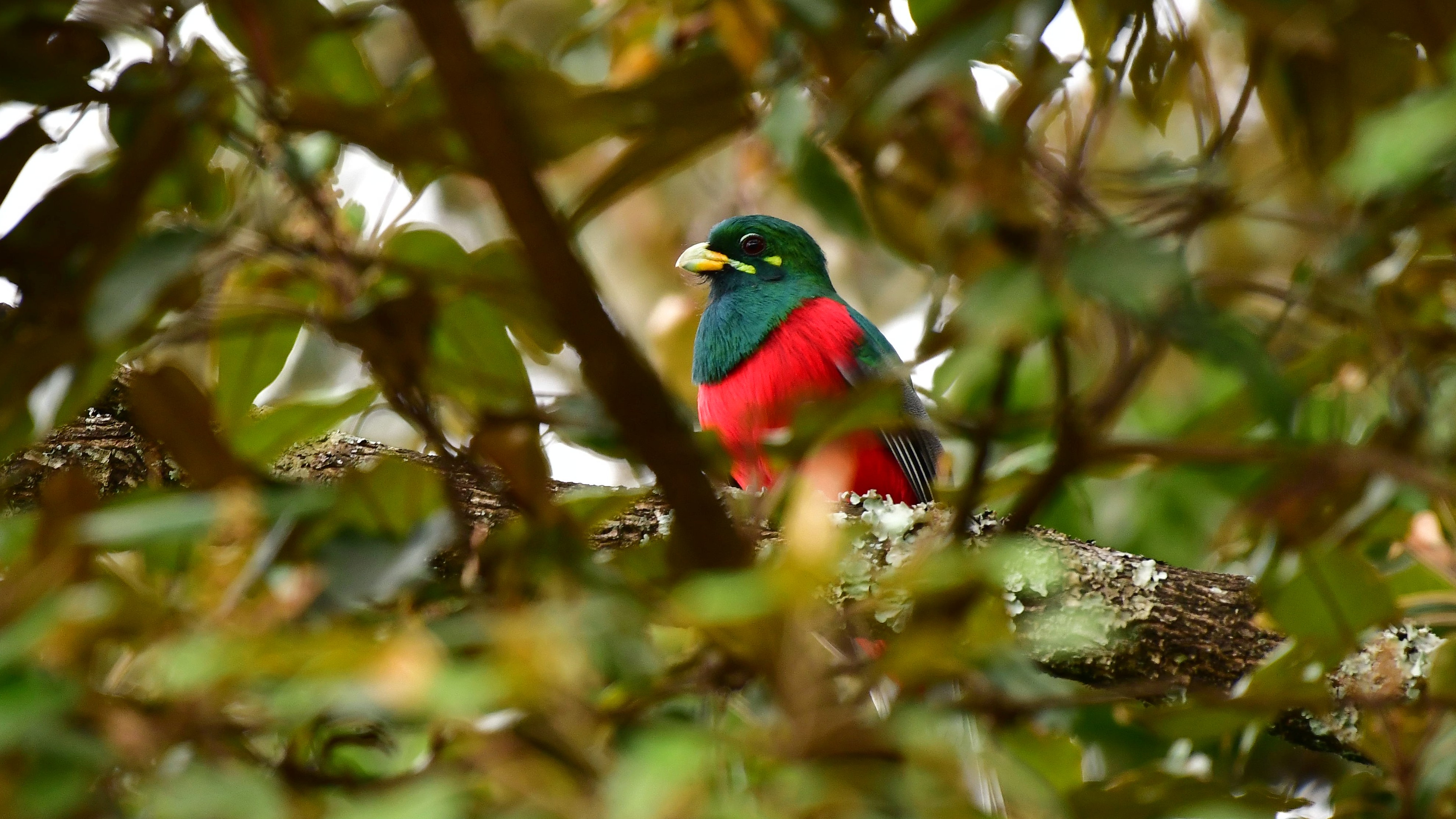
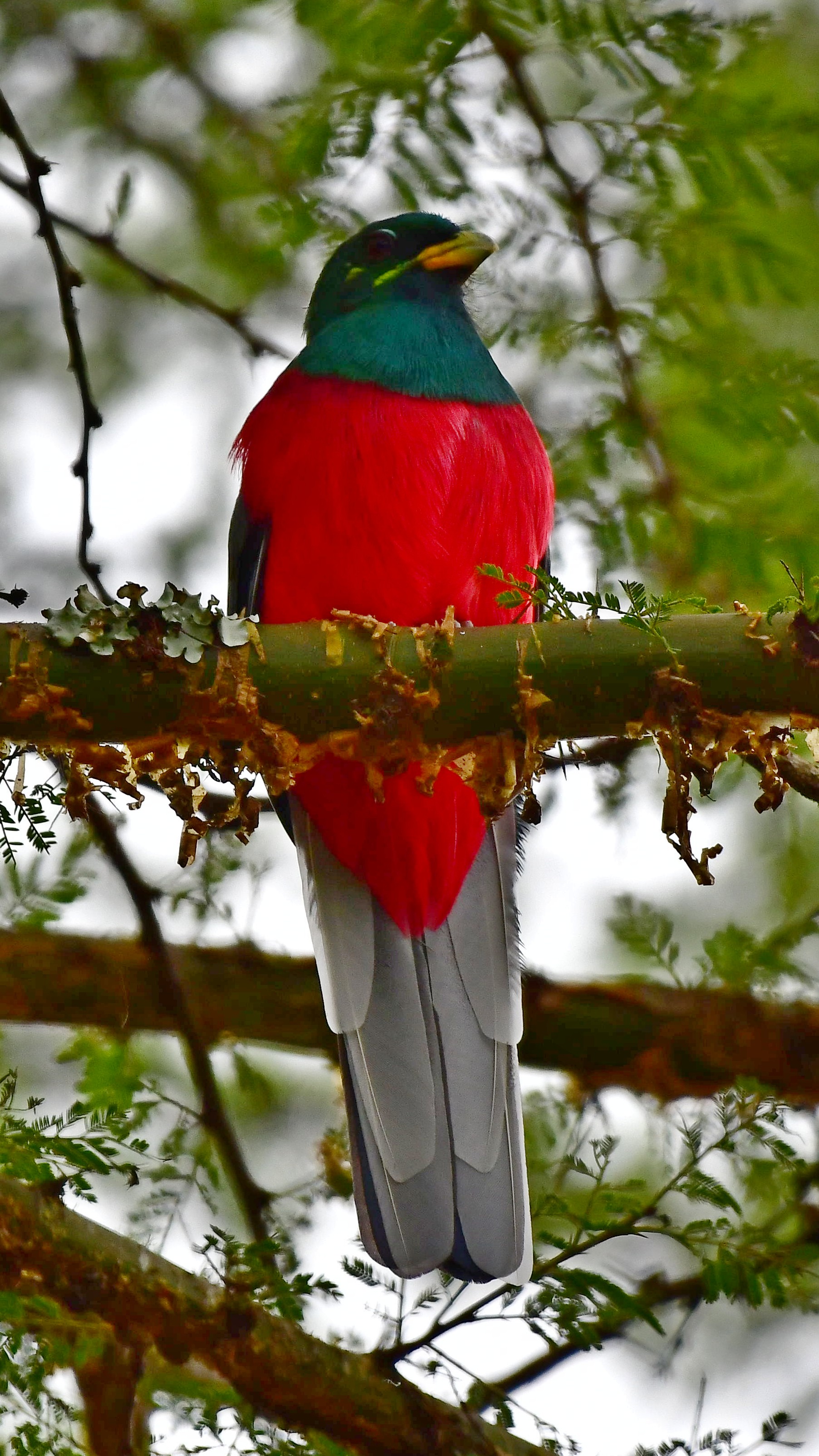
The Narina Trogon (Apaloderma narina) is one of Africa’s most striking and elusive bird species. Known for its vibrant plumage and shy behavior, the Narina Trogon is a member of the Trogonidae family, a group of birds renowned for their colorful appearance and preference for forested habitats. Found across a wide range of sub-Saharan Africa, this bird represents both the beauty and biodiversity of the continent’s woodlands and forests.

The Narina Trogon is a medium-sized bird, measuring about 32 to 34 centimeters in length. It is sexually dimorphic, meaning that males and females have different plumage. Males are particularly eye-catching with a vivid green back and head, a bright crimson belly, and a subtle iridescence that shimmers in sunlight. Females, though less vibrant, are beautiful in their own right, featuring olive or brownish-green upper parts and a duller red belly. Both sexes have a distinctive blue eye-ring and a long, graduated tail, adding to their elegant appearance.

This species has a wide but patchy distribution throughout Kenya. It inhabits a variety of forest types, including tropical rainforests, montane forests, and riverine woodlands. The Narina Trogon prefers dense vegetation and is typically found in areas where tall trees and thick undergrowth provide both food and cover. Despite its broad range, it is rarely seen due to its secretive nature and excellent camouflage among the foliage.

The Narina Trogon is a symbol of the hidden treasures that Africa’s forests still hold. With its brilliant colors, elusive habits, and vital role in forest ecosystems, it reminds us of the importance of preserving natural habitats. Though not endangered, its reliance on undisturbed forest environments makes it vulnerable to human activity. Understanding and appreciating such species is the first step toward ensuring their survival for generations to come. Keep birding!

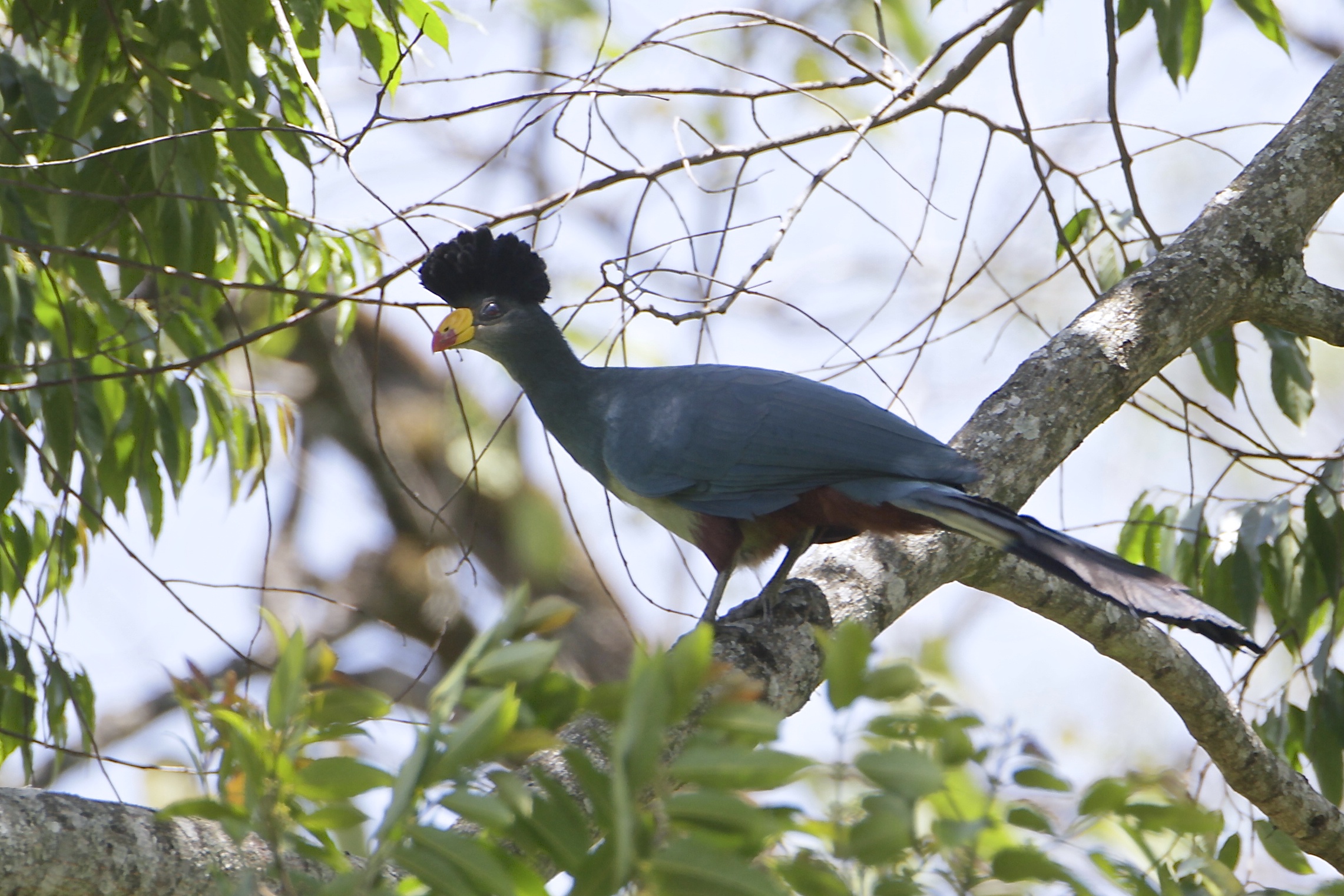
The Great Blue Turaco: Africa’s Vibrant Forest Jewel

Great Blue Turaco.Photo by Juhani Vilpo

Turacos are medium-sized arboreal birds endemic to sub-Saharan Africa, where they live in forests, woodland and savanna.

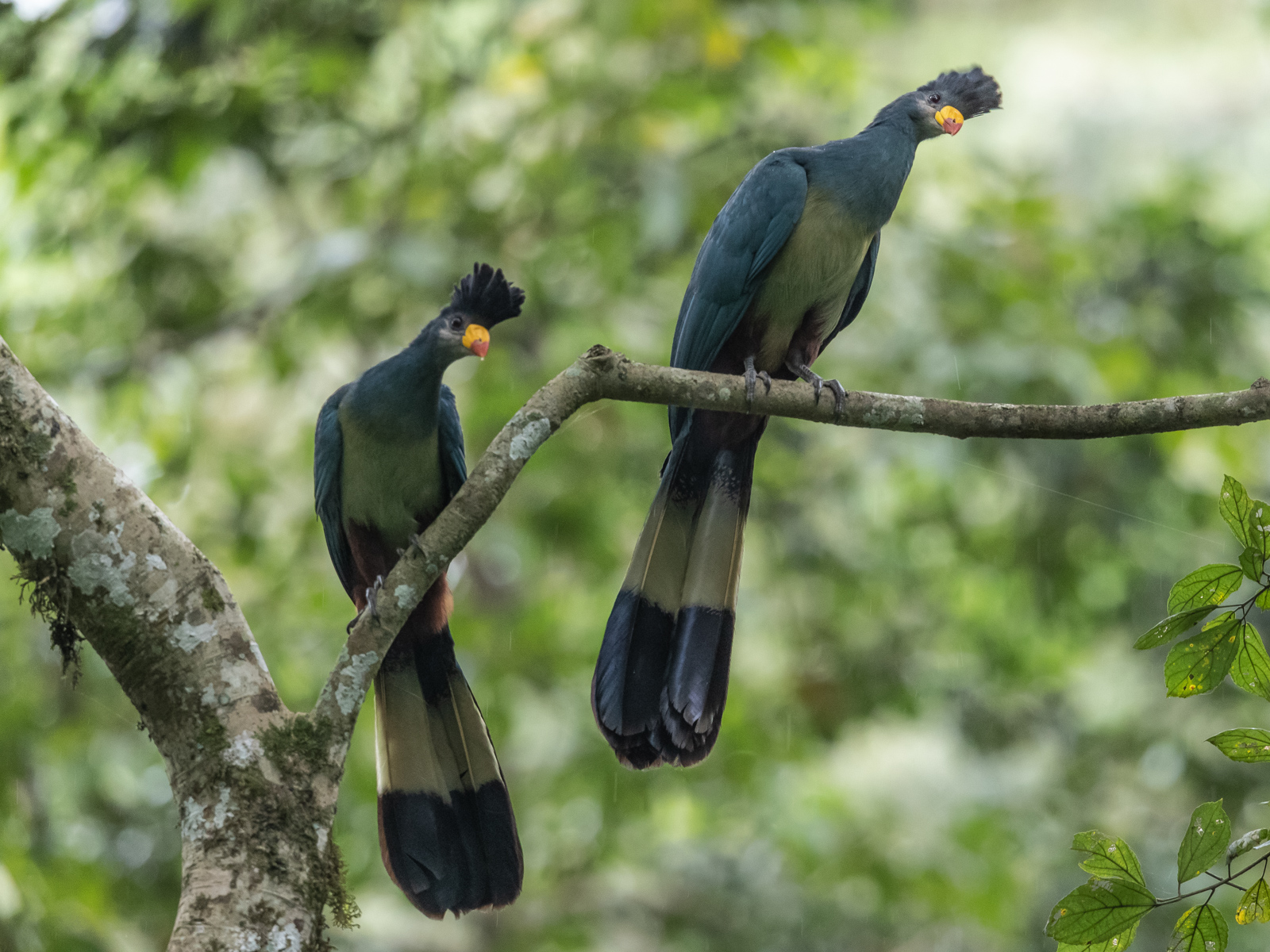
The Great Blue Turaco (Corythaeola cristata) is one of the most striking and charismatic birds of the African rainforest. With its vibrant colors, distinctive crest, and graceful movements, this bird holds a special place in the biodiversity of Central and West Africa’s tropical forests. Often called the “blue beauty of the canopy,” the Great Blue Turaco is not only a marvel of nature but also a key player in its ecosystem.

Great Blue Turaco.Photo by Jan F.L Van Duinen

Turacos acquire their crimson wings through specialized pigments called turacin, which contain copper. These pigments are unique to turacos and are responsible for the vibrant red coloration in their wings. Unlike most birds where red coloration is derived from carotenoids, turacos have these distinct pigments.Turacos spend most of their time in the forest canopy where they can be found in groups of up to 30 individuals.

The Great Blue Turaco is more than just a beautiful bird—it’s an important ecological player and a symbol of the rich biodiversity of African rainforests. Protecting its habitat ensures not only the survival of this stunning species but also the health of countless others that share its environment. As deforestation and habitat fragmentation continue to threaten tropical ecosystems, birds like the Great Blue Turaco remind us of the urgent need for conservation and sustainable land use.Keep birding!

Red-necked Falcon,is a striking bird of prey that adds both color and drama to the open landscapes of Kenya.

Red -necked Falcon ,Falco chicquera.

Characterized by its swift flight and agile hunting techniques, this small raptor is a marvel of adaptation and efficiency in the natural world. Its behavior, habitat, and interactions with its environment offer a window into the dynamics of savannah and semi-arid ecosystems.

True to its name, it is easily recognized by the rufous or chestnut-colored “red” nape and neck, which contrast sharply with its pale underparts and slate-gray upper wings. The face is marked with a bold black moustachial stripe, and its sharp, hooked beak is ideal for tearing flesh. Its long tail and pointed wings make it an excellent aerial hunter, capable of high-speed pursuits.

The Red-necked Falcon is not just a beautiful and agile hunter; it is also a symbol of the intricate balance of open-land ecosystems. Its adaptability, hunting prowess, and widespread distribution make it a fascinating subject for naturalists and bird watchers alike. Protecting its habitat ensures the continued survival of not only this falcon but also the many other species that share its world.Enjoy your birding!

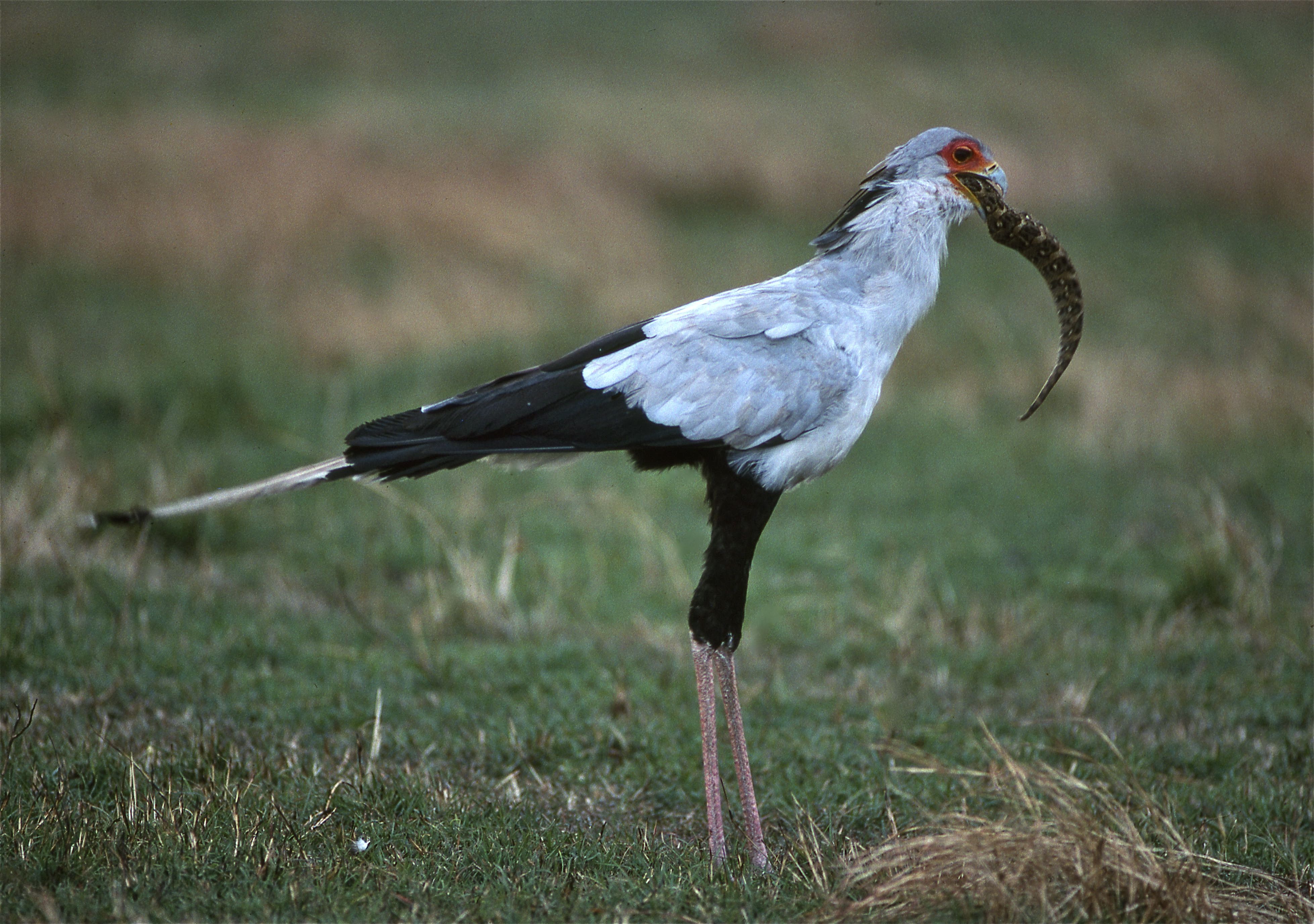
Secretary Bird,an African Endemic that Walks the Terrestrial Land Looking for Prey!

Secretary Bird ,Sagittarius serpentarius .

Secretary Bird is a very large, mostly terrestrial bird of prey. Endemic to Africa, it is usually found in the open grasslands and savanna of the sub-Saharan region. Unlike most birds of prey, the Secretary Bird is largely terrestrial, hunting its prey on foot. Adults hunt in pairs and sometimes as loose familial flocks, stalking through the habitat with long strides. Prey may consist of insects, mammals ranging in size from mice to hares and mongoose, crabs, lizards, snakes, tortoises, young birds, bird eggs, and sometimes dead animals killed in grass or bush fires.

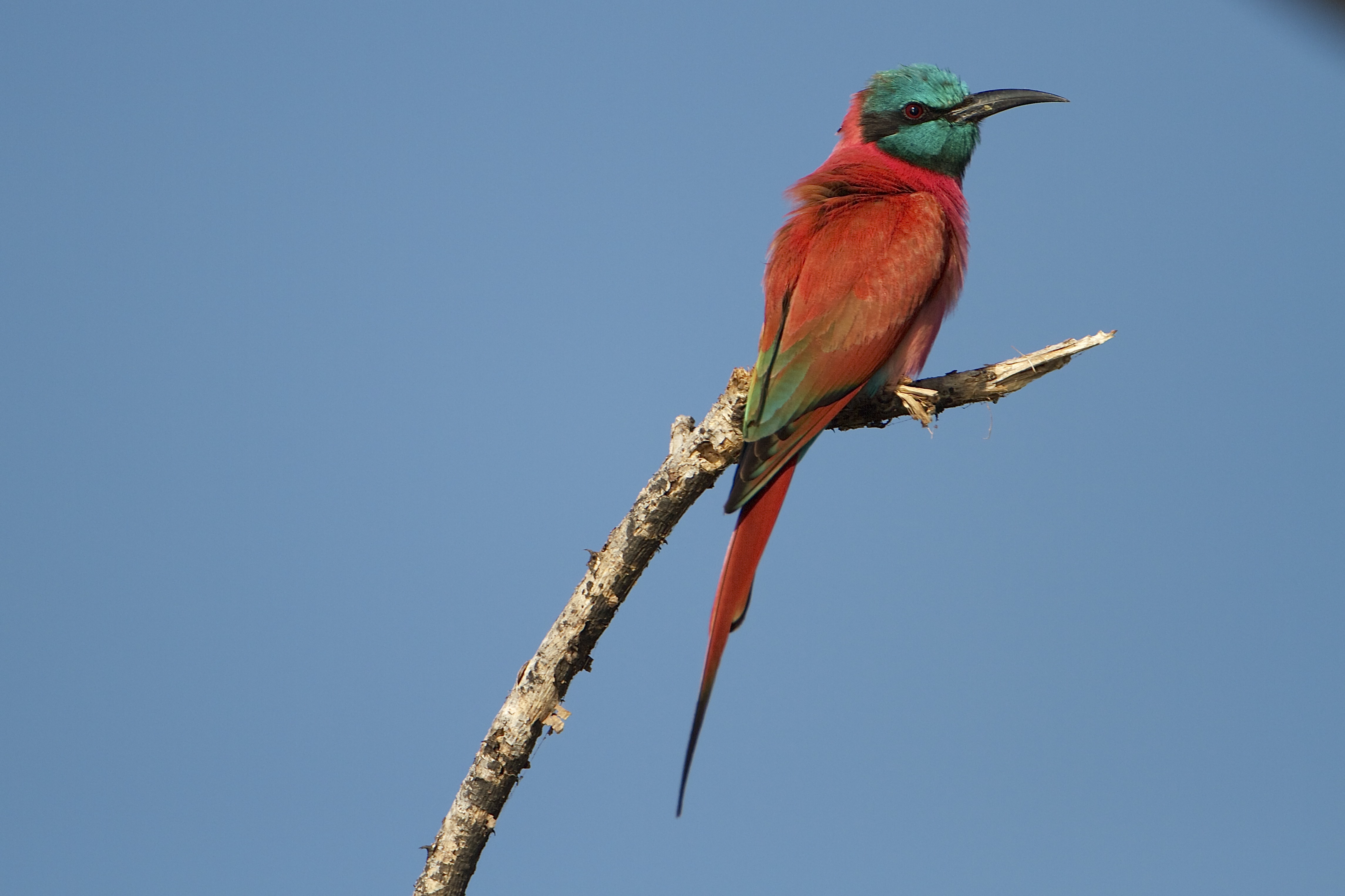
Northern Carmine Bee-eater (Merops nubicus).

Northern Carmine Bee-eater,Lake Baringo,Kenya.

Northern Carmine Bee-eater are a brightly colored and easily distinguishable birds.Adults are rosy carmine-pink with a bright,light blue rump and upper and under tail coverts.The head is iridescent green-blue with a black eye-line,throat and beak. This species is sexually monomorphic.

In Kenya,they are normally seen around September-November as passage migrant to their breeding ground further north-west of Africa.Its habitat is found in wide range of African savanna,including desert,woodland and northern edge of rainforest zones, although avoiding densely wooded areas.They also frequent agricultural fields of open pasture,floods-plains, and marshes ,and have occasionally been seen searching for prey over large bodies of water.

The local birding site likely to see this species while on a birding trip to kenya includes;Lake Baringo,Tsavo East,Sabaki river estuary and the Kenyan coastal stretch.

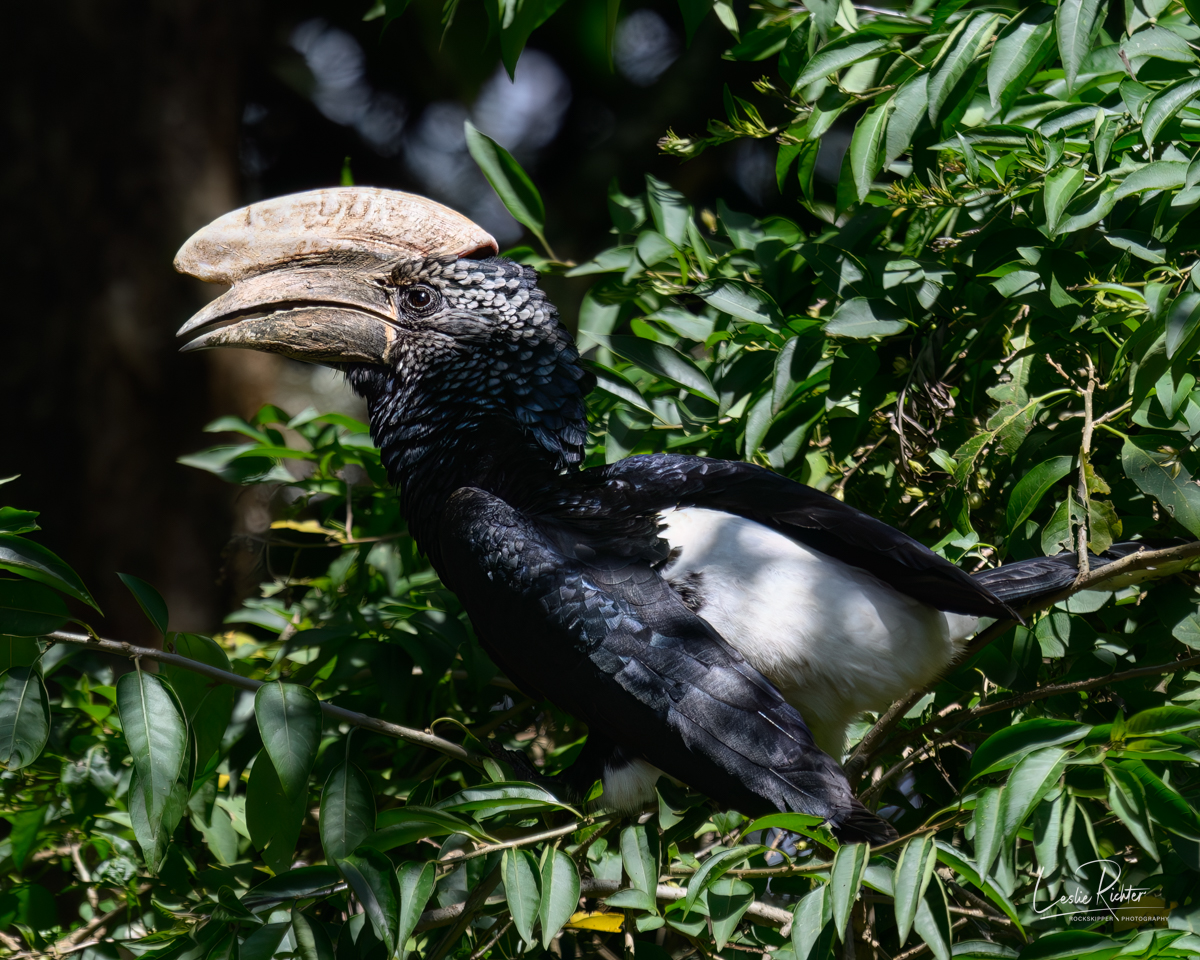
Eastern Yellow-billed Hornbill (Tockus flavirostris).

Photo@Peter Cavanagh

Yellow-billed is a species of hornbill found in Eastern Africa, preferring dry and semi-arid areas like savannahs and shrublands,and forages on the ground for seeds,insects,and small animals.

They are usually found in resident pairs or small family flocks, often follow groups of Dwarf Mongooses in search of prey and in returned,the hornbill provides security to the mongoose by sounding an alarm when a predator approaches a feeding party of Dwarf Mongooses.

This hornbill exhibit Sexual dimorphisms where males have a larger bill and pinkish bare skin on the throat; females have a smaller bill and black bare skin.

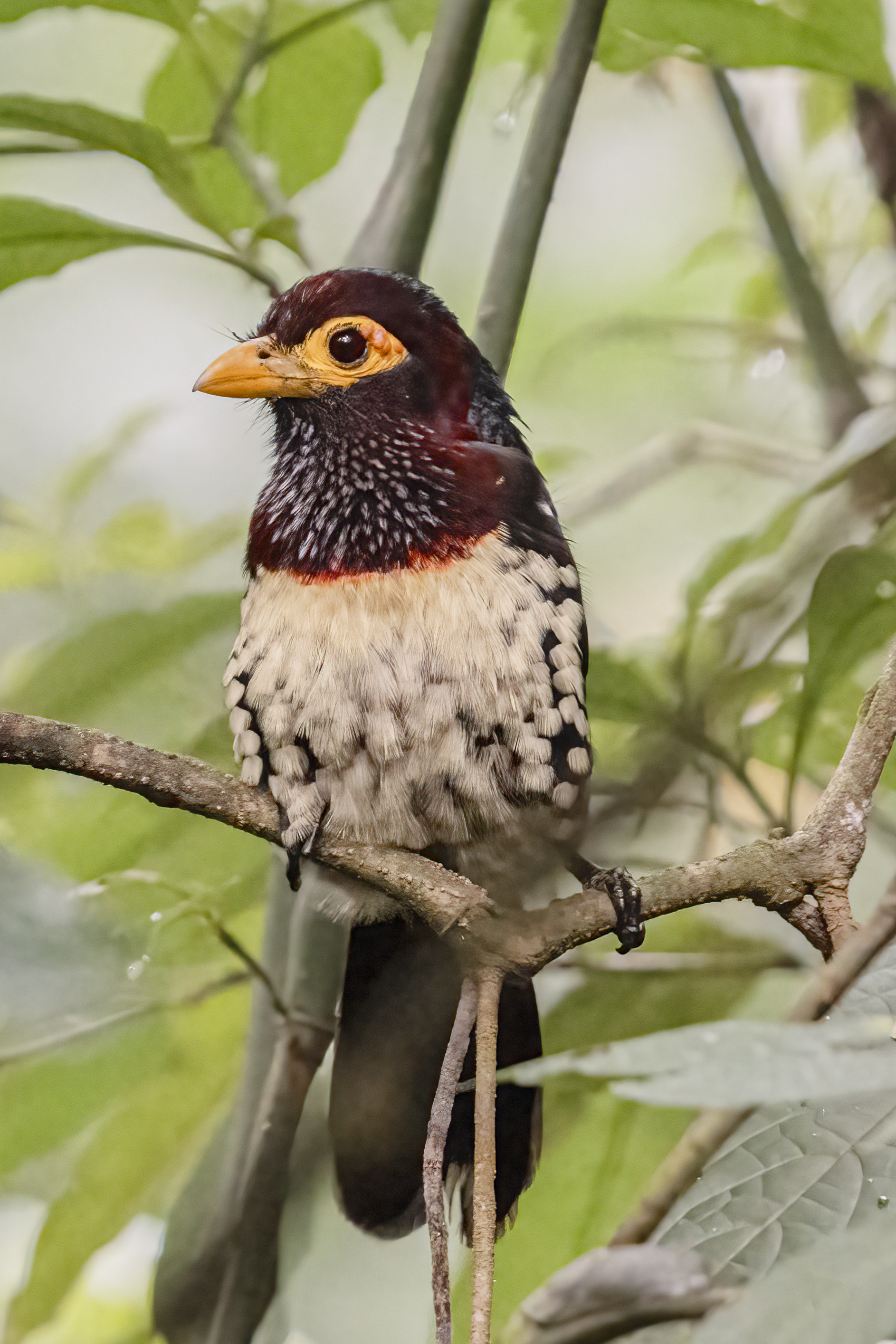
Eastern Yellow-billed Barbet (Trachyphonus purpuratus).

Photo by Peter Cavanagh

The Eastern Yellow-billed Barbet is a species of bird found primarily in sub-Saharan Africa.typically found in open woodlands and Forest edges. It prefers areas with a mix of trees, often near rivers or streams, where there is plenty of cover and food resources.Perhaps the most striking feature is its bright yellow bill, which is large and robust. The plumage is a mix of colors, with greenish,yellow, and brownish tones. The head is marked with a dark crown, and the body has a blend of green, yellow, and blackish hues.

Both males and females look similar, with no significant size or color differences.This omnivore feeder often forages alone or in pairs. It feeds by pecking at fruit or insects on the trunks and branches of trees.While often seen alone or in pairs, Yellow-billed Barbets can sometimes form small flocks, especially during non-breeding seasons.These birds have adapted well to a variety of habitats, even tolerating some degree of human-modified environments like gardens or plantations.The Yellow-billed Barbet is an excellent example of a resilient, colorful species that contributes to avian diversity of Africa’s tropical rain forest..

Common Snipe, a Wintering Visitor to East Africa Wetlands!

Photo by Joe Aengwo at Amboseli national park,Kenya.

The Common Snipe (Gallinago gallinago) is a migratory bird that is well known for its long migrations and distinctive behaviors. It is a member of the Scolopacidae family, which includes other waders and shorebirds.They typically migrate from their breeding grounds to Africa via a southwest route, traveling through the Mediterranean and then continuing southward across the Sahara desert, often arriving in tropical and southern parts of Africa.

Photo by Joe Aengwo at Amboseli national park,Kenya.

During their migration, Common Snipes seek wetlands areas for their wintering habitats. These include marshes, mudflats, riverbanks, and floodplains, where they can find ample food sources, such as insects, worms, and other small invertebrates.In East Africa, the Common Snipe is a common wintering migrant in wetland areas. During the non-breeding season, they are often found in countries like Kenya,Uganda and Tanzania. They tend to frequent marshes,riverine wetlands and sometimes rice paddies.

Photo by Joe Aengwo at Amboseli national park.

The Common Snipe’s ability to navigate vast distances and adapt to a variety of wetland environments makes it an interesting species to study, especially in relation to its migratory behavior and wintering ecology in Africa.

The Saddle-billed Stork is a majestic and resilient species, whose stunning appearance and specialized behaviors make it one of the most remarkable birds of sub-Saharan Africa.

Photo by Joe Aengwo

The Saddle-billed Stork is one of the largest storks in the world, standing up to 1.5 meters (5 feet) tall. It is easily recognizable due to its unique black and white plumage, bright red legs, and the large, bicolored bill, which has a black base and a yellow section resembling a saddle. The bill’s distinctive shape helps the bird forage for fish and amphibians, which make up a large part of its diet. This bird also exhibits sexual dimorphism, with males typically being slightly larger than females.

They prefer shallow, slow-moving waters where they can wade and forage for food. The stork is usually solitary or found in small groups, although some may form pairs during the breeding season. They often choose to nest in tall trees near water, constructing large, conspicuous nests that are used year after year.

Saddle-billed Storks form monogamous pairs during the breeding season, which typically occurs during the rainy season, when food is abundant. They build large nests in tall trees, and both parents share the responsibility of incubating their eggs. The female typically lays one or two eggs, and both parents take turns keeping them warm for about a month. Upon hatching, the chicks are fed a diet of regurgitated food from both parents until they are able to forage on their own.Though they are not yet considered endangered, the Saddle-billed Stork faces threats from habitat destruction, particularly the draining of wetlands for agriculture and development.

They also face threats from hunting in some areas and the disturbance of their nesting sites.By continuing to protect its wetland habitats, we can help ensure that future generations will be able to admire this iconic and important bird species.Keep birding!.