Kenya Birding Route’s

The possibilities of birding in Kenya are endless, and coming up with a simple birding itinerary will probably cost you less of your time. However, to come up with an excellent birding plan, you need to consider the general security situation, accessibility of the birding spot , bird species sort after by the birder, physical fitness of the participant and the traveling time. Some route will be incredibly rewarding with Kenya endemic and near endemic species. For instance, you can easily see four (William’s Lark, Sharpe’s Longclaw,Aberdare Cisticola and Hinde’s Babbler) out of six endemics of Kenya by visiting Mt. Kenya Forest, Samburu national reserve, Aberdare national Park and Kinangop grassland. The route can also pocket you nine of the Kenya near endemic. friedmann's-lark_500
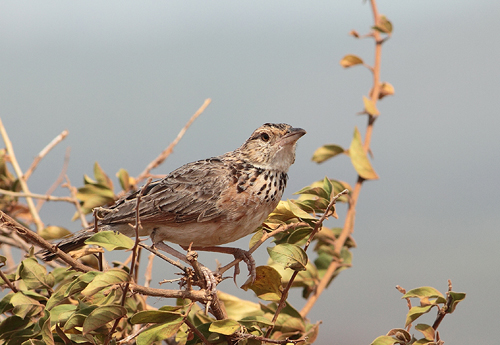
Friedmann’s Lark (Mirafra pulpa)

Some directions gives you greater species diversity than other. A birder can easily pocket over 450 species in 14 days by trying the Eastern-Coastal Route which will ideally take you to the world’s only wildlife capital (Nairobi National Park), Lake Magadi, Amboseli National Park, Tsavo West, Lake Jipe, Kitobo Forest, Tsavo East National Park, Arabuko Sokoke forest, Mida Creek and Sabaki estuary. Some of the species unique to this route includes; Clarke’s Weaver, Fischer’s Turaco , Sokoke Scops Owl , Mombasa Woodpecker , Friedmann’s Lark , Malindi Pipit, Sokoke Pipit , Pangani Longclaw , East Coast Akalat , Little Yellow Flycatcher , Amani Sunbird, Red-naped Bush-Shrike , Taveta Golden Weaver and Southern Grosbeak-Canary just to name but a few. After all this business of chasing this things with wing, you can spare yourself few days to just to relax at one of those exclusive white sand beach resorts in Watamu and Malindi and perhaps try out snorkeling by visiting either Malindi or Watamu Marine park. crab_plover

Crab-plover (Dromas ardeola)
If you decide to go down the Rift Valley, you will be treated with some of the spectacular panorama views of your life, 30 km from Nairobi, you will be descending the Rift, at its base is Lakes Naivasha, Elementaita,Nakuru, Bogoria and Baringo. All the Lakes are important bird areas and therefore birdwatching is very productive there. You will then exit the Rift Valley through the Elgeyo escarpment having literally driven a cross Kerio Valley which with luck can produces good species like White-crested and Ross’s Turaco, Chestnut-crowned Sparrow Weaver, Green-backed Eremomela and Boran Cisticola.

J.F.L Van Duinen
J.F.L Van Duinen

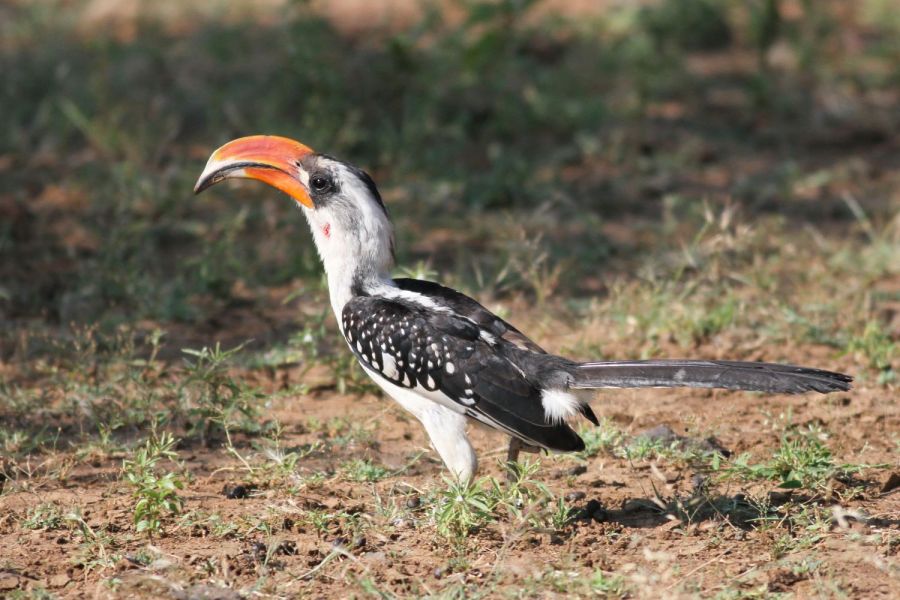
Hemprich’s Hornbill (Tockus hemprichii)

While travelling through Uasin Gishu Plateau, you guys have two option, which in any way, you can decided to take both. Start by visiting Burney’s House in Sirikwa which is normally basic base for exploring Cherangany Hills, Kongolai Escarpment and Saiwa swamp national park, the smallest park in Kenya barely measuring more than 2.9 sq.km . This small park provides a great home for Sitatunga, a swamp dwelling antelope and De Brazza’s Monkey. You will definitely find this route worth your while with species like Lammergeier, Lesser Blue-eared, Bronze-tailed and Splendid Starling, Yellow-billed Shrike,Heuglin’s Masked Weaver, Black-billed Barbet, Gambaga Flycatcher and Yellow-billed Hyliota coming your way.
Kakamega forest, Busia Grassland and Lake Victoria gives you a taste of western Kenya birding in a nutshell with high possibility of recording species like Turner’s Eremomela, Southern Hyliota, African Broad Bill, Great Blue and Black-billed Turaco, Yellow-billed, Hairy-breasted, Grey-throated and Yellow-spotted Barbet, Blue-shouldered, Snowy-headed and Grey-winged Robin Chat inside Kakamega forest, which is the only remnant tropical rain forest in Kenya. Busia region will reward you with Red-fronted Lovebird, Blue-breasted Bee-eater, Fawn-breasted and Zebra Waxbill,Bar-breasted and Black-bellied Firefinch, Compact Weaver and Rock Pratincole.
Lake Victoria richness in Papyrus vegetation is therefore ideal habitat to look for birds like Papyrus Gonolek, Greater Swamp, Papyrus Yellow and White-winged Warbler, Swamp Flycatcher, Slender-billed, Yellow-backed and Northern Brown-throated Weaver among others. Eastern Plantain Eater and other aquatic species are plenty here.

Photo@Moses Kandie
Photo@Moses Kandie

Papyrus Gonolek (Laniarius mufumbiri)
After Lake Victoria you head south-east to Masai Mara Game Reserve. The Mara is the northern extension of the famous Serengeti plains. Here you will find a wide assortment of bird life as well as some of the most spectacular mammals on the continent. Complementing the wildlife is the dramatic scenery of endless grasslands, lush river valleys and steep rock-strewn escarpments. Birds you can expect in this area of the Mara are Rufous-bellied Heron, Saddle-billed Stork, Wahlberg’s Eagle, Coqui and Red-necked Francolins, Grey Crowned-crane, Temminck’s Courser, Wattled Lapwing, Ross’s and Schalow’s Turacos, Malachite and Woodland Kingfishers, Yellow-throated Longclaw, Rufous-chested Swallow, White-tailed Lark, Familiar Chat, Silverbird, Red-faced, Trilling and Tabora Cisticolas, Green-capped Eremomela, Black-crowned Tchagra, Hildebrandt’s and Violet-backed Starlings, Yellow-fronted Canary and Cinnamon-breasted Bunting.Ray Wattled Plover
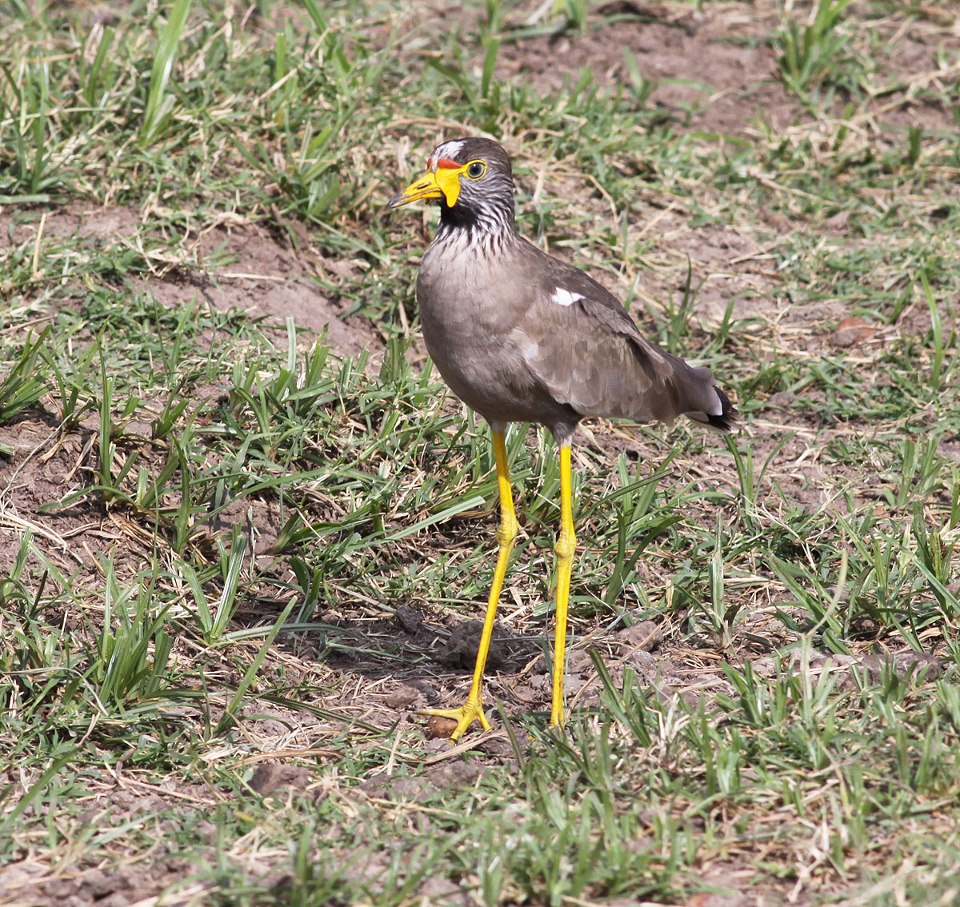
African Wattled Lapwing (Vanellus senegallus)

This is the best area in the Mara to see big game up close and some of the many mammals to be seen here include Black-backed Jackal, Bat-eared Fox, Banded Mongoose, Spotted Hyena, Serval Cat, African Lion, Leopard, Cheetah, Bush Hyrax, African Elephant, Common Zebra, Hippopotamus, Common Warthog, Masai Giraffe, African Buffalo, Eland, Steinbuck, Bohor Reedbuck, Thomson’s and Grant’s Gazelles, Impala, Topi, Coke’s Hartebeest and thousands of Wildebeest. You will also see many massive Nile Crocodiles, some over 15ft in length, basking in the sun along the banks of the Mara River. From Masai Mara Game Reserve, you only need 4 hours to drive to Nairobi.

Noah Strycker, the Record Breaking Birder from Oregon went Birding in Kenya with Joseph Aengwo!

Noah Strycker is a keen birdwatcher who is out to set world record for bird species seen in one calendar year. Noah who lives in Eugene, Oregon, U.S.A. He was in Kenya from 6th – 16th August 2015 where I was privileged to host him. Growing up with a fascination of birds, Noah considered embarking on a yearlong trip to break the world record for most bird species seen in one calender year

photo by Joseph Aengwo

The current world record is was set by British couple Ruth Miller and Alan Davies in 2008, of 4,341 species. There are an estimated 10,000 bird species worldwide.

Photo by Joseph Aengwo

Noah birding itinerary took him to Taita Hills, Tsavo East, Arabuko Sokoke forest along the coast, Mida Creek, Mt. Kenya, Lake Baringo and Kinangop grassland. He flew in to Kenya from Madagascar with a list of 3831 species and he left Kenya for Tanzania with 3996 species, which means he had 165 new species in his list and a country list of 393 in 11 days.  It was nice being part of this record breaking team and I wish him well in his quest to set a new world record.

Photo by Joseph Aengwo

Birdwatching In Ethiopia

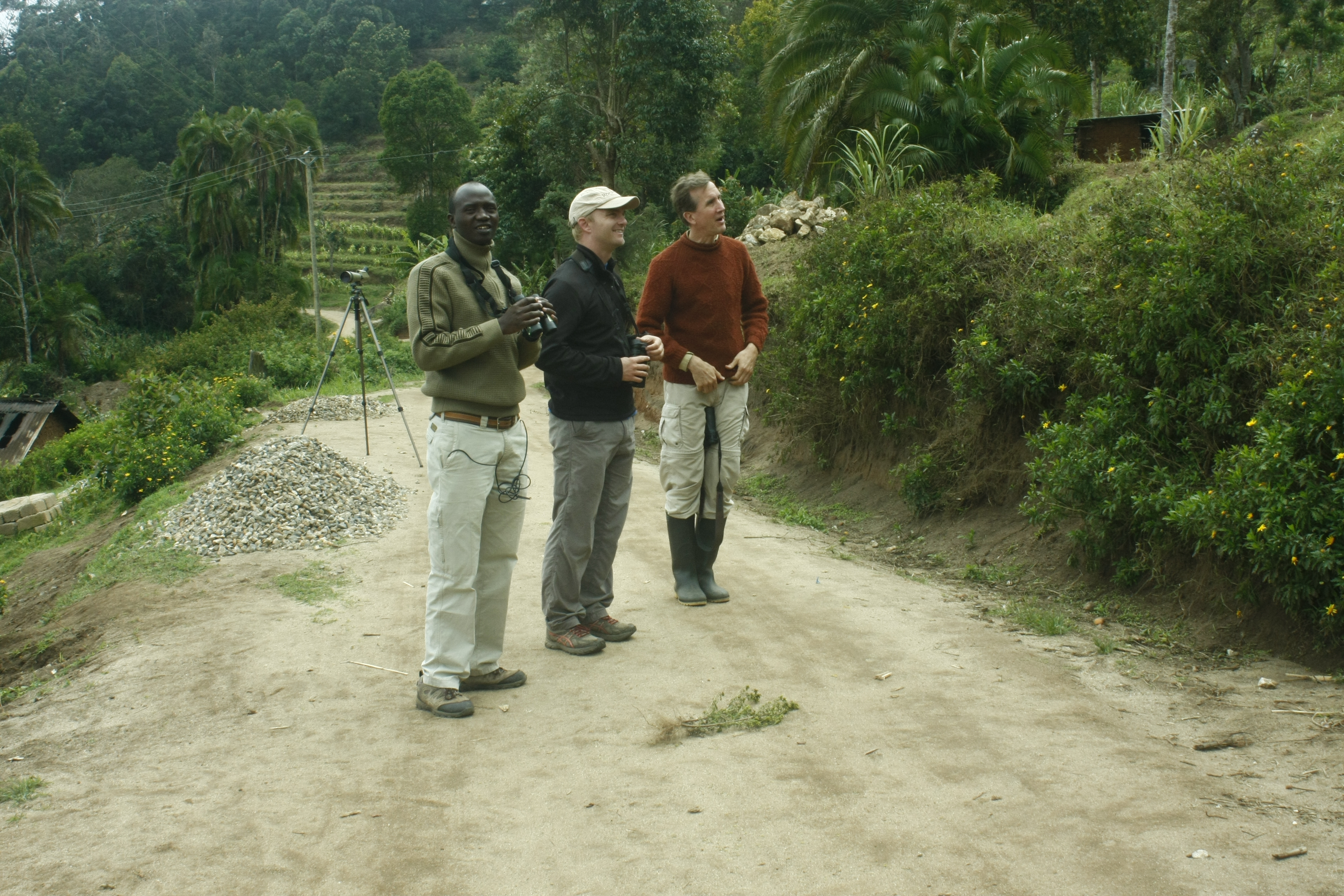
Bird watching in Ethiopia is not easy as I had came to experience, but despite all those, I managed to add over 40 lifers to my life list, considering that I am a seasoned birder in Kenya. I had previously plan to travel from Nairobi to Addis Ababa by road, but charged my mind after the security situation in northern part of become very unpredictable especially the section of Isiolo-Marsabit-Moyale.

My flight from Jomo Kenyatta International Airport took off 23:30 pm and touched down in Bole International Airport at 1:30 a.m. A woke up in addis Ababa and travelled south of Ethiopia through the western escarpment route of Butajira-Hossana where I spend two nights. After I proceeded to Sodo-Shashemene all the way to Dinsho, the HQ of Bale Mountain National Park. Ethiopia 015

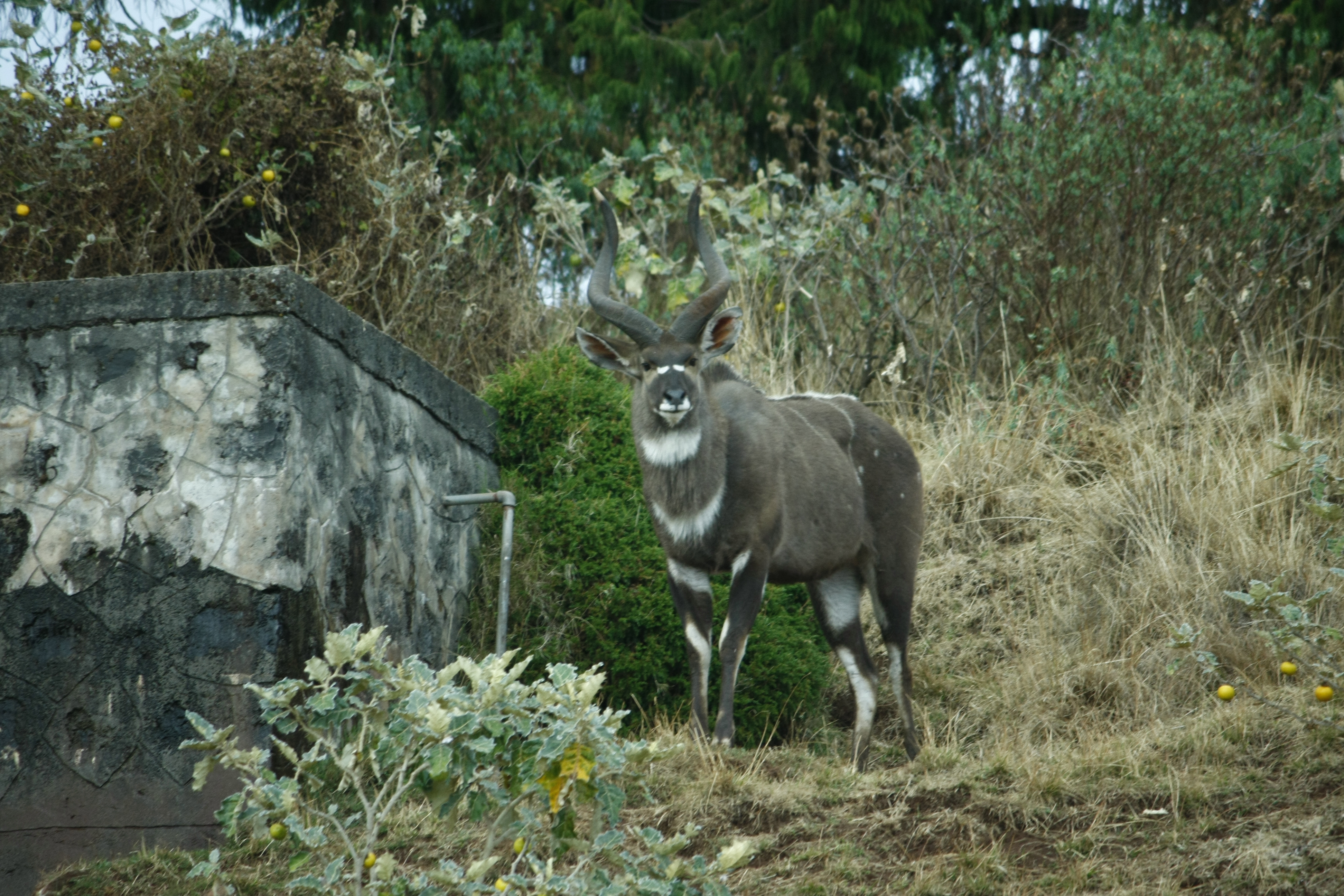
Bale Mountains National Park is a national park in Ethiopia with one of the highest incidences of animal endemicity of any terrestrial habitat in the world. It is home to Mountain Nyala and Ethiopian Wolf.Ethiopia 047
I stayed in Bale Mountain for 2 days after which I back tracked to Shashemenne and I drove south to Dilla Town, a nice high altitude town which was full of life. The next day I started early going south to Hagere Maryam then connected to Yabello town, a small town located is arid and semi arid area, but famous for its ornithological richness.

Photo by Joseph Aengwo

After a day there, I started my trip back to Hawassa, a beautiful lake side town where I spent three nights there before going back to Addis Ababa for my flight back to Nairobi. While in Ethiopia I enjoyed their avian richness, unique culture and food and I was treated to some of the most sensational landscapes in southern part of that vast country. I will publish my full trip report once I am done in this blog.Ethiopia 077

November 2013 and January 2014 Scheduled Birding Trip to North and Western Kenya Birding Trip

This 17 days trip will take you to Nairobi, Mt. Kenya region,Samburu, Lake Nakuru, Lake Baringo, Kakamega, Lake Victoria, Masai Mara and Lake Naivasha. Some of the highlight species expected on the this include;Turner’s Eremomela, Abbot’s Starling, and Sharpes’s Longclaw, Rufous-bellied Heron,Allen’s Gallinule, Hartlaub’s Bustard, White-crested, Great Blue and Black-billed Turaco, White-faced Scops Owl, Gambaga Flycatcher and Boran Cisticola

Golden Pipit (Tmetothylacus tenellus)

Golden Pipit is a uniquely bright yellow underparts bird with a bold black band on the breast. Perhaps what is even unique about this pipit is that it is the only bird with a bare (featherless) tibiotarsi. On a closer look, you will observe that the bird has a bright yellow superciliary stripe and generally on flight it appears yellow with black wings.In Kenya they mostly seen singing on top of scrub bushes in Tsavo west and east, Samburu and Meru National reserve, Magadi road on your way to Lake Magadi and recently we have records of this bird in Lake Bogoria and Baringo.

Black-necked Weaver (Ploceus nigricollis)

@Michael Sammut

Black-necked Weaver appear in two races, P.n. nigricollis and P.n.melanoxanthus. Both species are widespread in moist secondary growth of western Kenya in area around Kakamega, Bunguma,  Lake Victoria and Masai Mara Game reserve.While spp menaloxanthus is uncommon in dry bush and woodland of Tsavo west and east, Amboseli,Lake Magadi, and Samburu. Male has deep golden-yellow head with black eyes;throat patch and nape also black with red-brown eyes with a back bill.Female has a prominent yellow supercilliary  stripes and not throat patch . Black-necked weaver is very similar to Dark-backed weaver (forest weaver) and Baglafecht Weaver.

Joe guided Nigel Marven of Animal Planet on a Kenya Birding Trip

photo@Joe Aengwo

Nigel Marven went Birding in Kenya

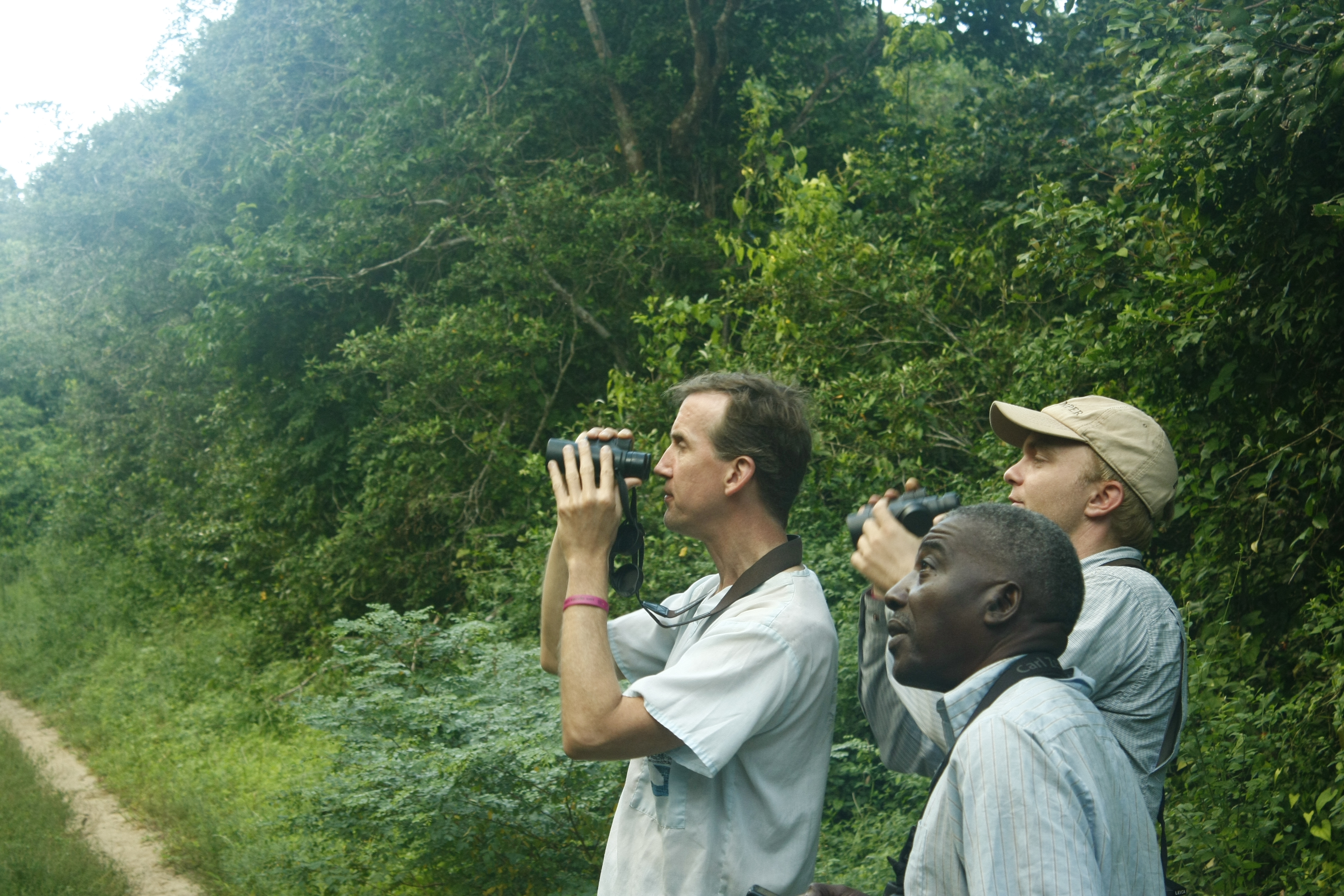
When Moses, a colleague of mine informed me that I was to guide a client from England for 8 days birding safaris, I had no idea that my client will torn out to be Nigel Marven, the famous Animal Planet natural history presenter.  We had good time birding together in Kakamega forest, Tugen hills,Lake Baringo, Bogoria, and Nakuru and finally Nairobi National Park. We managed to spot over 300 species of birds and lucky enough, we managed to see most of our sort after species with exception of four or five species.

Jacson’s Hornbill (Tockus jacksoni)

Image

Similar to other hornbills, Jackson’s hornbills have a unique and nearly predator proof way of raising their offspring. Before she lays her eggs, the female is sealed in a tree cavity by her mate. During this time, he passes her food through a narrow slit.The species is an example of sexual dimorphism, meaning there is a difference in form between males and females of the same species. The male Jackson’s hornbill has a red billed with a yellow tip (see above) and the female has a black bill.

In Kenya they are found in Lake Baringo, Lake Bogoria, Kapedo and the the  upper part of the Rift Vally mostly in Turkana area.

Pel’s Fishing-Owl (Scotopelia peli)

Pel's Fishing-Owl (Scotopelia peli)

Photo@Yan Van Dainne

Fish owls differ from other owls in that they have no feathers on their feet. Additionally, they lack the noiseless flight typical of owls, perhaps because their submerged prey is less able to hear their approach.  Three species of fish owl occurs in Africa . Pel’s Fishing Owl snatch their prey while skimming the water surface. In Kenya it is found in Maasai Mara and Samburu national reserve along the the Mara rive and Ewaso Ngiro rivers.