Hottentot Teal (Anas hottentota)

c@kelemen marton

The Hottentot Teal is a species of dabbling duck of the genus Anas. It is migratory resident in eastern Africa.The Hottentot teal is known for its black-capped head and distinctive blue bill. The duck’s body is speckled brown and black, with black wings.

Monogamous, territorial solitary nester. Interestingly, the pair bond barely lasts beyond incubation, with the male having almost no role in incubation and care of chicks.The female builds the nest, which is a deep bowl in the ground, filled with grass and leaves, often lined with down. It is usually placed in emergent vegetation near water.Laying dates vary with different regions, but usually in February-May.It lays 5-12 eggs, in successive days.Incubation is done solely by the female, for 25-27 days. She will sometimes leave the nest, to join the male in feeding and preening.The chicks are kept hidden in thick reedbeds, which makes them difficult to see. They fledge when they are about 60-65 days old.

Widespread all over Kenya in Swamps like Manguo, Lake Nakuru, Lake Baringo,Lake Bogoria and Lake Naivasha.

Joe guided Nigel Marven of Animal Planet on a Kenya Birding Trip

photo@Joe Aengwo

Nigel Marven went Birding in Kenya

When Moses, a colleague of mine informed me that I was to guide a client from England for 8 days birding safaris, I had no idea that my client will torn out to be Nigel Marven, the famous Animal Planet natural history presenter.  We had good time birding together in Kakamega forest, Tugen hills,Lake Baringo, Bogoria, and Nakuru and finally Nairobi National Park. We managed to spot over 300 species of birds and lucky enough, we managed to see most of our sort after species with exception of four or five species.

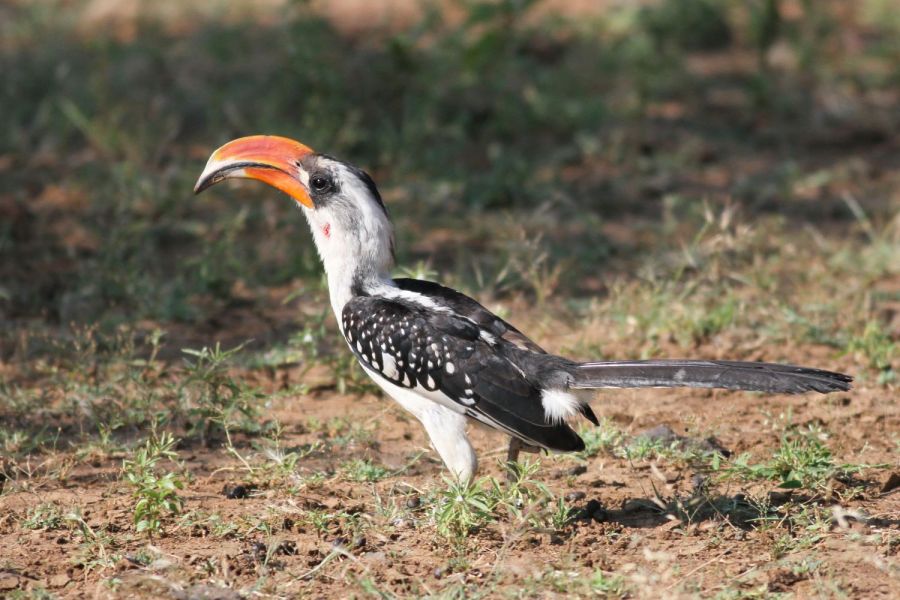
Jacson’s Hornbill (Tockus jacksoni)

Image

Similar to other hornbills, Jackson’s hornbills have a unique and nearly predator proof way of raising their offspring. Before she lays her eggs, the female is sealed in a tree cavity by her mate. During this time, he passes her food through a narrow slit.The species is an example of sexual dimorphism, meaning there is a difference in form between males and females of the same species. The male Jackson’s hornbill has a red billed with a yellow tip (see above) and the female has a black bill.

In Kenya they are found in Lake Baringo, Lake Bogoria, Kapedo and the the  upper part of the Rift Vally mostly in Turkana area.

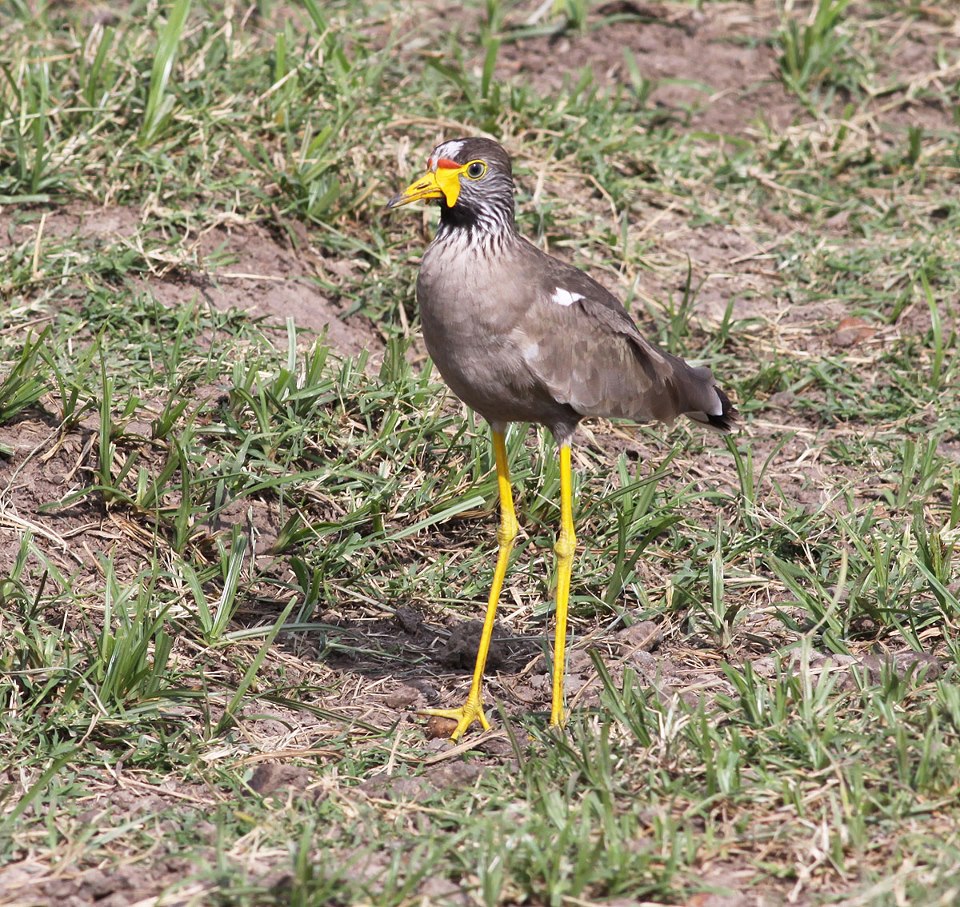
Wattled Plover (Vanellus senegallus)

Wattled Plover (Vanellus senegallus)
Photo@Raymond Galea

Wattled Plover (Vanellus senegallus)

A large and very distinctive Plover. Both the male and female have long yellow facial wattles as well as smaller red ones on the forehead. As with all the lapwings of the genus Vanellus, the Wattled Plover has a white wing stripe (visible in flight) and a white base to its tail. These birds are fairly common in the Maasai Mara and can also be found around Lake Victoria. Although they are residents of swamps, streams and lakes they are only occasionally seen near the Rift Valley Lakes

Goliath Heron(Ardea goliath)

Goliath Heron

Photo@Yan Van Dainne

Goliath Heron

The Goliath heron is Africa largest heron, standing 53-to-55 inches tall, with a wingspan of six-to-seven feet. Male and female look similar, with an overall covering of slate gray and chestnut feathers. The head and its bushy crest, face, back and sides of the neck are chestnut. The chin, throat, foreneck and upper breast are white, with black streaks across the foreneck and upper breast. The lower breast and belly are buff with black streaks. The upper mandible is black and the lores and orbital areas are yellow with a greenish tinge. The eyes are yellow and legs and feet are black. Juveniles look similar to the adults, but are paler.

The Goliath heron is territorial, usually living alone near water. A diurnal and often rather inactive feeder, the heron hunts by standing in the shallows, or on floating vegetation, intently watching the water at its feet. As prey appears, the heron rapidly spears it with open mandibles.

Goliath heron nests are found in trees overhanging water, on the ground and in low bushes. Both sexes build the stick and reed platform nest, which measures three-to-four feet across. Both parents incubate two-to-four pale blue eggs for 29 days. The chicks are covered with long white down.

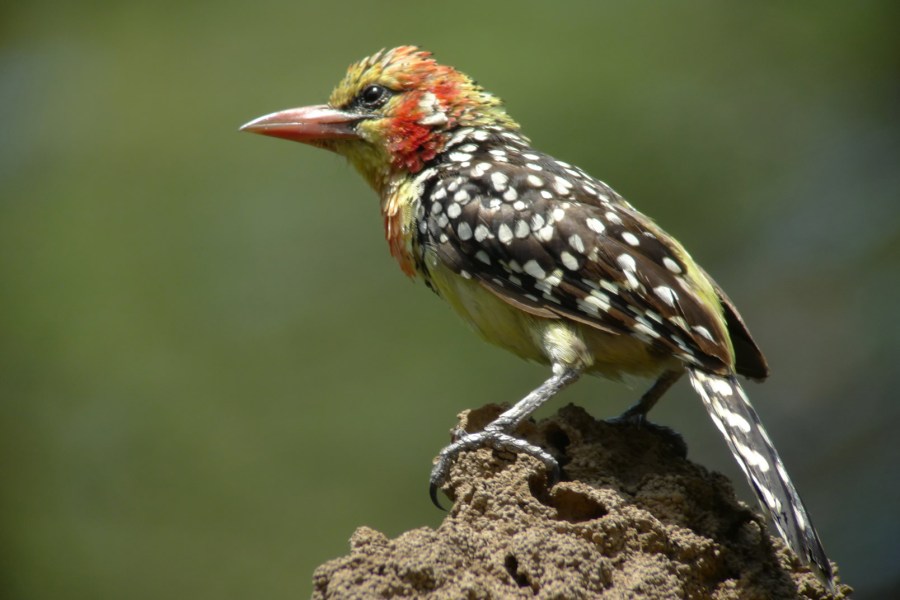
25 March, 2012:Red-and-Yellow Barbet (Trachyphonus erythrocephalus)

25 March, 2012:Red-and-Yellow Barbet (Trachyphonus erythrocephalus)

Photo@Jurg Hosang

Red-and-Yellow Barbet like so all the other species of Barbet that I have come across are creatures of distinctive beauty. Barbet are closely related to tinkerbirds, woodpecckers,   honeyguides  and wrynecks. They are usually found alone or pairs.

This Barbet has a strong red billed, which is hooked and the face is generally red with bright white eared patches. The nominate race which is generally common is boldly white spotted above, with a black and white  speckled band across the yellow breast, yellow-white tail spots, and boldly barred outer tail feathers; rump yellow, upper tail coverts red and yellow; and under tail coverts red and yellow tips.

Very social species and always prefer hanging around termite mounds where they both derive their food stuff and build their nest is circular holes.

Locally common and widespread in dry bush,  savanna  and woodland scrub of Kerio Valley, Lake Baringo, Lake Bogoria , Meru national park, Olorgesaillie and Magadi road.