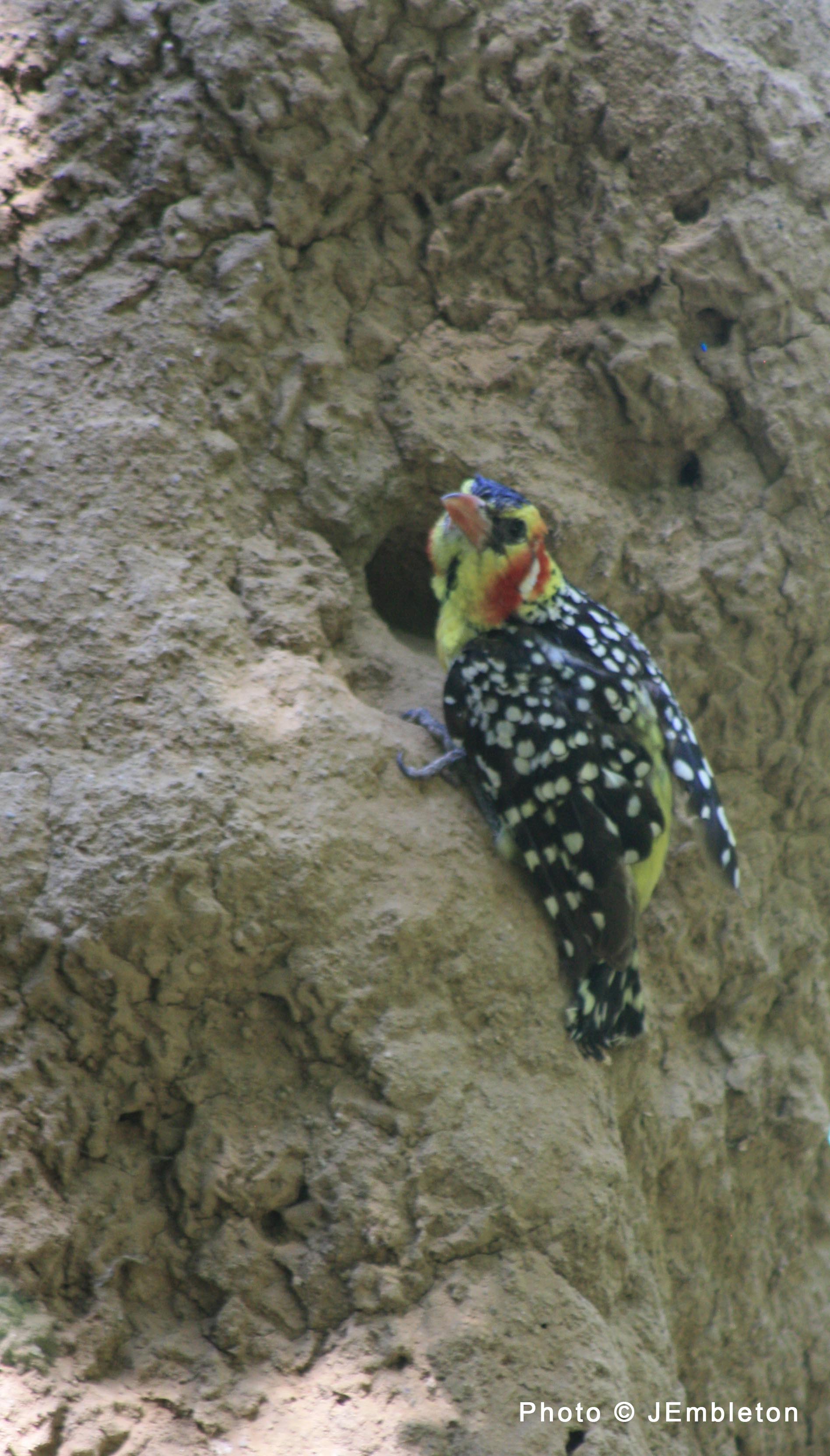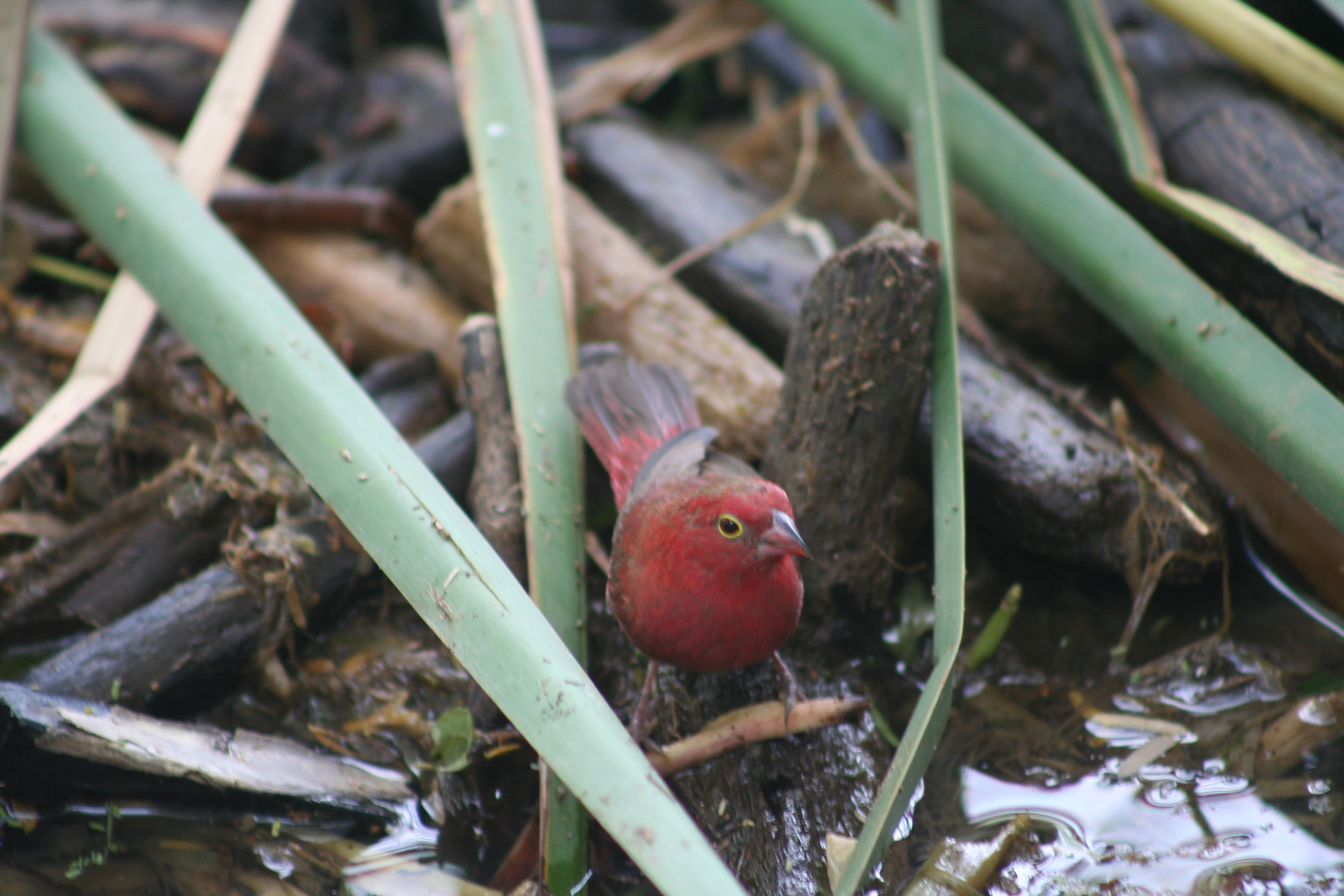
Lilac-breasted Roller photoshoot

This Lilac-breasted Roller was caught posing at the Lake Baringo Club over Christmas. It just couldn’t get enough of having its photo taken. Enjoy this set of photos of this beautiful bird!
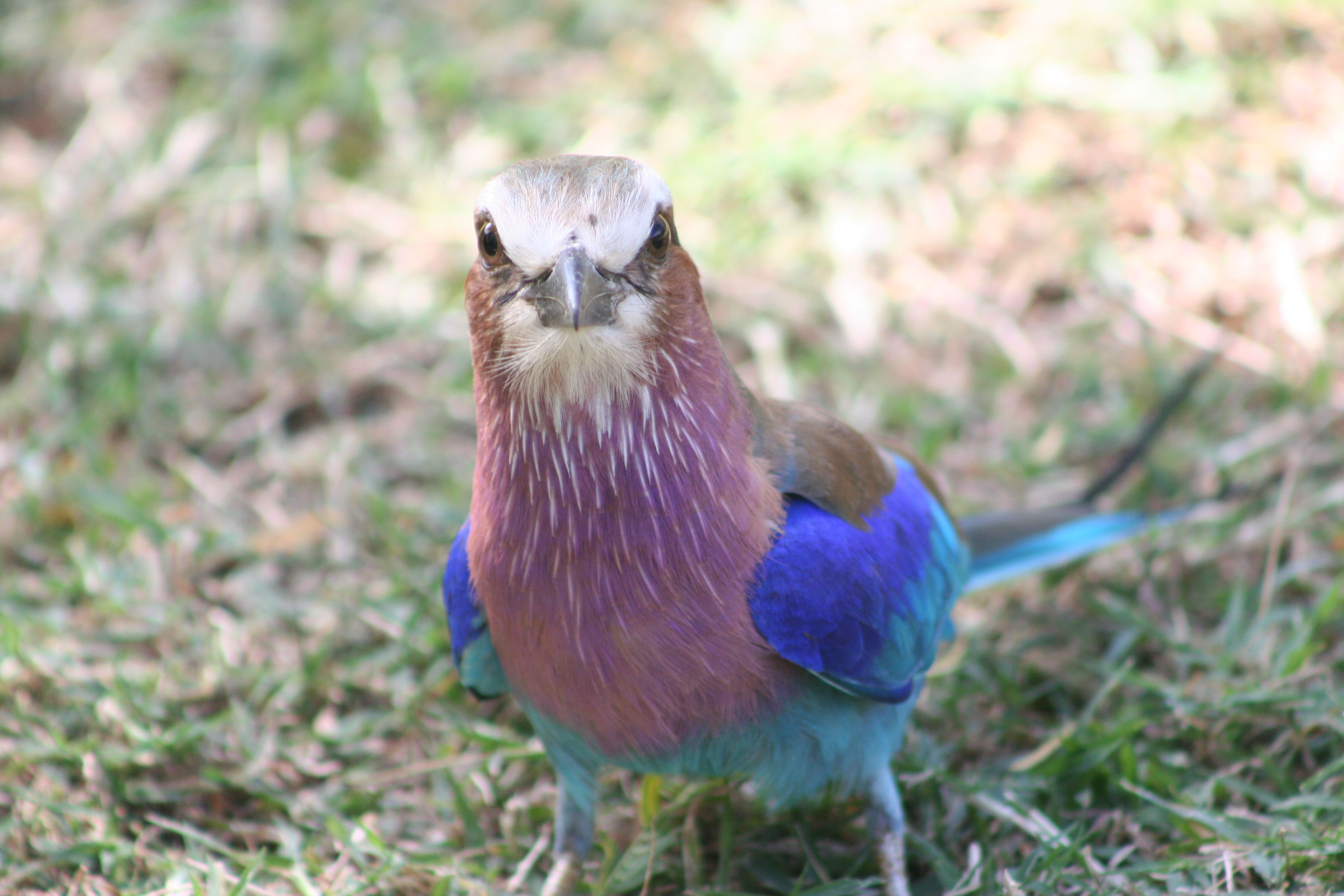
Coming up, a report on birds spotted on a recent tour I guided, as well as the bird of the week, and much more!

Joe

Bird Songs

I’ve recently started to record bird songs using a Panasonic mp3 digital recorder and have been using it to call-back with it’s decent audio speaker. I will try to frequently post songs and accompanying photos of the birds singing when possible.

Here is a song of a Grey-capped Warbler (Eminia lepida) that I recorded in Eldoret, Kenya during an urban birding session.

Grey-capped Warbler Song

Joe

December 30, 2011: Rufous-naped Lark (Mirafra africana)

 Rufous-naped Lark  (Mirafra Africana)

The Rufous-naped Lark’s head is coloured brown as well as the bill. The Mirafra Africana has a white coloured throat, pink legs and a brown coloured back. The eyes are brown.

The male Mirafra africana has physical features that are slightly different from the female bird. When the bird is excited it has a richly striped rufous crown. In most observatory incidence the bird tends to call from a raised platform or rather on top of a medium sized tree.

In Kenya, the bird is widely distributed in areas around central Kenya, Lake Naivasha, Maasai Mara and Amboseli National park.

Rufous-naped lark Rufous-naped lark song

I recently spotted this Rufous-naped lark in the Maasai Mara National Reserve and recorded it’s song.

– Joe

December 15, 2011: Hunter’s Sunbird (Nectarinia hunteri)

Hunter’s Sunbird is widespread and found in most dry areas of Kenya; especially in wooded and bushed grassland, it will however avoid very dry desert-like environments. It can easily be mistaken for the Scarlet-chested and Amethyst Sunbird.

The adult male is a non-reflective velvety black, with more brownish on the back, and a glittering green crown which appears turquoise; the throat as well as the patch on the bend of the wing is metallic ruby or rose-purple.

Hunter's Sunbird

The female is grey-brown above with white edged coverts. The under part is dull white, strongly mottled with sepia-brown on the throat and breast, more faintly on the belly and flanks washed brown, with chin and throat appearing darker .

It has a habit of being shy and solitary. It is widely distributed in dry areas like Samburu and Shaba National Reserve, Lake Baringo, Lake Bogoria and Kerio Valley.

Urban Birding in Kenya

I bird everywhere! Even in the urban landscapes of Kenya, in locations where one wouldn’t expect to be birding, it is possible to spot species with a keen eye. I spotted this Winding Cisticola on the outskirts of a residential area of Eldoret on an evening walk.

Winding CisticolaWinding Cisticola 2Coming soon your ‘Bird of the Week‘.

Joe

December 6, 2011: Eastern Paradise Whydah

The Eastern Paradise Whydah is a small, widely occurring bird of eastern Africa. It gathers in flocks but separates into pairs during the mating season.Easten Paradise Whydah is a species specific brood parasite with its target being the Green-winged pytilia.

This bird is both dichromatic and dimorphic during the breeding season. When in “breeding mode”, the male has black plumage along its back and tail, with a yellow nape and chestnut colored lower breast and belly. It also grows new long- tail feathers. During the non-breeding season, it loses its striking black and yellow coloration, becoming brownish in color with black streaks on its head. The female has grayish, black-streaked upper-parts with a brown-colored head. Its breast is pale gray and its belly is white.

Eastern Paradise Whydah

The Eastern Paradise Whydah feeds on grass seeds such as millet and wild oats, but will occasionally take termites and grubs.

It inhabits dry thorn scrub and open or woodland savannahs throughout eastern Africa. Fairly common after heavy rains both as a resident and a wonderer , appearing usually near watering areas. Well distributed in the  area of  Samburu, Meru, Lokichokio, Turkana, Tsavo and Amboseli National park.

Kenya’s Important Bird Areas

A few important resources about Kenya’s Important Bird Areas.

Kenya's Important Bird AreasA fantastic map of Kenya’s Important Bird Areas from Nature Kenya.

Also, from KenyaBirds, a listing table of the Important Bird Areas, Locations, Habitats, and threatened species.

Coming up soon, a Bird of the Week with a song I recorded while birding recently.

Joe

Lake Baringo Birding

Lake Baringo is a fantastic location for bird watching in Kenya. I grew up in Lake Baringo, where I developed my interest in birding and I never get tired of going out to observe all the species in my backyard. Yesterday, with my friend Wilson Tiren, down by the shore of the lake and at the rocky cliff we spotted some impressive species! There are approximately 500  bird species in and around the lake. We spent a full day birding and managed to come up with this list of species for those keen birders who are wondering what can be seen in this area of the Great Rift Valley.

  1. Cattle egret
  2. Intermediate Egret
  3. Hammerkop
  4. Green-backed heron

    Green backed Heron
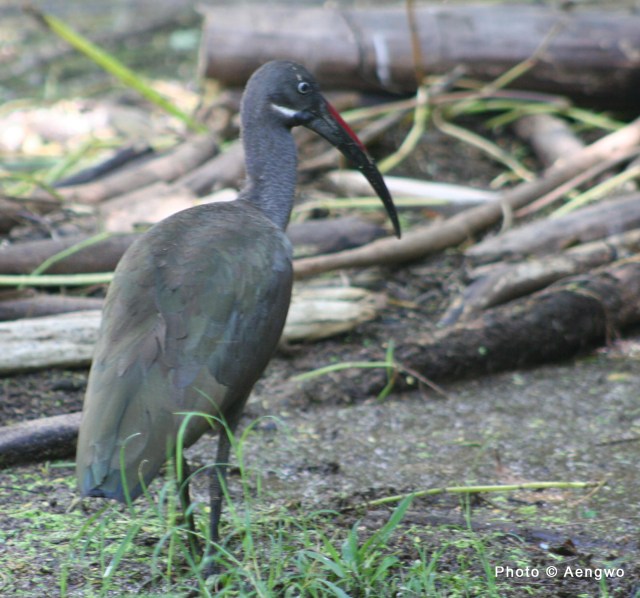
  5. Hadada ibis
  6. Glossy ibis
  7. Sacred ibis
  8. Grey heron
  9. Egyptian goose
  10. Black-shouldered kite
  11. Imperial eagle
  12. Fish eagle

    African Fish Eagle
  13. Black-chested snake eagle
  14. Eurasian mash harrier
  15. Dark chanting goshawk
  16. Gabar gashawk
  17. Shikra
  18. African harrier-hawk
  19. Verreaux’s eagle
  20. Common kestrel
  21. Pygmy falcon
  22. Lanner falcon
  23. Crested francolin
  24. Black crake
  25. Purple swamphen
  26. African jacana
  27. Spotted thick-knee
  28. Heuglin’s courser
  29. Common sandpiper
  30. Emerald-spotted wood dove
  31. Namaqua dove
  32. Laughing dove
  33. African mourning dove
  34. Brown parrot
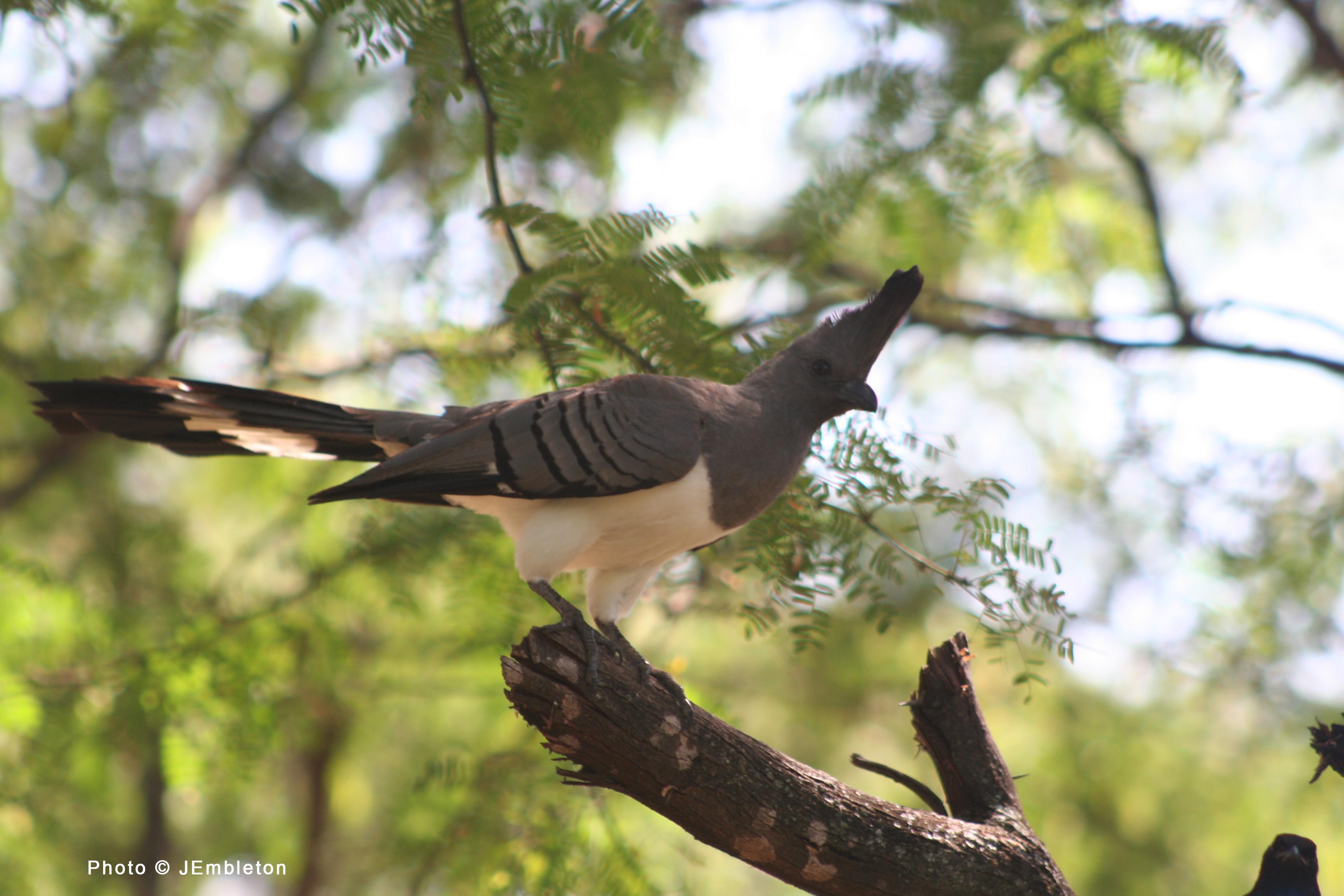
  35. White-bellied go-away-bird
  36. Black and white cuckoo
  37. Diedrik’s cuckoo
  38. White-browed coucal
  39. Pearl-spotted owlet
  40. Little swift
  41. Blue-naped mousebird
  42. Pied kingfisher
  43. Striped kingfisher
  44. Grey-headed kingfisher
  45. Woodland kingfisher
  46. Malachite kingfisher
  47. Little bee-eater
  48. Northern carmine bee-eater
  49. Lilac-breasted roller
  50. Rufous-crowned roller
  51. Green wood-hoopoe
  52. African hoopoe
  53. Eurasian hoopoe
  54. Jackson’s hornbill
  55. Red-billed hornbill
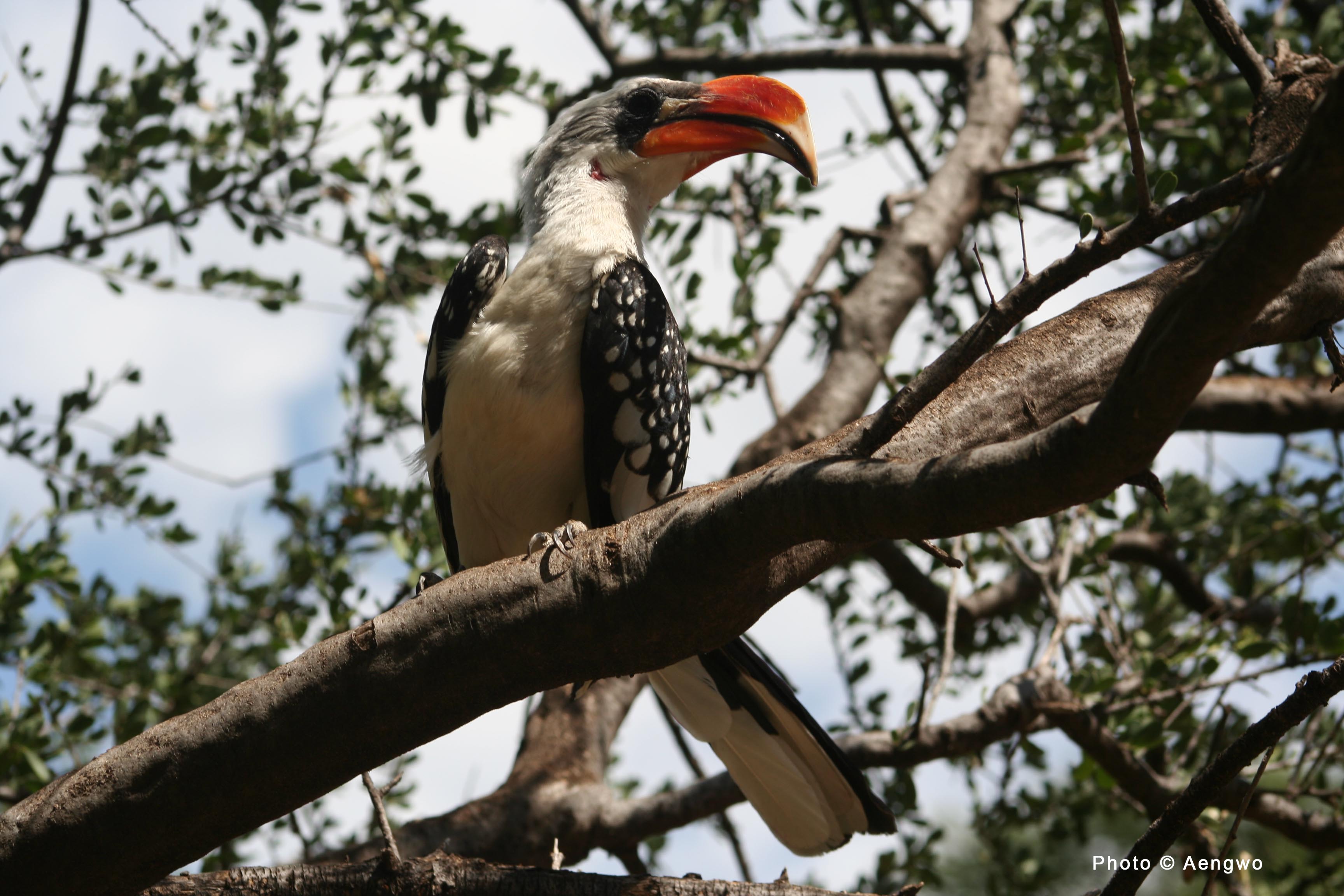
  56. Hemprich’s hornbill
  57. D’arnaud’s barbet
  58. Red and yellow barbet
  59. Black-throated barbet
  60.  Lesser honeyguide
  61. Greater honeyguide
  62. Scaly-throated honeyguide
  63. Nubian woodpecker
  64. Grey woodpecker
  65. Rock martin
  66. Red-rumped swallow
  67. Barn swallow
  68. Common bulbul
  69. Northern brownbul
  70. Cliff chat
  71. Isabelline wheatear
  72. White-browed scrub robin
  73. Spotted morning thrush
  74. Olivaceous warbler
  75. Northern crombec
  76. Yellow-bellied eromomela
  77. Red-fronted warbler
  78. Pale prinia
  79. Grey-wren warbler
  80. Yellow-breasted aplis
  81. African-grey flycatcher
  82. Pygmy batis
  83. African paradise flycatcher
  84. Brown-babbler
  85. Northern grey-tit
  86. Beautiful sunbird
  87. Hunter’s sunbird
  88. Eastern violet-backed sunbird
  89. Brubru
  90. Slate-coloured boubou
  91. Sulphur-breasted bush-shrike
  92. Grey-headed bush-shrike
  93. Northern white-crowned shrike
  94. Drongo
  95. Black-headed oriole
  96. Red-billed oxpecker
  97. Greater-blue-eared starling
  98. Superb starling
  99. Yellow-spotted petronia
  100. Grey-headed sparrow
  101. White-browed sparrow weaver
  102. White-headed buffalo weaver
  103. White-billed buffalo weaver
  104. Black-headed weaver
  105. Lesser-masked weaver
  106. Vitalline masked weaver
  107. Northern masked weaver
  108. Jackson’s golden-backed weaver

November 21, 2011: Flamingo

Flamingo
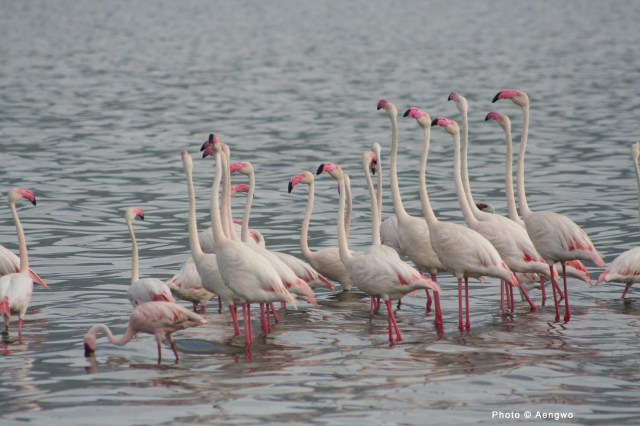
Phoenicopterus, the latin name for flamingo, means “Crimson wing”, the flamingo is said to be the inspiration for the crimson-winged phoenix, the ancient symbol of transformation and re-birth. Flamingoes are characteristic species of soda lakes in the Rift Valley in Kenya and Tanzania, especially Nakuru, Bogoria, Elementaita and Turkana. Their breeding ground is Lake Natron, in northern Tanzania.
Two species occur in Africa: Greater flamingo  Phoenicopterus ruber and Lesser flamingo Phoeniconaias minor. They are long legged wading birds adopted to a unique method of filter feeding. The two species avoid direct competition by feeding on different food items at different depths, with major diet being spirulina and diatoms.
Flamingo Lake Bogoria Kenya
A flamingo landing on Lake Bogoria, Kenya.Photo@Jurg Hosang

November 6, 2011: Heuglin’s Courser

Hello birders and twitters,
The bird of the week this Sunday is:
Heuglin’s Courser (Rhinoptilus cinctus)
Tree-banded Courser, as it is also referred to, is secretive and seldom kind of a bird. It is widespread and sometimes common in bush-land and bush grassland in low rainfall areas but sometimes extending into miambo woodland where it normally breeds during the dry season when the grasses are burned to give room for the  growth of the fresh ones.
When breeding, the pair always establish their nest in a bare ground, where most nests are partially buried and partially exposed, with their colour matching the ground perfectly.
This fairly large, cryptically patterned bird has a broad mottled brown breast band bordered below by narrow black, white and chestnut bands; chestnut stripes, one from each side of the neck, converge in a point on the white breast, and the rest of the belly is white. Long pale superciliary stripes contrast with scaly brown crown and buffy-brown face patch.
Heuglins courser is largely nocturnal and roosts under bushes during the day. Two types occur: the nominate and emini. The nominate race is widespread and generally uncommon in semi-arid bush and scrub. While emini is found in Nyanza and  the Maasai Mara National game reserve.
Despite the fact I have seen several, I have never had enough of this beautiful bird.
Enjoy your week.
Heuglin's Courser
Heuglin's Courser