
The Great Blue Turaco: Africa’s Vibrant Forest Jewel

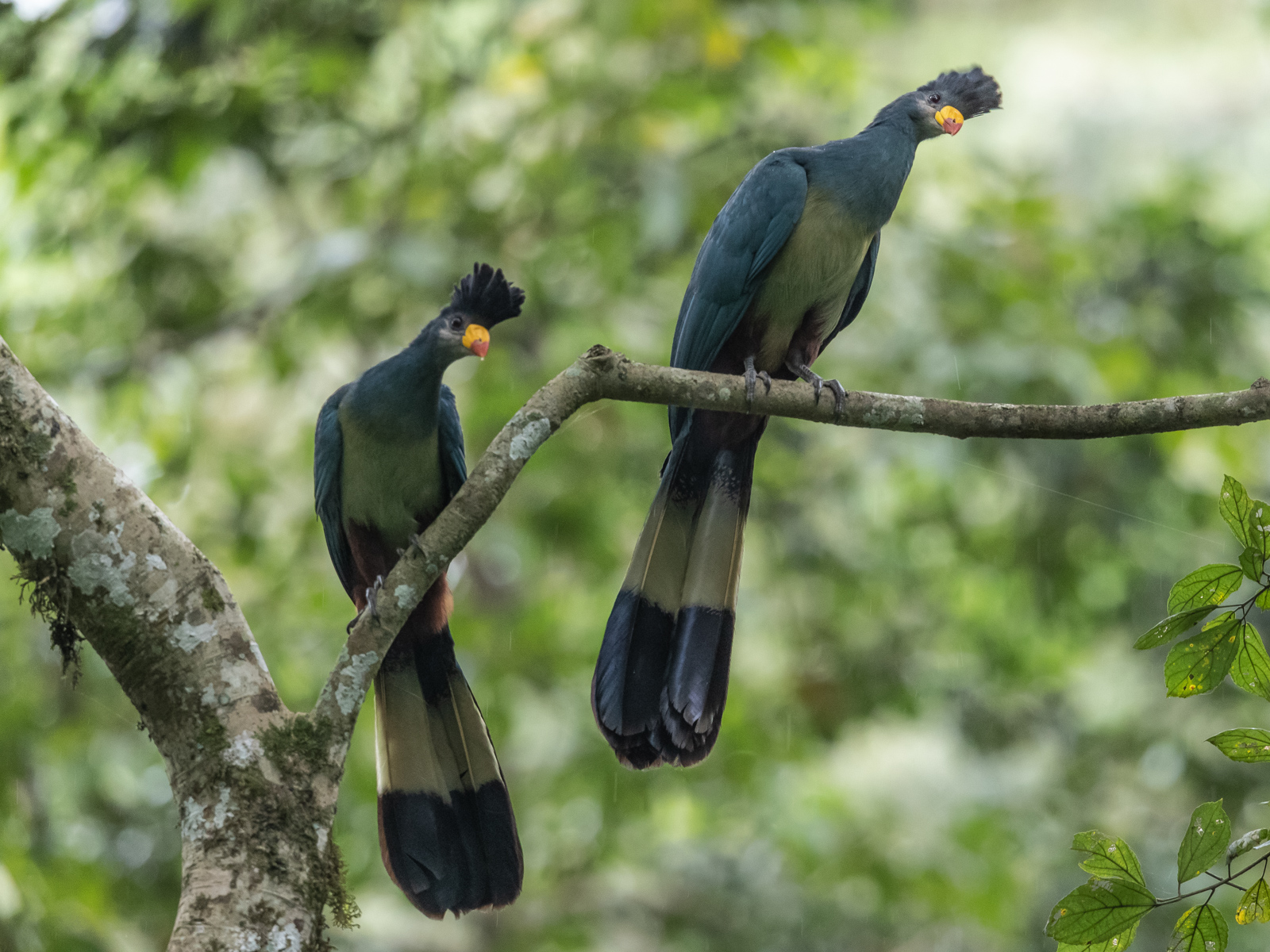
Great Blue Turaco.Photo by Juhani Vilpo

Turacos are medium-sized arboreal birds endemic to sub-Saharan Africa, where they live in forests, woodland and savanna.

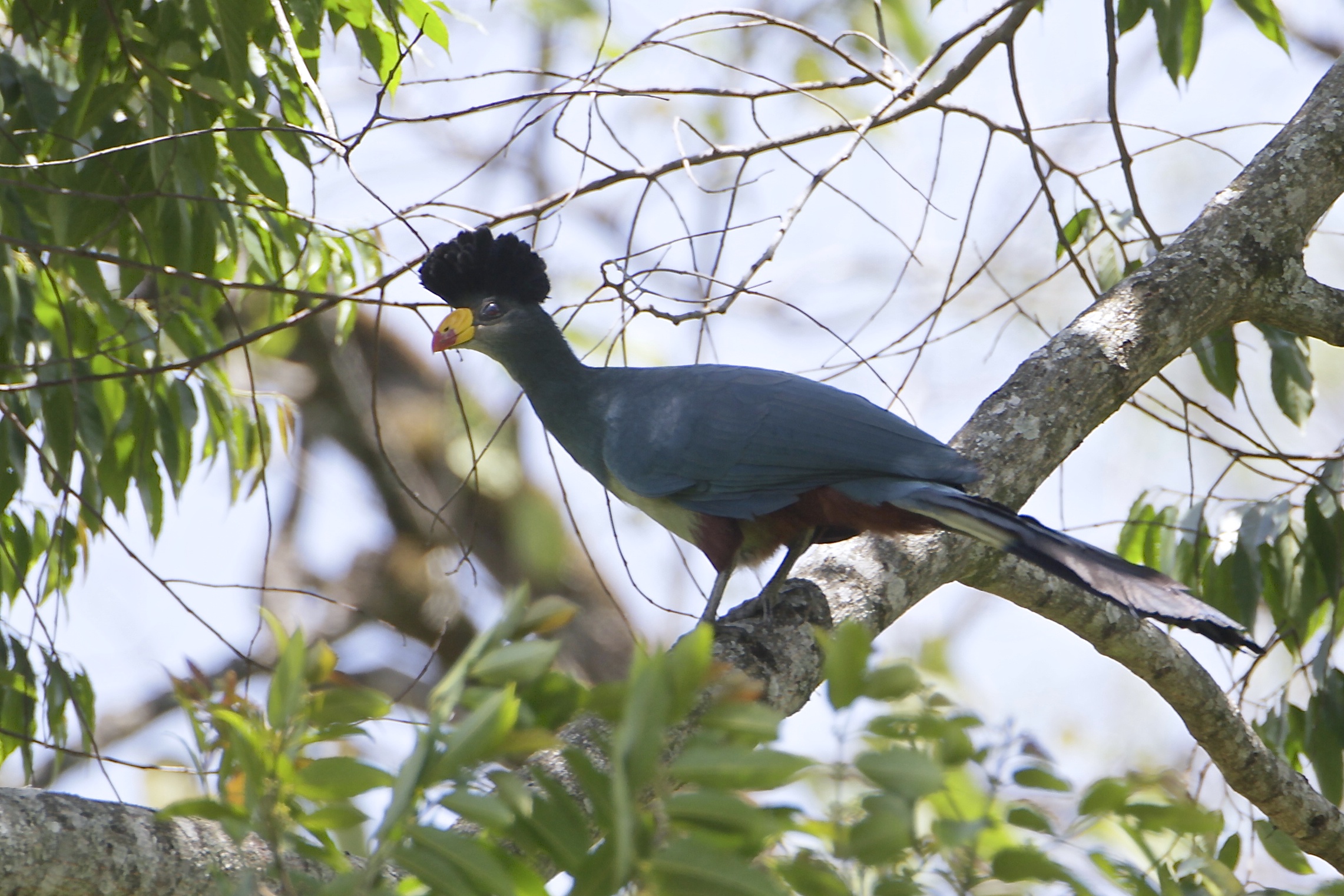
The Great Blue Turaco (Corythaeola cristata) is one of the most striking and charismatic birds of the African rainforest. With its vibrant colors, distinctive crest, and graceful movements, this bird holds a special place in the biodiversity of Central and West Africa’s tropical forests. Often called the “blue beauty of the canopy,” the Great Blue Turaco is not only a marvel of nature but also a key player in its ecosystem.
Great Blue Turaco.Photo by Jan F.L Van Duinen

Turacos acquire their crimson wings through specialized pigments called turacin, which contain copper. These pigments are unique to turacos and are responsible for the vibrant red coloration in their wings. Unlike most birds where red coloration is derived from carotenoids, turacos have these distinct pigments.Turacos spend most of their time in the forest canopy where they can be found in groups of up to 30 individuals.

The Great Blue Turaco is more than just a beautiful bird—it’s an important ecological player and a symbol of the rich biodiversity of African rainforests. Protecting its habitat ensures not only the survival of this stunning species but also the health of countless others that share its environment. As deforestation and habitat fragmentation continue to threaten tropical ecosystems, birds like the Great Blue Turaco remind us of the urgent need for conservation and sustainable land use.Keep birding!

Great Blue Turaco (Corythaeola cristata)

Jan Van Duinen
Jan Van Duinen

Great Blue Turaco is the largest species of the Turaco family. The adult has turquoise-blue upperparts, including wings and tail. The tail is long and wide, and shows a broad, black subterminal band. Most birds have narrow blue tips. The outer rectrices are partially edged yellow. The wings lack the crimson primaries of other turacos.On the underparts, neck and upper breast are turquoise-blue. Lower breast and belly are greenish-yellow, as the undertail feathers. The tail has black subterminal band. Lower belly, undertail-coverts and tibial feathers are chestnut.
On the turquoise-blue head, there is a conspicuous blue-black raised crest on forecrown and crown. Chin, throat, cheeks and outer eye-ring are greyish. The large convex bill is bright yellow with red tip. The eyes are reddish-brown, surrounded by bare dark turquoise-blue eye-ring. Legs and feet are blackish. Sexes are similar.
Great Blue Turaco have territories which are maintained throughout the year. Like many of the turacos, Great blues are rather shy and seldom descend to the ground except for drinking and bathing. They are quite agile when climbing throughout the branches. Seldom alone, they may be in pairs, family or social groups of up to seven individuals, with several groups often gathering at a single large fruit tree. These turacos are not good fliers, flying short distances and soaring to lower levels of the forest. Courtship involves calling, chasing, feeding each other, raising the crest and the long tail. They call early in the morning and late in the afternoon. They best seen only in Kakamega forest in western Kenya and all the forest in Uganda.

Ross’s Turaco (Musophaga rossae)

Photo@Jan F.L Van Duinen

Ross’s or Lady Ross as it sometime called is a medium-sized bird, with a long tail and broad, round wings. They have three toes on each foot that point forward, while the fourth toe can be rotated forward or backwards. Males and females differ in that females may have a greenish beak. This Beautiful Turaco is seen in mostly on the western side of Kenya Great Rift Valley mostly in areas around Tugen Hills and El geyo escarpment. Ross’s Turaco is a very social bird, seen mostly moving is a small noisy flock of 2 to 7 birds. They spent most of their time among trees in search for fruits until evening when they nest solitary on a plat form of twigs.It is an easy bird to Identify because nothing else in our region is like it.