


The Saddle-billed Stork is one of the largest storks in the world, standing up to 1.5 meters (5 feet) tall. It is easily recognizable due to its unique black and white plumage, bright red legs, and the large, bicolored bill, which has a black base and a yellow section resembling a saddle. The bill’s distinctive shape helps the bird forage for fish and amphibians, which make up a large part of its diet. This bird also exhibits sexual dimorphism, with males typically being slightly larger than females.

They prefer shallow, slow-moving waters where they can wade and forage for food. The stork is usually solitary or found in small groups, although some may form pairs during the breeding season. They often choose to nest in tall trees near water, constructing large, conspicuous nests that are used year after year.
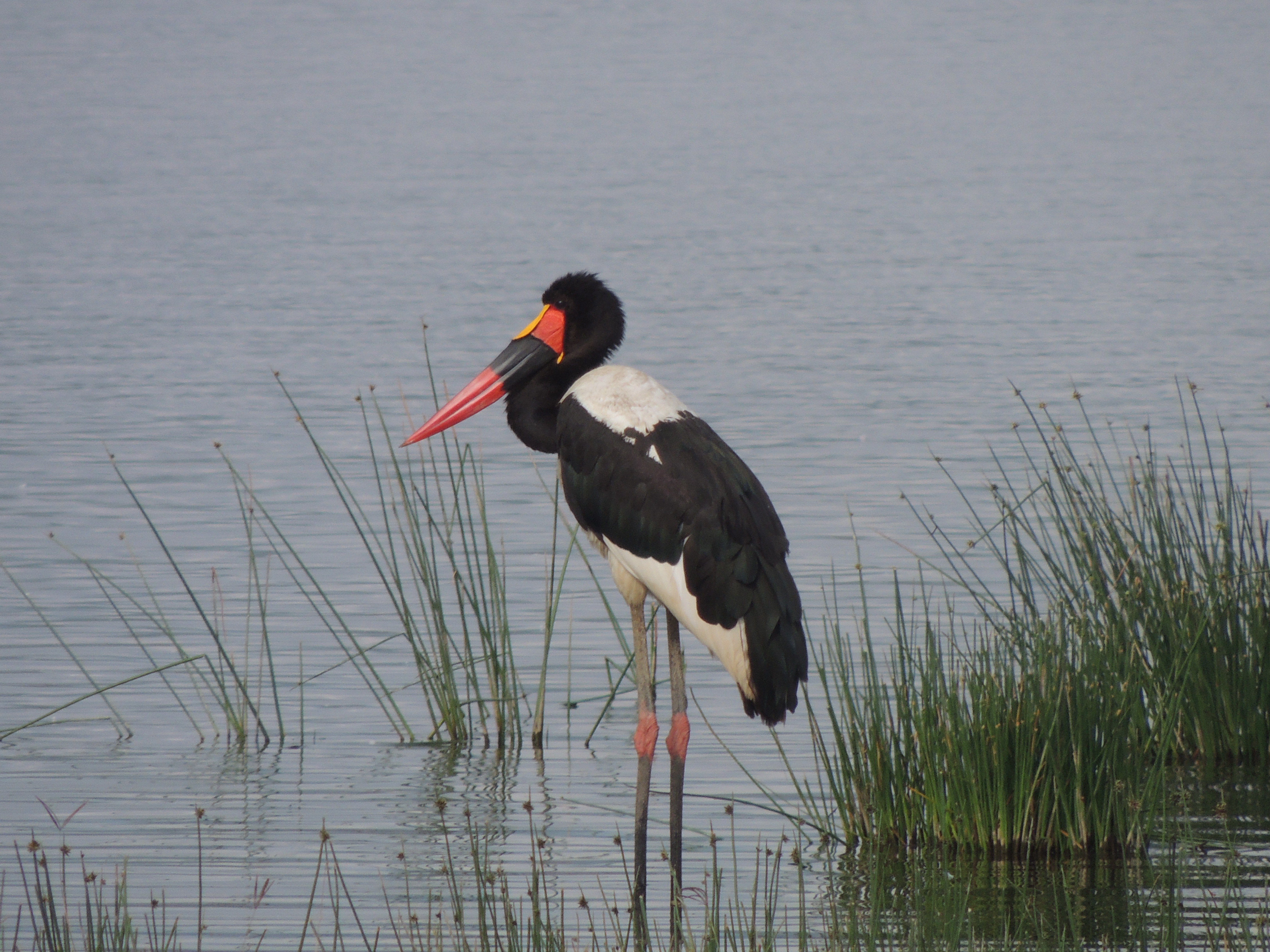
Saddle-billed Storks form monogamous pairs during the breeding season, which typically occurs during the rainy season, when food is abundant. They build large nests in tall trees, and both parents share the responsibility of incubating their eggs. The female typically lays one or two eggs, and both parents take turns keeping them warm for about a month. Upon hatching, the chicks are fed a diet of regurgitated food from both parents until they are able to forage on their own.Though they are not yet considered endangered, the Saddle-billed Stork faces threats from habitat destruction, particularly the draining of wetlands for agriculture and development.
They also face threats from hunting in some areas and the disturbance of their nesting sites.By continuing to protect its wetland habitats, we can help ensure that future generations will be able to admire this iconic and important bird species.Keep birding!.

 Kenya Birding