

There is a place, on the northern shore of Lake Victoria, where the papyrus grows tall enough to swallow a boat whole, and the water moves so slowly it seems to have given up all ambition of going anywhere at all. This is Mabamba Swamp, in Uganda. And it is here, standing motionless in the reeds, that one may come face to face with one of the most extraordinary birds left on our planet. The Shoebill.
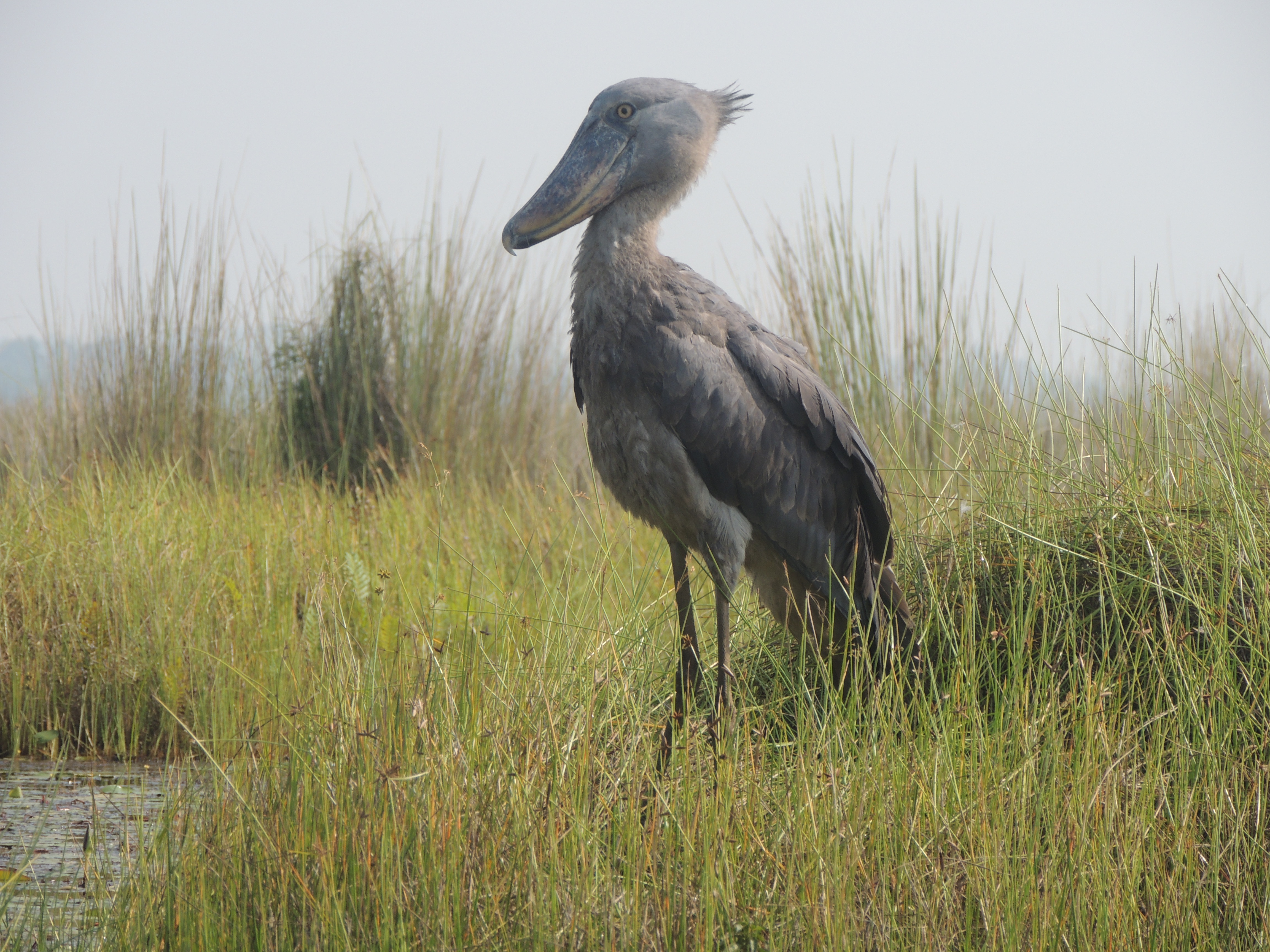
To look at it for the first time is to question whether evolution was entirely serious about this one. It stands over a metre tall, on legs like grey stilts. Its eyes are pale, and fixed, and strangely knowing. But it is the bill that commands attention — a vast, grey, clog-shaped weapon, hooked at the tip like something forged rather than grown. It is, without exaggeration, one of the strangest faces in the natural world.And yet, for all its prehistoric appearance, the shoebill is a master of patience.
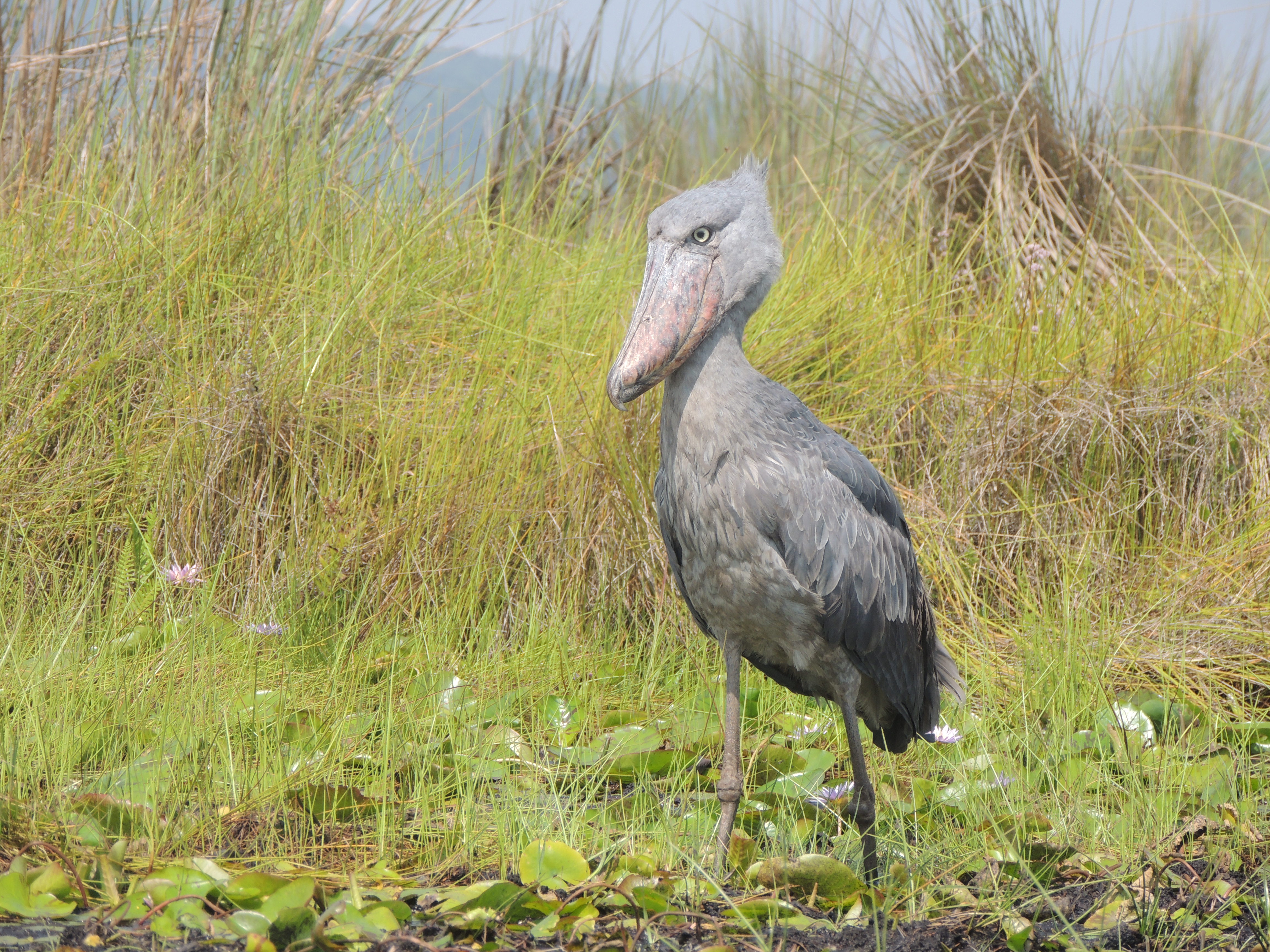
Photo@Joe Aengwo
Watch closely, and you will see almost nothing happen. For minutes. For hours, if you have the patience yourself. The shoebill does not hunt the way other birds hunt — no darting, no chasing, no frantic splashing through the shallows. It simply stands. Waits. Becomes, to all appearances, a grey statue rooted in the swamp itself.
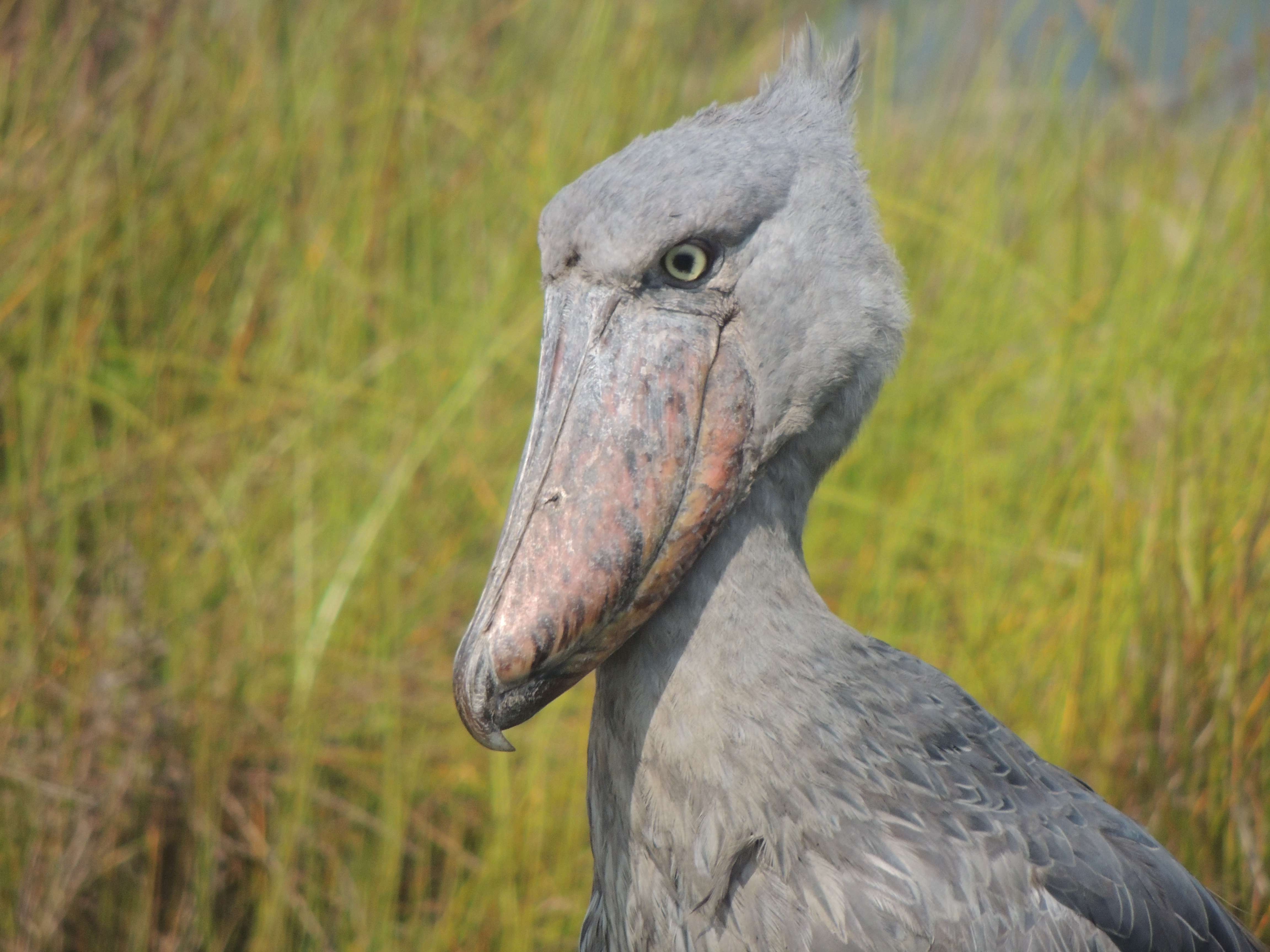
Beneath the surface, in the tangled roots and warm, oxygen-starved water, lungfish move. Unassuming creatures, in no particular hurry. They have survived, largely unchanged, for millions of years. And it is precisely their leisurely rise to the surface to gulp air that the shoebill is counting on.Then — with a suddenness that seems almost an insult to the stillness that preceded it — the bird strikes. The whole enormous body pitches forward in what researchers rather charmingly call a “collapse.” Wings flung wide for balance, that great bill crashing down through papyrus stems and water alike, seizing prey, plant matter, and sheer bad luck all in a single, explosive motion. It is over in under a second. And then, just as suddenly, stillness returns, as though nothing at all had happened.It is, perhaps, the most dramatic thing you will ever see a statue do.
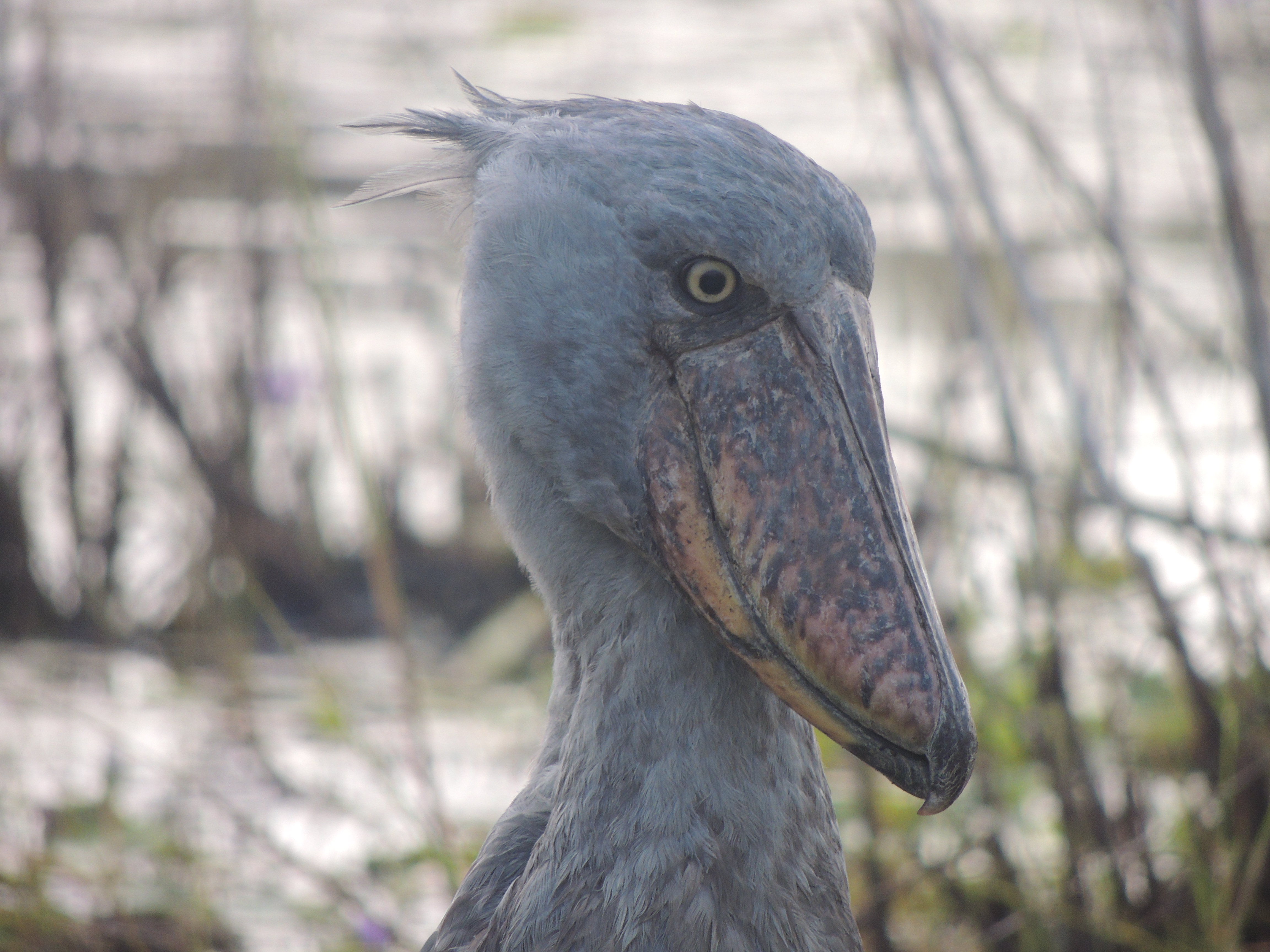
So it is a small miracle, really, that in this particular corner of Uganda, in the soft grey light of early morning, with mist still lying low over the papyrus, a visitor might glide silently past in a canoe and find themselves looking directly into the pale, ancient eyes of a shoebill.
It will not move. It will not blink, or so it seems. It will simply stand there, holding its ground as it has done, in one form or another, since long before we arrived to admire it — a reminder, if ever one were needed, of just how strange, how patient, and how quietly magnificent the natural world can be.


Great post and amazing shots, Joseph!