

Woodland Kingfisher (Halcyon s. senegalensis)

Woodland Kingfisher (Halcyon s. senegalensis)
Photo@Yan Van Danne
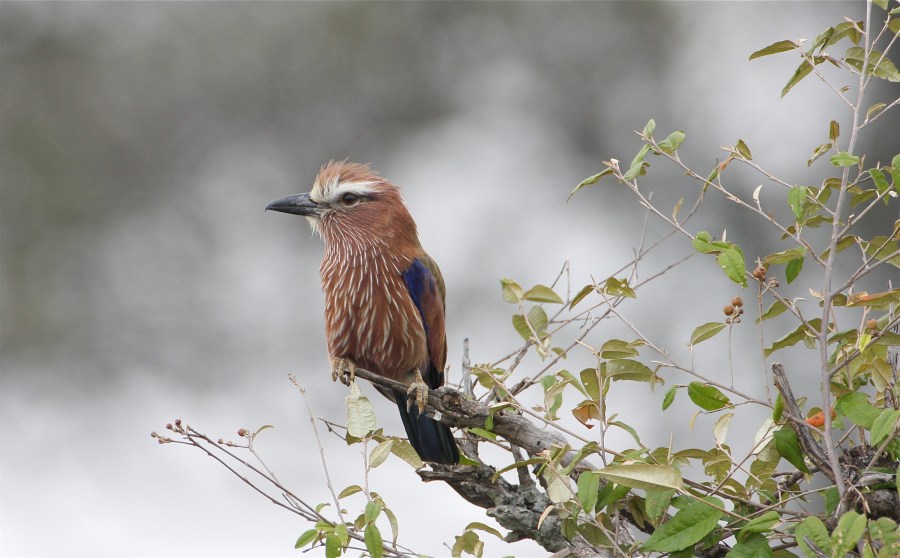
Rufous-crowned or Purple Roller has it is sometimes referred to is a very uncommon compared to other species of Rollers, with exception of Abyssinian Roller.It feed on big insect and it can be observed from one spot for some time as it scanned and goes for his prey and returning to the same location .
The bird is generally purple as the name suggest with violet tailed and a little spot on the wing shoulder.It is the biggest roller we have in East Africa, therefore identifying this bird should never be a problem at all.
It is very common in areas around Lake Baringo, Lake Bogoria, Kerio Valley, Kapedo, Samburu National reserve and Meru National Park.

Photo@Joseph Aengwo
Southern Ground Hornbill is a large, turkey sized terrestrial bird, black-plumaged except for white primaries, conspicuous in flight. Adult bird has a bright red bare skin around eyes and on the neck, where usually somewhat inflated;eyes pale yellow; bill back, with small casque at the base above.
Pairs or small groups walk about in search for insects and small vertebrates.It will tend to take flight only when disturbed or alarmed.Widespread but partially distributed in open grassland and savanna around Nairobi National Park, Maasai Mara, Central Rift Valley a round Lake Nakuru and Naivasha and Kakamega forest, Mt.Elgon and Kapenguria.
Photo@Yan Van Danne
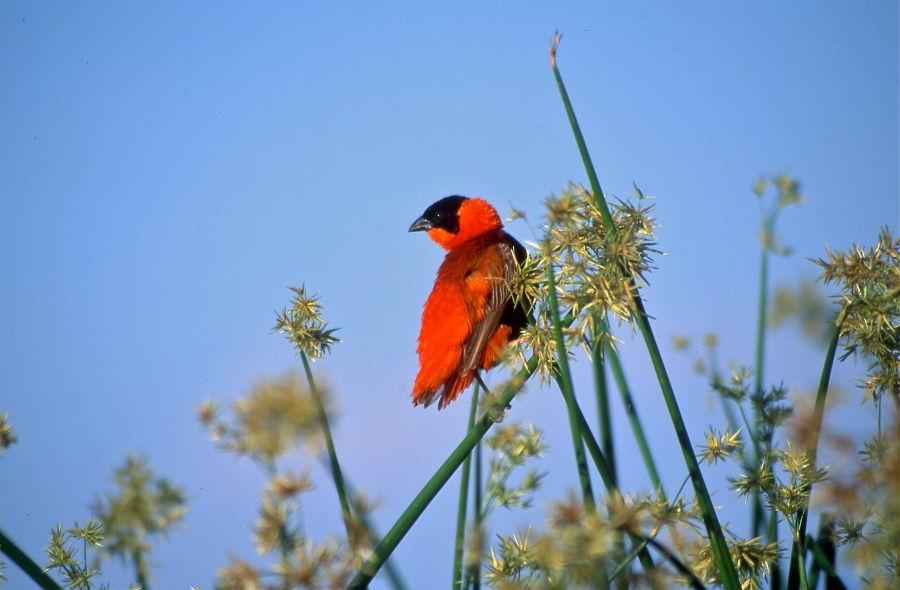
Northern Red-Bishop is have sexual dimorphism. Breeding Males has bright red back all the down to the tail, with wing panels being dark brown. The the front head to the face is black with a all black belly.
The male have eclipse plumage when not breeding in order to remain inconspicuous-at this time they resemble the drab female.This dimorphism is indicative of polygymous, colonial breeding species with intense reproductive competition-male taking a number of mates (up to eight) simultaneously or consecutively without offereing assistance in incubation or check-rearing.
He does however protect the territory vigorously from conspecific males. Males display to female with what is called the “bumble flight” where the back and head feathers are fluffed-giving them the appearance of a bumb-bee. Female feed the chicks by regurgitation.
Locally common in grassland, savanna and wetland in the Rift Valley around the Lakes of Baringo and Bogoria
Birds of Prey
Their shadow dims the sunshine of our day,
As they go lumbering across the sky,
Squawking in joy of feeling safe on high,
Beating their heavy wings of owlish gray.
They scare the singing birds of earth away
As, greed-impelled, they circle threateningly,
Watching the toilers with malignant eye,
From their exclusive haven–birds of prey.
They swoop down for the spoil in certain might,
And fasten in our bleeding flesh their claws.
They beat us to surrender weak with fright,
And tugging and tearing without let or pause,
They flap their hideous wings in grim delight,
And stuff our gory hearts into their maws.
Photo@Jurg Hosang
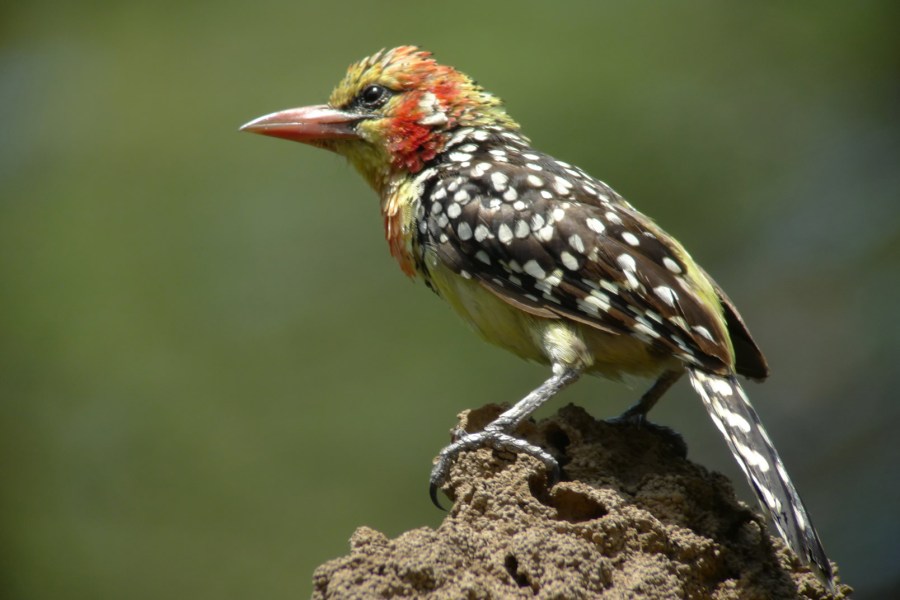
Red-and-Yellow Barbet like so all the other species of Barbet that I have come across are creatures of distinctive beauty. Barbet are closely related to tinkerbirds, woodpecckers, honeyguides and wrynecks. They are usually found alone or pairs.
This Barbet has a strong red billed, which is hooked and the face is generally red with bright white eared patches. The nominate race which is generally common is boldly white spotted above, with a black and white speckled band across the yellow breast, yellow-white tail spots, and boldly barred outer tail feathers; rump yellow, upper tail coverts red and yellow; and under tail coverts red and yellow tips.
Very social species and always prefer hanging around termite mounds where they both derive their food stuff and build their nest is circular holes.
Locally common and widespread in dry bush, savanna and woodland scrub of Kerio Valley, Lake Baringo, Lake Bogoria , Meru national park, Olorgesaillie and Magadi road.
Hello my fellow birders!
I’ve finally posted my trip report under Birding Trip Reports for January 25 – February 8, 2012. I will be updating it with photos shortly.
Here is an excerpt from the report! Click the link above to view the full report.
Trip Leader Joseph Aengwo
Participants: 5 Clients
Bird Species Recorded: 445
Animal Species: 34
For many bird people across the globe, the beginning of the year is a wonderful time. Yearly lists can start anew, and who knows what the next twelve months will bring? While rarities whet the appetite of any birder, the expected birds are much more frequently counted. And this was not any different for us when we started our 14 days birding trip that took us to birding hotspot found in eastern and coastal part of Kenya.
There were of course numerous avian highlights during our grand tour of that part of the country and of the nine or ten Kenyan endemics we encountered four, namely;
We also saw rarities and restricted-range species such as:
Of the other near-endemics and specials rarely recorded on other tours we also managed to record the following:

Photo@Joseph Aengwo
Giant Kingfisher is a crow-sized kingfisher, dark-crested,with white throat and a large black bill.Upper part of this beautiful bird is dark slate, finely spotted and barred with white.This species also exhibit sexual dimorphism with male having chestnut breast, white belly and black-and-white-barred flanks.Female is chestnut bellied, with densely black-and-white-speckled breast .
This bird is widely distributed in Kenya and can easily be seen in rivers, swamps and lakes.Areas where it is commonly seen include Subukia, Nyahururu, Lake Naivasha, Baringo and Kitobo forest which close to the Kenya-Tanzania border.

Photo@Yan Von Danne
This rare norrow-winged, Kestrel-sized falcon typically associated with Palm tree.It can easily be identified from its Red-rufous crown that extend all the way to the scapular. This beautiful raptor has a white face, chin and the upper breast, with broad pale rufoous band across upper breast.Pale blue-grey above with fine black barring;primaries and primary covert darker. The wings are pretty short compared to typical falcons like Peregrine.
Uncommon in low open country, especially with palms and acacia of Galana river, Meru and Samburu national park, Lake Turkana and the coastal part of Kenya.This photo was taken by a friend of mine in Samburu National Reserve.

Photo@Tony Crocetta
Malachite Kingfisher is the most stunning species easily watched in any wetland with fish.And this great picture was taken at the shore of Lake Baringo, located in the northern part of the Great Rift Valley.Enjoy birding

