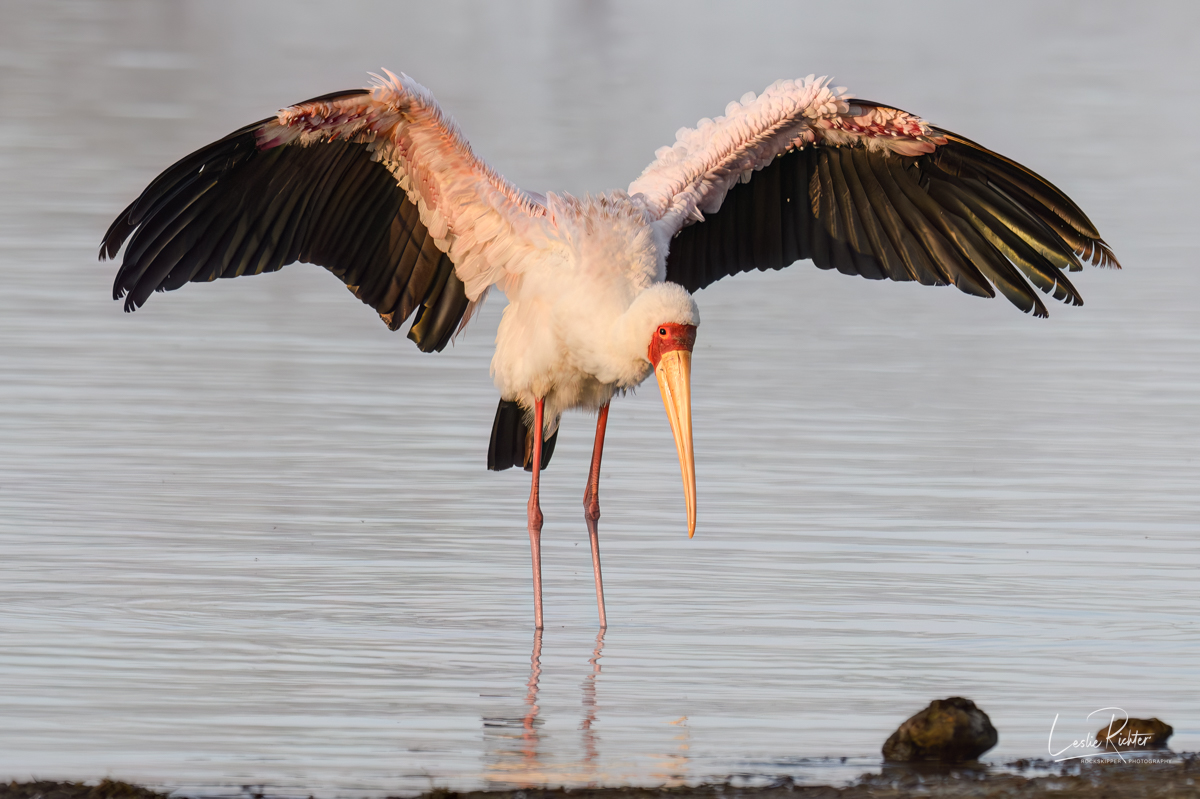
Wildlife Photography at Lake Nakuru: The Yellow-billed Stork

Lake Nakuru National Park, nestled in Kenya’s Great Rift Valley, is one of Africa’s most celebrated wildlife destinations — famed for its incredible birdlife and shimmering alkaline waters that attract tens of thousands of flamingos, pelicans, ibises, herons, and storks year-round. Among these waterbirds, the Yellow-billed Stork (Mycteria ibis) stands out as a graceful and captivating subject for photographers and nature lovers alike.

On the muddy shallows and marshy edges of Lake Nakuru, the Yellow-billed Stork can often be seen wading quietly, its long yellow bill probing the shallow water for fish, frogs, and other aquatic prey. The bird’s striking white plumage contrasted with black flight feathers and that iconic yellow bill makes it a rewarding subject for wildlife photography.

Photographers visiting the lake frequently capture these elegant storks in natural light, either alone or moving slowly in small groups along the shoreline. One such photograph showed a Yellow-billed Stork standing serenely at the water’s edge, the curved bill poised as if painted against the backdrop of the glittering lake — a perfect example of the park’s rich biodiversity.
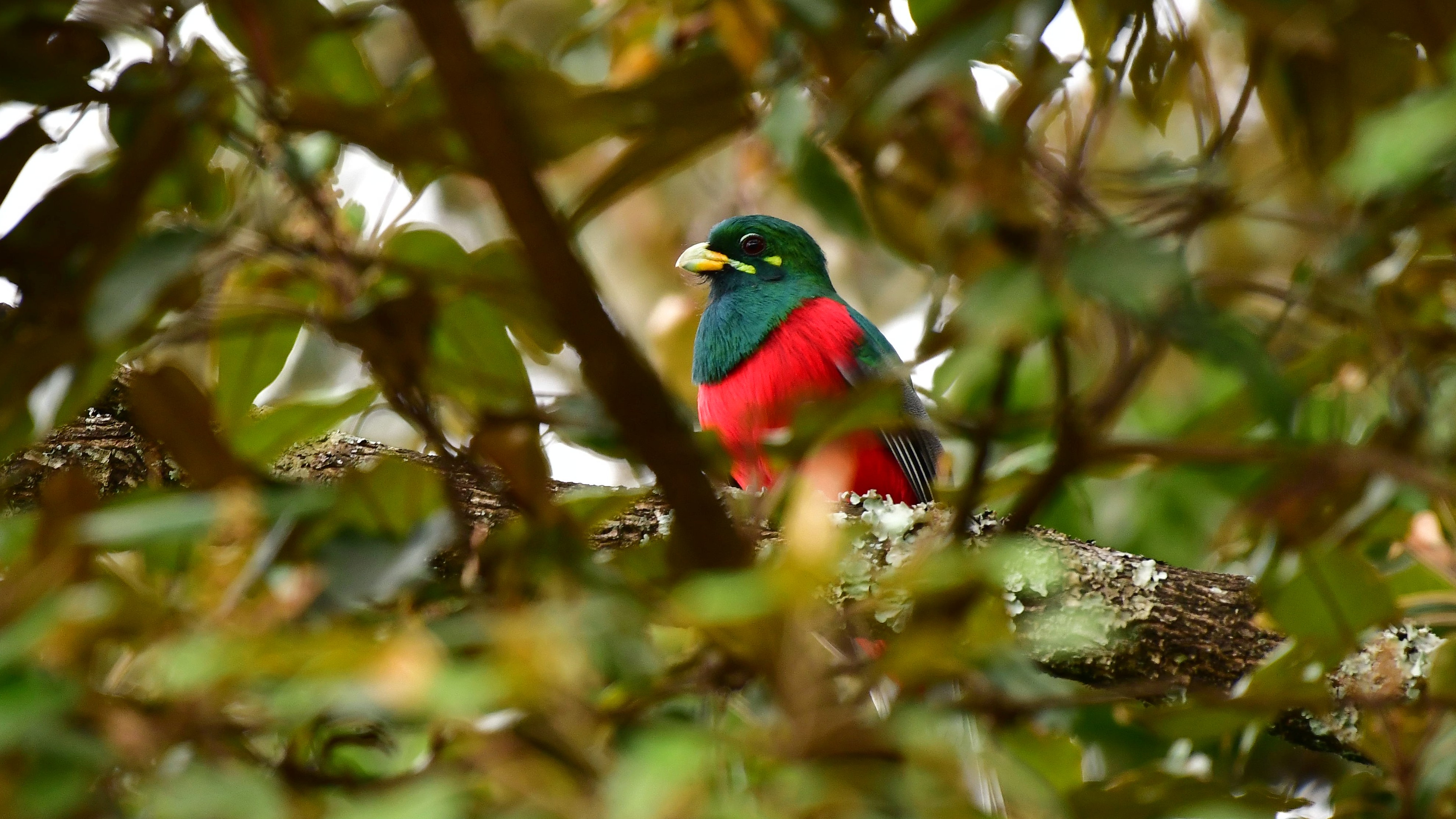
The Narina Trogon:A Jewel of the African Forests.

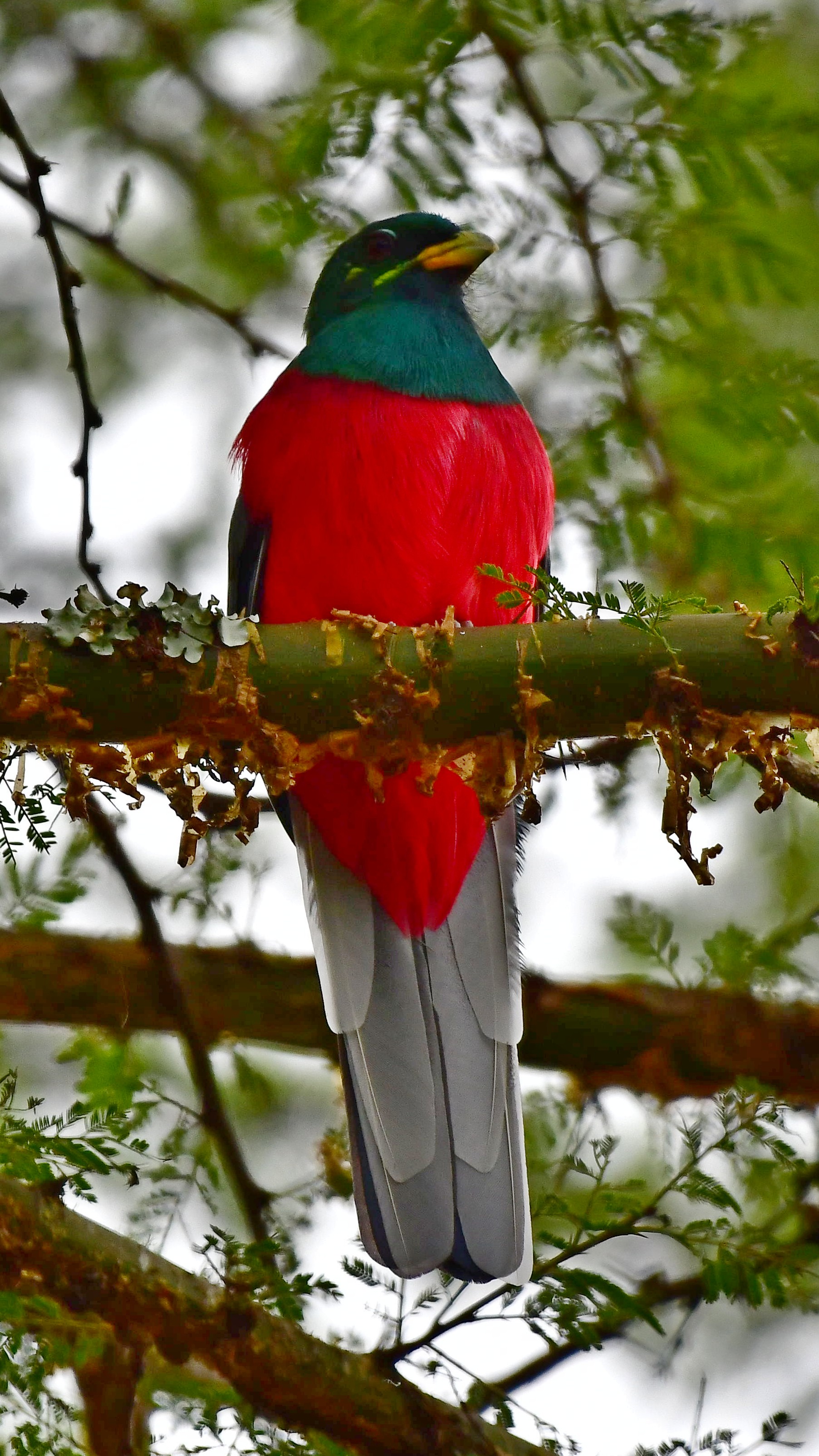
The Narina Trogon (Apaloderma narina) is one of Africa’s most striking and elusive bird species. Known for its vibrant plumage and shy behavior, the Narina Trogon is a member of the Trogonidae family, a group of birds renowned for their colorful appearance and preference for forested habitats. Found across a wide range of sub-Saharan Africa, this bird represents both the beauty and biodiversity of the continent’s woodlands and forests.

The Narina Trogon is a medium-sized bird, measuring about 32 to 34 centimeters in length. It is sexually dimorphic, meaning that males and females have different plumage. Males are particularly eye-catching with a vivid green back and head, a bright crimson belly, and a subtle iridescence that shimmers in sunlight. Females, though less vibrant, are beautiful in their own right, featuring olive or brownish-green upper parts and a duller red belly. Both sexes have a distinctive blue eye-ring and a long, graduated tail, adding to their elegant appearance.

This species has a wide but patchy distribution throughout Kenya. It inhabits a variety of forest types, including tropical rainforests, montane forests, and riverine woodlands. The Narina Trogon prefers dense vegetation and is typically found in areas where tall trees and thick undergrowth provide both food and cover. Despite its broad range, it is rarely seen due to its secretive nature and excellent camouflage among the foliage.

The Narina Trogon is a symbol of the hidden treasures that Africa’s forests still hold. With its brilliant colors, elusive habits, and vital role in forest ecosystems, it reminds us of the importance of preserving natural habitats. Though not endangered, its reliance on undisturbed forest environments makes it vulnerable to human activity. Understanding and appreciating such species is the first step toward ensuring their survival for generations to come. Keep birding!

The Great Blue Turaco: Africa’s Vibrant Forest Jewel

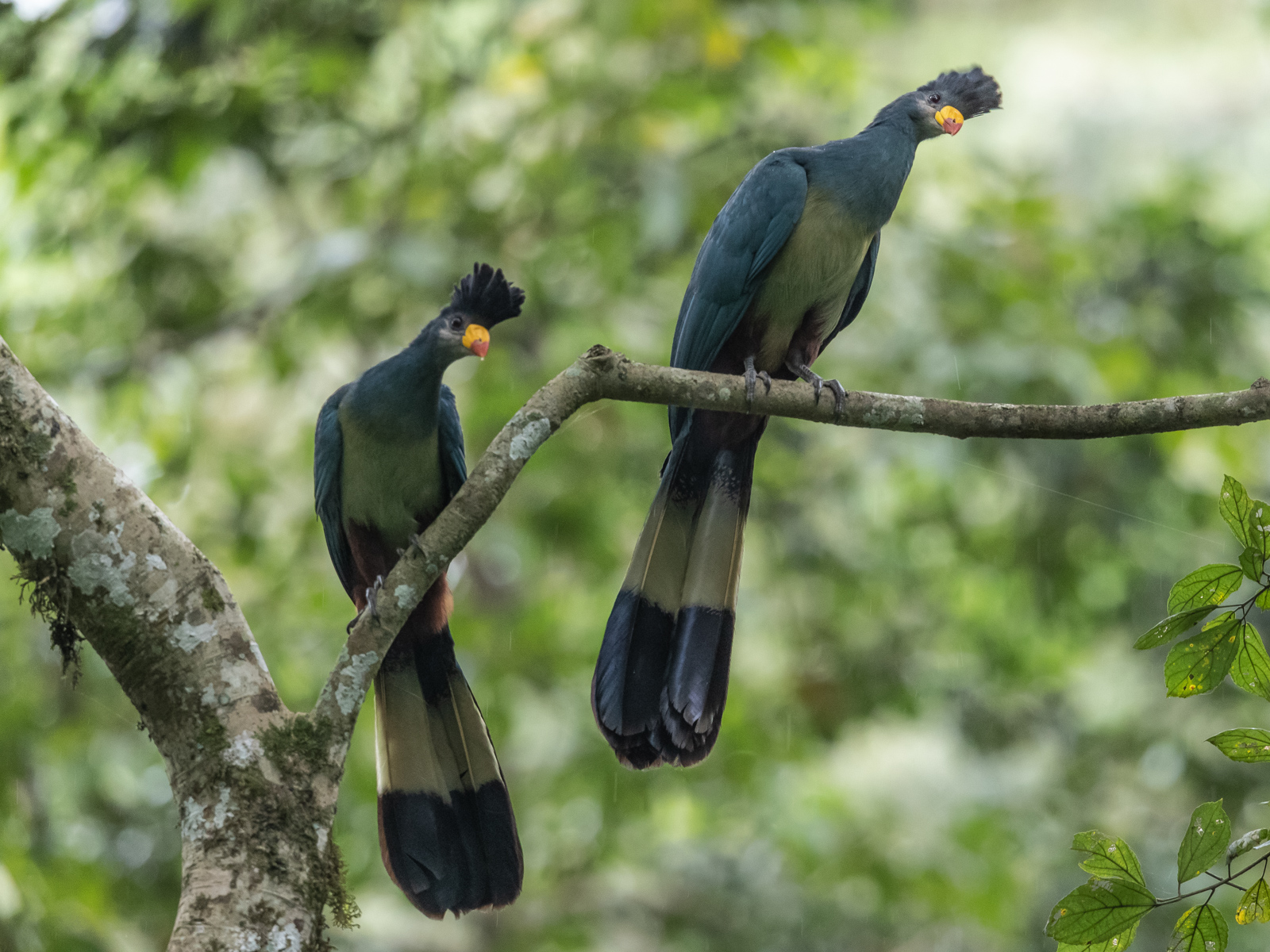
Great Blue Turaco.Photo by Juhani Vilpo

Turacos are medium-sized arboreal birds endemic to sub-Saharan Africa, where they live in forests, woodland and savanna.

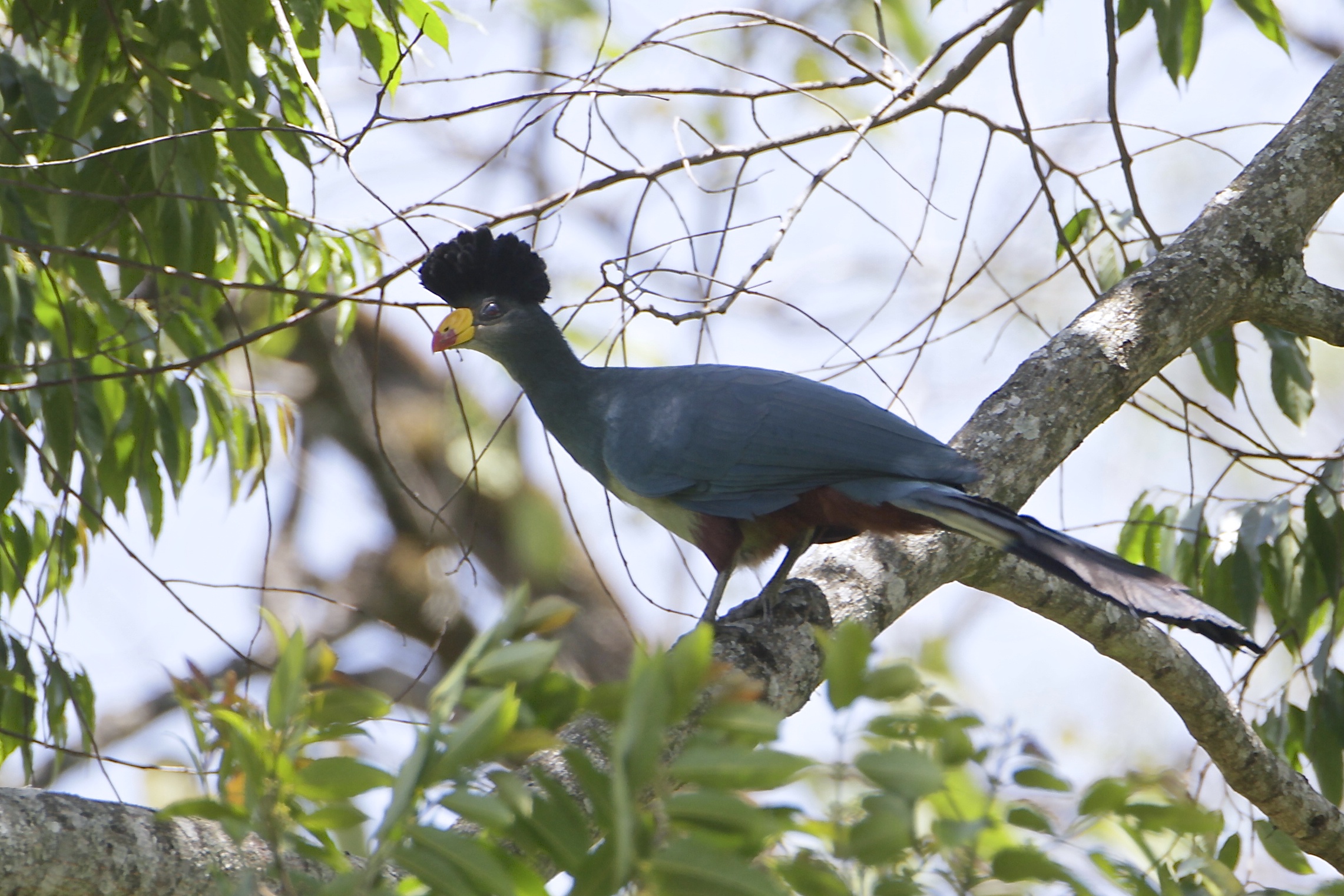
The Great Blue Turaco (Corythaeola cristata) is one of the most striking and charismatic birds of the African rainforest. With its vibrant colors, distinctive crest, and graceful movements, this bird holds a special place in the biodiversity of Central and West Africa’s tropical forests. Often called the “blue beauty of the canopy,” the Great Blue Turaco is not only a marvel of nature but also a key player in its ecosystem.

Great Blue Turaco.Photo by Jan F.L Van Duinen

Turacos acquire their crimson wings through specialized pigments called turacin, which contain copper. These pigments are unique to turacos and are responsible for the vibrant red coloration in their wings. Unlike most birds where red coloration is derived from carotenoids, turacos have these distinct pigments.Turacos spend most of their time in the forest canopy where they can be found in groups of up to 30 individuals.

The Great Blue Turaco is more than just a beautiful bird—it’s an important ecological player and a symbol of the rich biodiversity of African rainforests. Protecting its habitat ensures not only the survival of this stunning species but also the health of countless others that share its environment. As deforestation and habitat fragmentation continue to threaten tropical ecosystems, birds like the Great Blue Turaco remind us of the urgent need for conservation and sustainable land use.Keep birding!

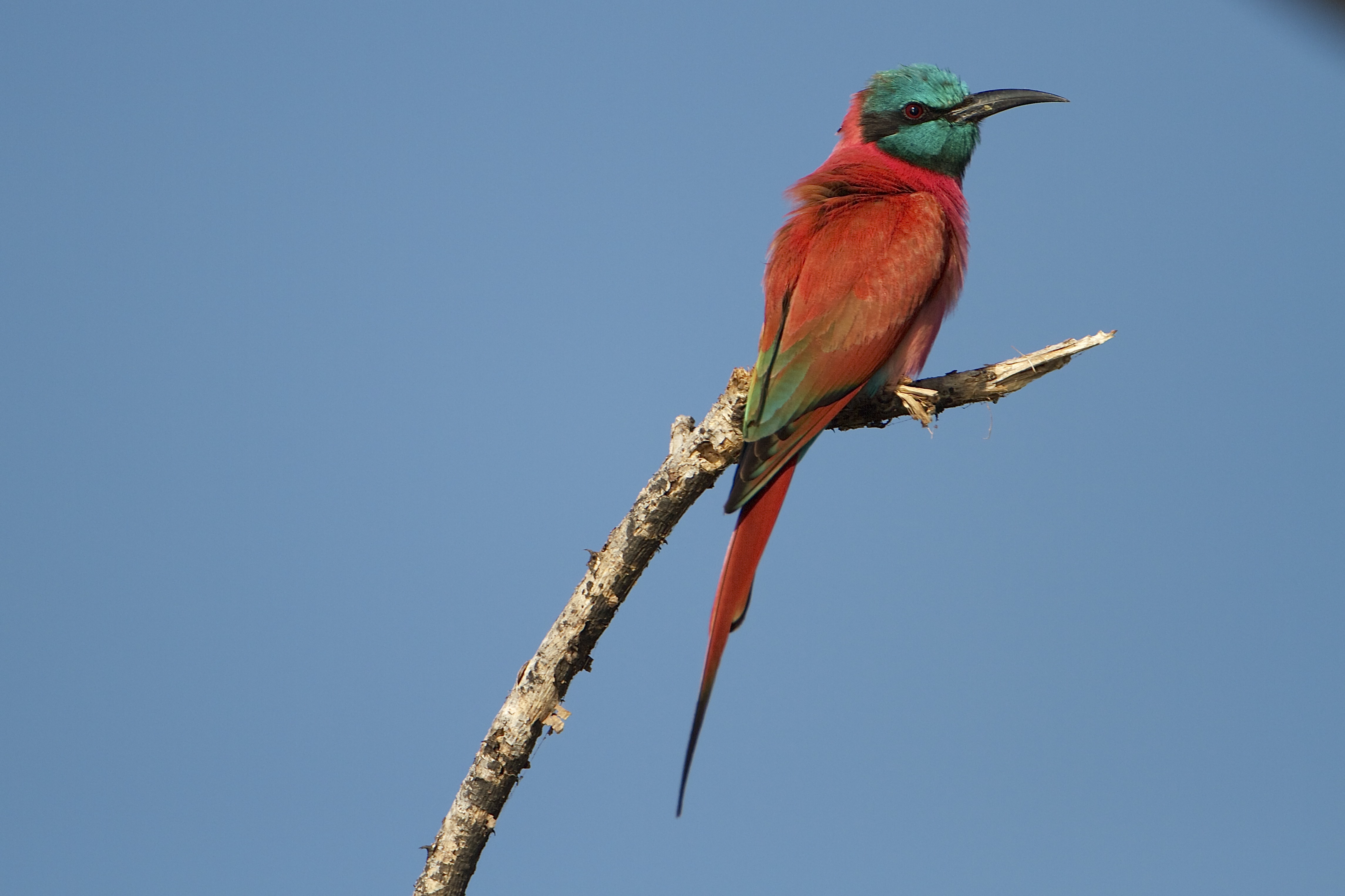
Northern Carmine Bee-eater (Merops nubicus).

Northern Carmine Bee-eater,Lake Baringo,Kenya.

Northern Carmine Bee-eater are a brightly colored and easily distinguishable birds.Adults are rosy carmine-pink with a bright,light blue rump and upper and under tail coverts.The head is iridescent green-blue with a black eye-line,throat and beak. This species is sexually monomorphic.

In Kenya,they are normally seen around September-November as passage migrant to their breeding ground further north-west of Africa.Its habitat is found in wide range of African savanna,including desert,woodland and northern edge of rainforest zones, although avoiding densely wooded areas.They also frequent agricultural fields of open pasture,floods-plains, and marshes ,and have occasionally been seen searching for prey over large bodies of water.

The local birding site likely to see this species while on a birding trip to kenya includes;Lake Baringo,Tsavo East,Sabaki river estuary and the Kenyan coastal stretch.

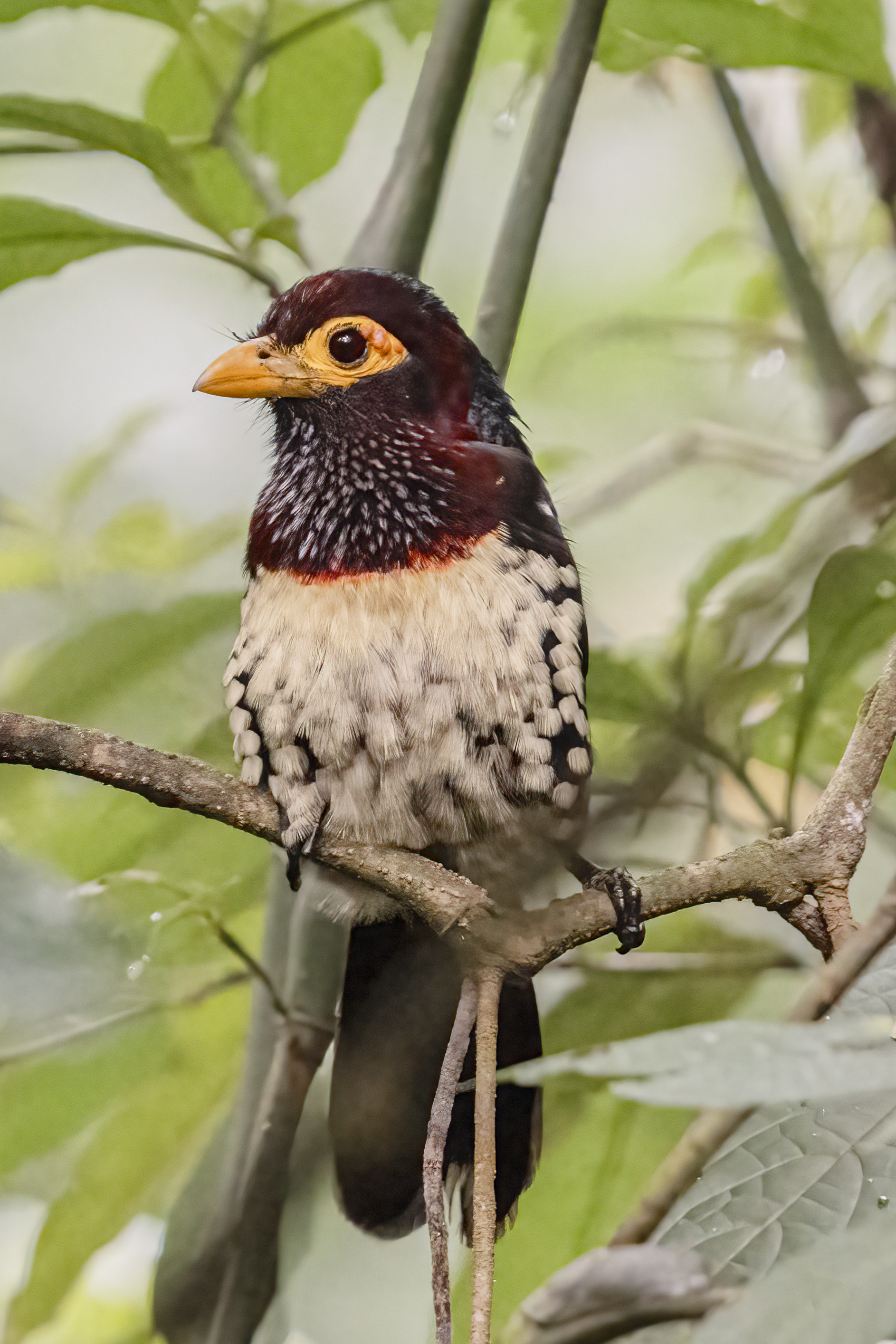
Eastern Yellow-billed Barbet (Trachyphonus purpuratus).

Photo by Peter Cavanagh

The Eastern Yellow-billed Barbet is a species of bird found primarily in sub-Saharan Africa.typically found in open woodlands and Forest edges. It prefers areas with a mix of trees, often near rivers or streams, where there is plenty of cover and food resources.Perhaps the most striking feature is its bright yellow bill, which is large and robust. The plumage is a mix of colors, with greenish,yellow, and brownish tones. The head is marked with a dark crown, and the body has a blend of green, yellow, and blackish hues.

Both males and females look similar, with no significant size or color differences.This omnivore feeder often forages alone or in pairs. It feeds by pecking at fruit or insects on the trunks and branches of trees.While often seen alone or in pairs, Yellow-billed Barbets can sometimes form small flocks, especially during non-breeding seasons.These birds have adapted well to a variety of habitats, even tolerating some degree of human-modified environments like gardens or plantations.The Yellow-billed Barbet is an excellent example of a resilient, colorful species that contributes to avian diversity of Africa’s tropical rain forest..

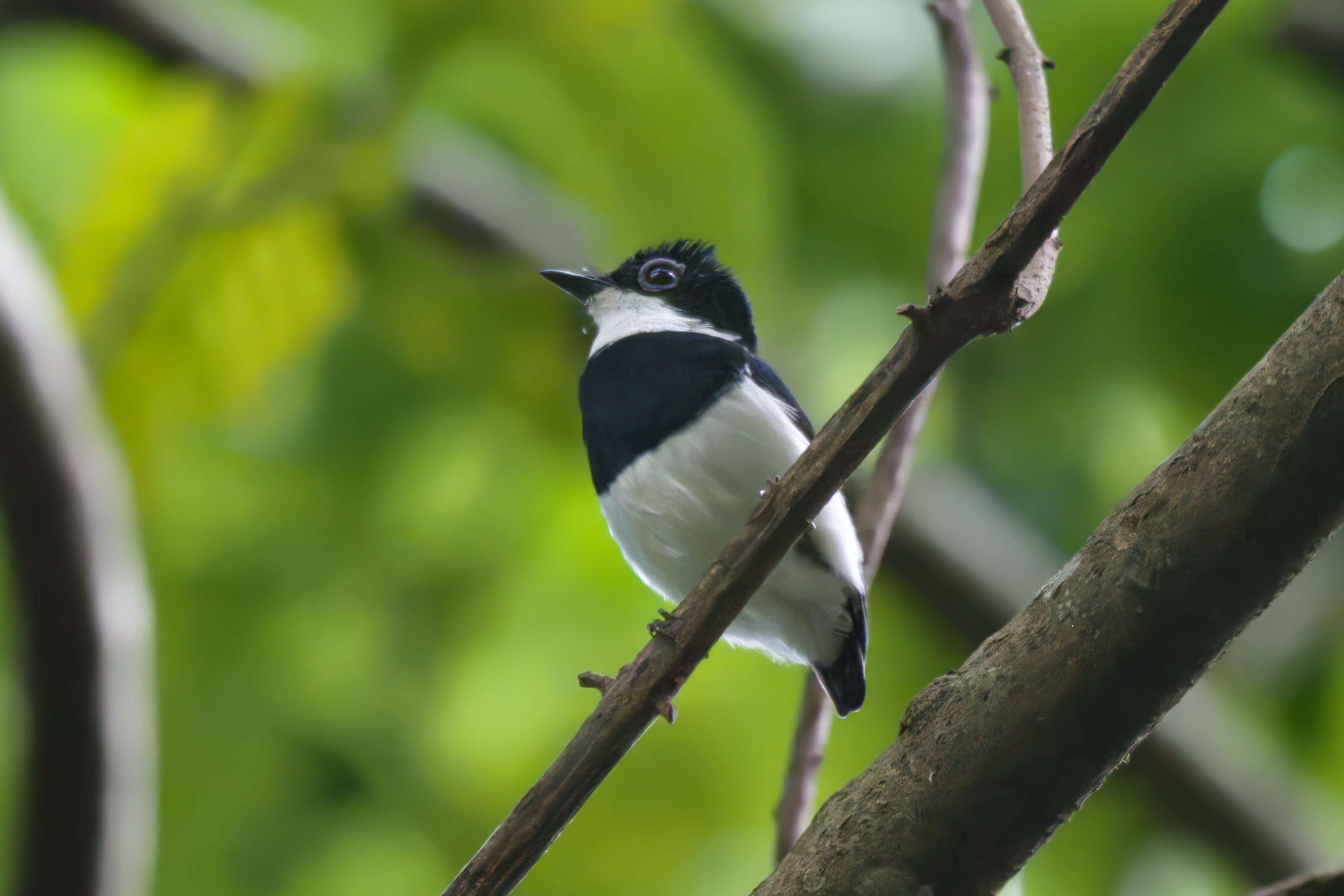
Chestnut Wattle-eye,Infinitesimal  Splendor of the Tropical Rain forest of Western Kenya!

Photo by Giuseppe Citino.

Wattle-eyes belongs to the family Platysteiridae.This family also carries Batises and Shrike-flycatcher.Wattle-eyes are dimorphic and most of this birds derive their name from the more appealing females.

Other than Chestnut Wattle-eye, we also have Yellow-bellied ,Jameson’s and Brown-throated Wattle-eyes in Kakamega forest .On a very productive day,all the fours species can be seen.Their presence is detected by their behavior of audibly flicking their wings and snapping their beaks.

The photograph appearing above was taken by my client Giuseppe Citino.

White-chinned Prinia also kown as White-chinned Warbler (Schistolais leucopogon)

Photo By Juhani Vilpo

White-chinned Prinia is one of the two species found in Kakamega tropical rain forest,the other one frequently recorded there is Banded Prinia.Both species are found in thick understory of forest,overgrown cultivation,and edge habitats.This species has unusual broad-tailed with a white throat,it is also important to note the black cheek and white in the outer rectrices.

Usually the species is found in small very actives groups always continuously moving inside the vegetation cover exposing themselves once in a while.When the birds are singing,they clearly line-up on an exposed horizontally lying branches proving excellent opportunities for photography.

In Kenya the species is only found the remnant patches of tropical rain forest of Kakamega and South Nandi,both in Western Kenya.

Blue-headed Bee-eater(Merops muelleri).

Photo By Mario Liebshner

Bee-eaters are beautiful birds to observe in the field, but the exhilaration among birders on sighting of a Blue-headed bee-eater is remarkable .Really attractive Bee-eater. This species is strictly restricted only to Kakamega and South Nandi Forest in Kenya. However, other isolated populations of this species are found in West Africa as well.

This brilliantly colored Bee-eater can be encountered on any birding walks around Kakamega forest with some efforts, local guides will be of great help, although you can really run into it with some luck.

Usually Bee-eaters are gregarious, but not Blue-headed Bee-eater, I have not recorded more than three individuals at a go. They are arboreal birds that perch on exposed branches.

Little Weaver(Ploceus luteolus)

Photo by Joseph Aengwo

Kenya is known for its rich diversity in weavers species in East Africa with over 60 species already described.Little weaver is one of the smallest weavers and is found in arid and semi-arid areas of North-western park of Kenya.Breeding little weaver plumage has a black forecrowned,face and throat surrounded by bright yellow,with out any of the saffron wash typical of larger weavers.The only species which is very similar to it is the Slender-billed weaver ,but can easily be separated by the longer and slender billed and its habitat is restricted to areas adjacent to Lake Victoria.

The breeding behaviour of Little weaver is pretty unique compared to other weavers who are majorly colonial breeders.Little Weaver is monogamous and solitary nester and often prefers reusing its nesting site over and over again.

Best birding sites to see them in Kenya includes;Samburu,Buffalo spring and Shaba game reserve,Lake Turkana,Kongelai,Kerio Valley,Lake Bogoria and Baringo.

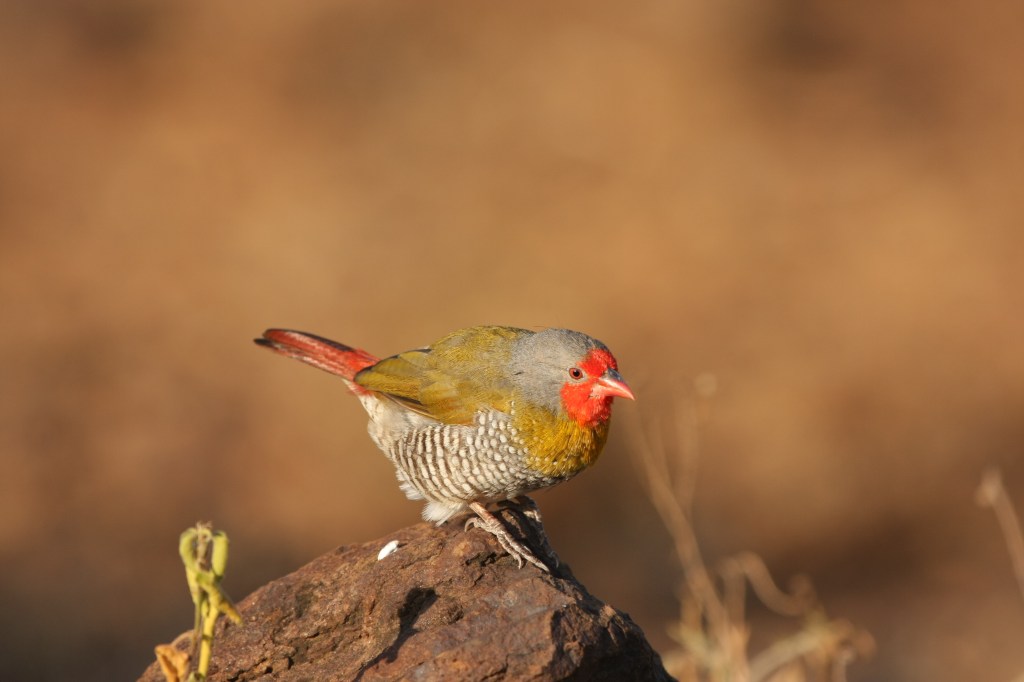
Green-winged Pytilia, A Semi-arid Savanna Striking Waxbill.

Whenever you out birding in any arid and semi-arid habitat in Kenya,there is one species that will take your breath away on sight,a Green-winged Pytilia.Most of the time,it forages on the ground and prefer grassland habitat with plenty supply of seeds. You can hear it, though, if you’re careful: the high-pitched cheeps in the foreground will always betray their presence.

Photo by Joseph Aengwo

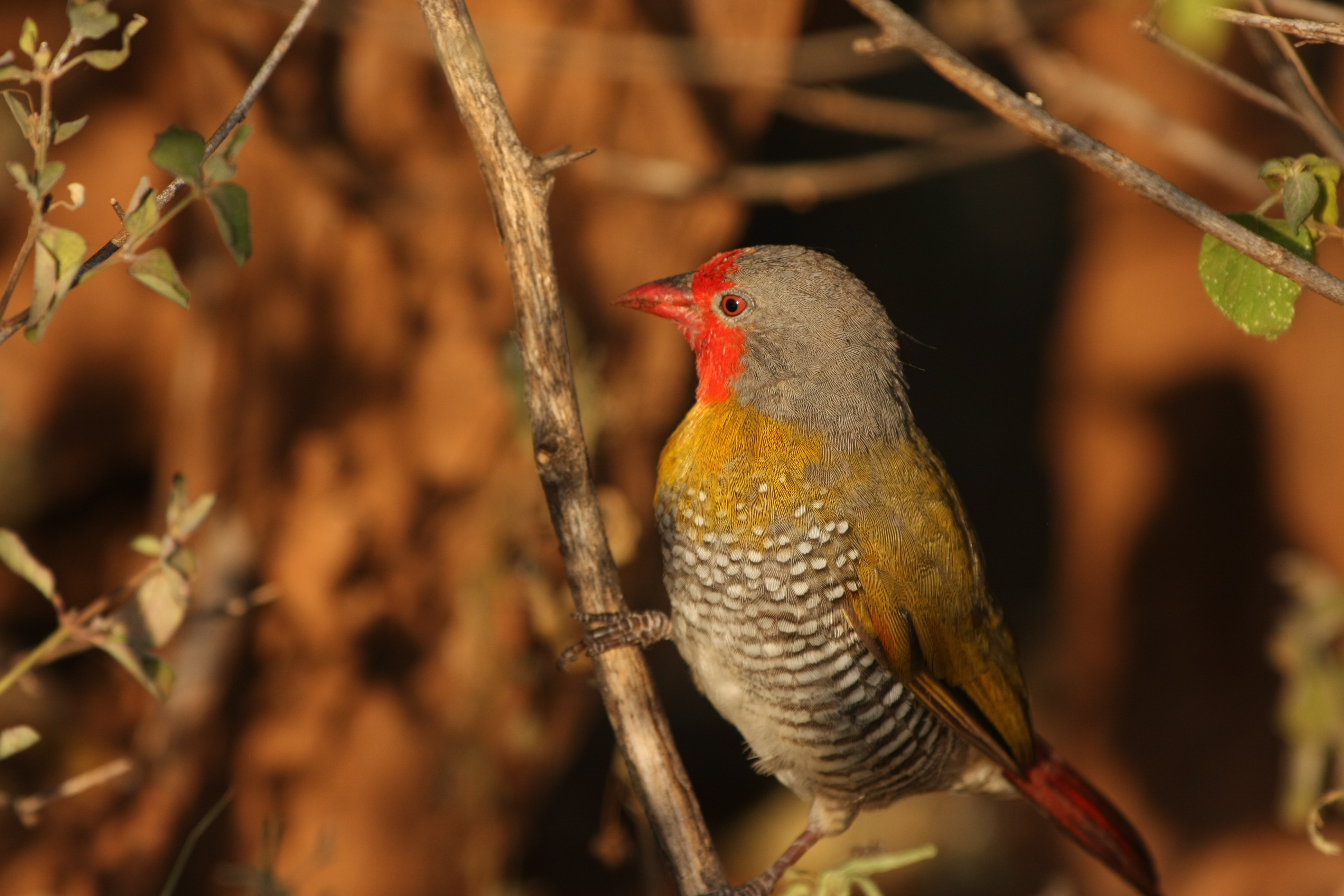
The species also known as Melba finch are always seen in pairs or with a feeding party combined with Purple Granadier,Red-billed Firefinch together with several species of weavers.

Photo by Joseph Aengwo

In Kenya, this species is common in Samburu,Buffalo Springs national park,Amboseli national park,Lake Baringo and Tsavos national park.