Broad-billed roller (Eurystomus glaucurus)

Broad-billed Roller , Eurystomus glaucurus .

The Broad-billed roller is a beautiful bird to watch during your nature travel in Kenya, and its strikingly yellow billed catches your attention instantly .It  is found in areas around Lake Nakuru national park, Mt.Kenya, Kakamega extending south to Masai Mara game reserve.

Here it is fairly common in savanna, as well as clearings in woodlands. It is a specialist predator, mainly eating swarming termite and ants, as well as beetles and bugs. It mainly nests in unlined cavities in trees 5-15 m above ground. It also nests in holes of barns . It lays 2-4 eggs, timing laying to coincide with the emergence of insects after rain.

Intra-African breeding migrant, mainly breeding in southern Africa before moving north in the non-breeding season. Flocks start to arrive in southern Africa in September, leaving in the period from December to April.

It mainly nests in unlined cavities about 5-15 m above ground, usually in a tree but occasionally in a barn.
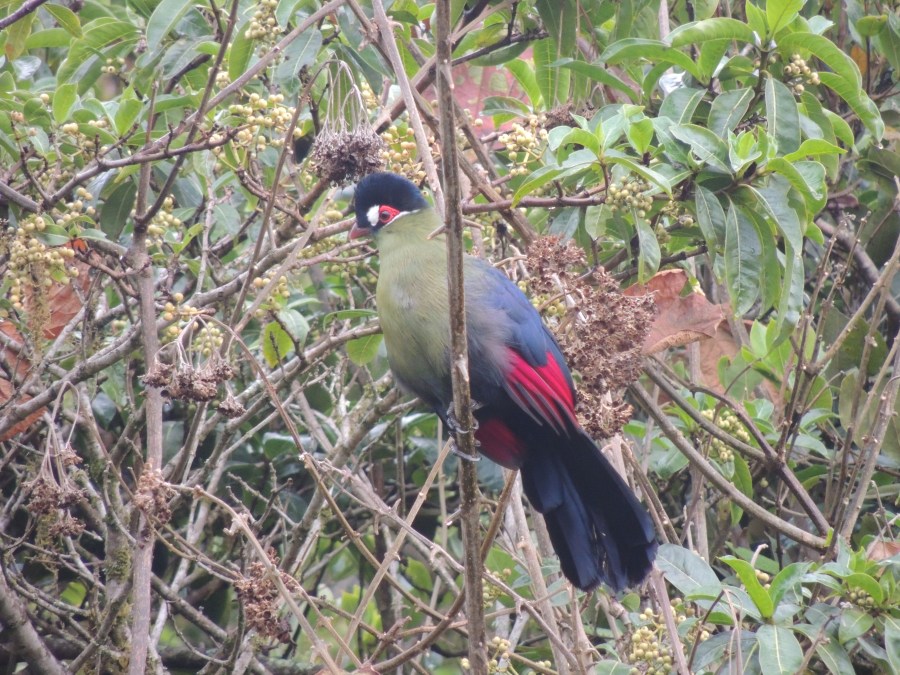
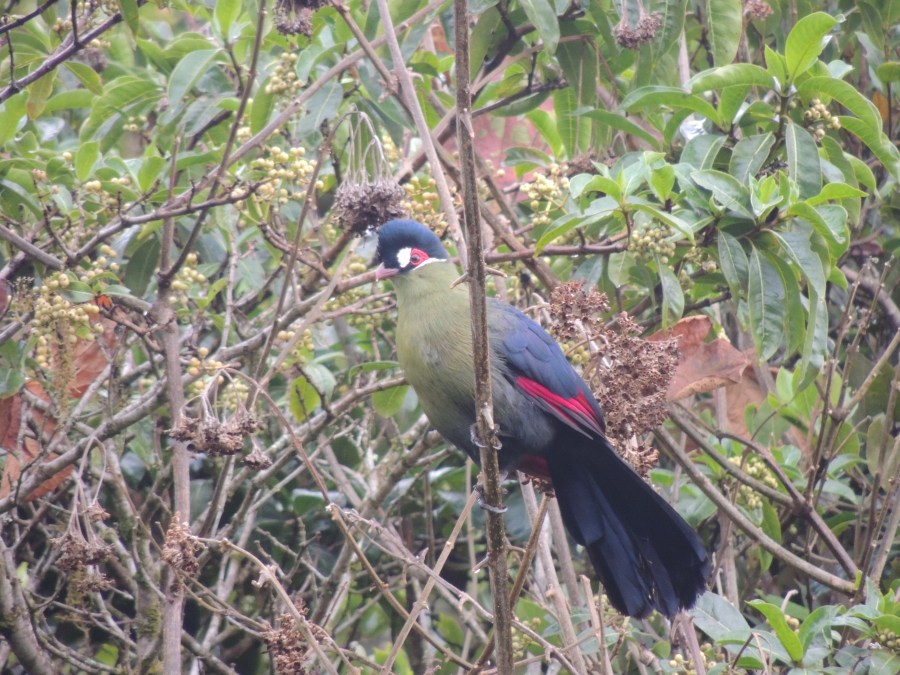
Hartlaub’s Turaco (Tauraco hartlaubi)

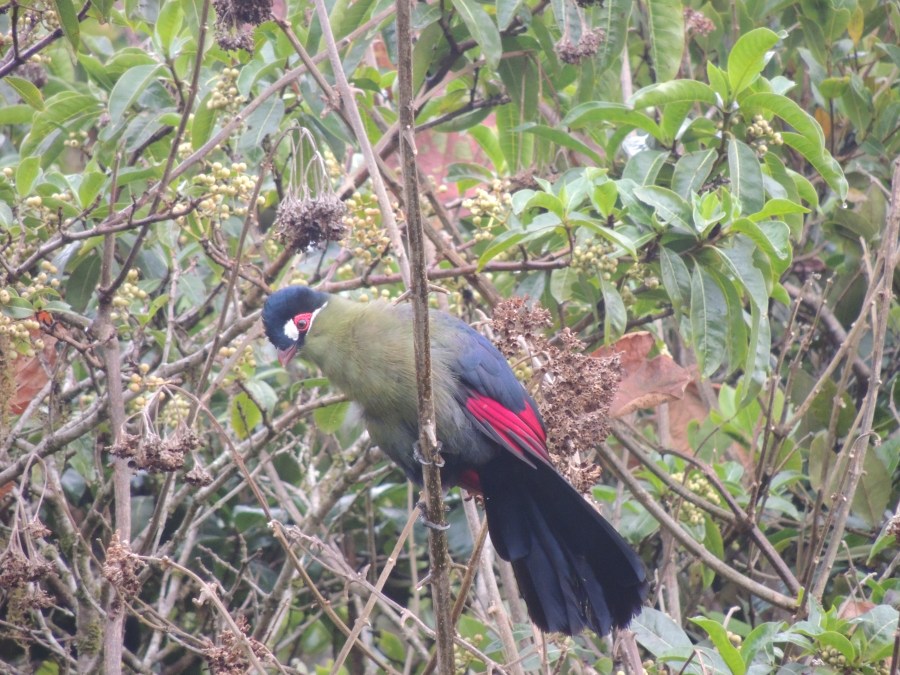
DSCN0894Hartlaub's TuracoHartlaub's Turaco photo

Hartlaub’s Turaco is a beautiful bird to watch!!! it will surely take your breath away if at all you are seeing it for first time. Hartlaub’s  Turaco dominates the montane forest of Kenya with its range slightly extending to Northern Tanzania and Western Uganda in East Africa.

Hartlaub’s turaco is a spectacularly patterned, medium-sized bird with a strong, curved bill, short, rounded wings and a rather long tail. The vivid plumage of Hartlaub’s turaco, is a product of two unique copper pigments, unknown in any other bird family, or indeed in any other animal group. The adult has a bushy, blue-black crest and a conspicuous red eye-ring, with a distinctive white patch immediately in front of the eye and a white line beneath the eye. Much of the upper body, including the neck, mantle, throat and breast is silky green, while the lower back, folded wings, and tail are an iridescent violet-blue, Visible only in flight, the flight feathers are a striking crimson. Like all Turacos, the feet of Hartlaub’s turaco have a special joint that allows the outer toe to move either forward or backward, an attribute that enables these birds to move acutely through vegetation.

Best location to look for this species in Kenya includes, Mt. Kenya forest reserve, Aberdare National Park, Nairobi National Park, Taita and Tugen Hills. In Kenya , other than the Hartlaub’s  Turaco, we have have Great Blue and Black-billed Turaco restricted to Kakamega tropical rain forest. Others are Ross’s, Purple-crested, Schalow’s, and Fisher’s Turaco.


Northern crombec (Sylvietta brachyura)

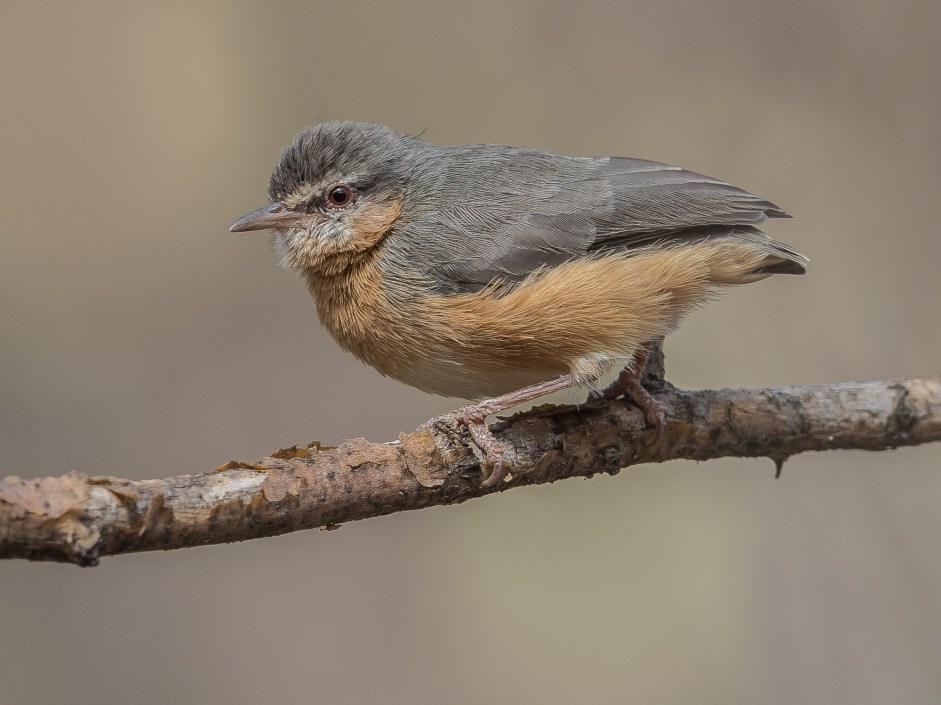
Northern Crombec (Sylvietta brachyura)_20180110_082131_75702
Photo by Juhani Vilpo

Northern Crombec is a species of African Warbler. This species is listed on IUCN red list as a near threatened species, but is evaluated as least concern. This species as an incredible short tailed, that sometimes you might tempted to assume that is has no tail. This crombec construct deep pocket shaped nests suspended from a branch and is mostly made of cob web materials .

This is commonly seen alone or in a small group of upto 5 species, but they also found feeding in a mixed flock of species. In Kenya it can easily be seen in arid and semi-arid areas of Samburu national reserve, Lake Baringo, Lake Bogoria, Tsavo East and West national park.

Orange-breasted Bushshrike (Telophorus sulfureopectus)

Sulphur-breasted Bush-shrike,Malaconotus
sulfomiopectus,Maanzoni.

Also know as Sulphur-breasted Bush shrike is an easy specie to pick in the field especially if you are birding the dry country side of Kenya, Uganda, Tanzania and Ethiopia. It prefers the canopy of acacia tortilis, but its presence is always betrayed by its unmistakable  call.   This Bush shrike main diet is invertebrates.

Another interesting natural history fact about this specie is that it is monogamous, it will only seek a new breeding mate  in the event that his partner dies. The bird lays eggs which are green in colour and number between 1-3. A real beauty in the field.

violet-backed starling (Cinnyricinclus leucogaster)

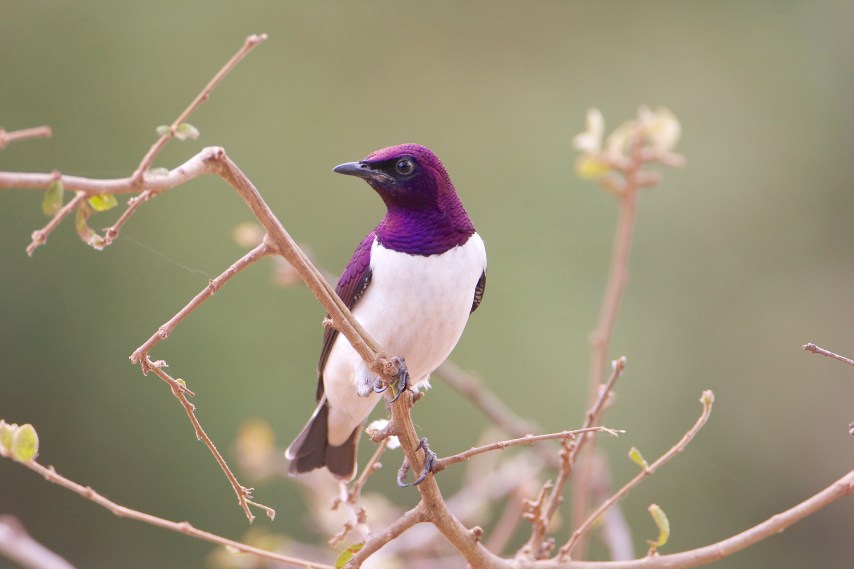
Violet-backed Starling.Maanzoni.
Photo@Jan F. Van Duinen

The Violet-backed Starling  belongs to the family of birds classified as Sturnidae. This species, also known as the Plum-coloured Starling or Amethyst Starling, is the smallest of Kenya starlings, reaching only about 18cm in length. It is a successful breeder, and is fortunately not listed as a threatened species.

The sexes are strongly sexually dimorphic, meaning that there is a distinct difference in the appearance of the male and female. The breeding male is brilliantly coloured, with feathers an iridescent shining plum violet colour along the length of is back, wings, face and throat, contrasting with bright white on the rest of the body. Females (and juveniles) are a streaky brown and buff colour, and can easily be mistaken for a thrush.

Less noisy than other starlings, this bird is a monogamous species, and will remain so unless its mate dies. Under those circumstances it will seek a new mate in replacement. These starlings are normally seen in small flocks in summer, just before the breeding season when they will break off into pairs to nest.

Violet-backed starlings will nest in cavities such as tree holes high off the ground, holes in river banks, even in old hollow fence posts, lining the nests with dung, leaves and other plant material. They have been known to reuse nests in successive breeding seasons

In Kenya, they are found a long riverine vegetation in big dead tree trunks in Machakos, the low areas of Tugen hills, Lake Nakuru and Nairobi national park.


Red-billed oxpecker (Buphagus erythrorhynchus)

Red-billed Oxpecker.Buphagus erythrorhynchus.
Photo taken by Jan Van Duinen

Oxpeckers will sit on certain mammals and target the ticks and other small parasites found on the skin and in the coats of these animals. Oxpeckers’ bills are especially adapted to their lifestyle. The bills are pointed as well as laterally compressed which helps the birds work their way through the coats of the mammals in a comb-like fashion and to pry out well embedded parasites.

The birds are also known to help clean-up open wounds. What they are after around the open sore is the rotting wound tissue. Oxpeckers are quite efficient at cleaning these lesions.

Their legs are also well adapted to a life spent perched on mammals. The legs are shortened to enable them to grip onto their moving hosts. Powerful toes and sharp nails further benefit the Oxpeckers in their quest to feed and as a spin off keep their mammal hosts’ parasite numbers under control.

The birds are also known to help clean-up open wounds. What they are after around the open sore is the rotting wound tissue. Oxpeckers are quite efficient at cleaning these lesions.

Their legs are also well adapted to a life spent perched on mammals. The legs are shortened to enable them to grip onto their moving hosts. Powerful toes and sharp nails further benefit the Oxpeckers in their quest to feed and as a spin off keep their mammal hosts’ parasite numbers under control.

The Redbilled oxpecker Buphagus erythrorhynchus, is one of only two species of birds in the family Buphagidae. It is a fairly common bird, found in the savannah grassland and semi-arid regions Kenya. The only other species in the Buphagidae family, the yellowbilled oxpecker, is far less common.

Redbilled oxpeckers only occur where there are animal hosts for the species of insects – mostly ticks – that the birds eat. The hosting animals are generally antelope like impala or kudu, or larger mammals such as zebra, giraffe, buffalo and rhino. In farmland areas, the hosts can also be domestic stock such as cattle. Elephants and a few species of small antelope will not tolerate the birds at all.

The Red-billed Oxpecker is a starling sized-bird. Although it is a fairly plain olive-brown with creamy under-parts, the bird is very easy to identify. Adults have totally red beaks and distinctive yellow rings around their bright red eyes. They have strong legs and long, particularly sharp claws which enable them to cling onto the sides and backs of their hosts at precarious angles. They also have short, stiff tails which are used as props. Aside from the colour, it is in the shape and action of their beaks that one sees the biggest differences between the two oxpecker species. The yellow billed oxpecker uses its stout beak to pluck parasites off its hosts. The red billed cousin uses its slimmer, flatter beak in a scissor-like motion to remove its meals. This same sharp beak is also used to peck at any sores or scabs on the host.

Grey-Headed Bush-Shrike (Malaconotus blanchoti)

Grey-headed Bush-shrike is the biggest Bush-shrike in our region. It is a very colorful bird to watch and know to be flying low in the vegetation, when hunting. It generally occupies wooded areas, especially Miombo, Acacia and riverine woodland, but it occasionally moves into suburban gardens and alien tree plantations adjacent to indigenous forest. Is presence easily know by is loud call which which normally not mistaken when known.

Grey-headed Bush-shrike.
Photo by Jan Van Duinen

In Kenya, is a widely distributed bird and can be seen in Samburu, Buffalo and Shaba game reserve, Masai Mara, Nairobi national park, Lake Baringo, Nakuru, Bogoria and Magadi road.

Yellow-breasted Apalis (Apalis flavida)

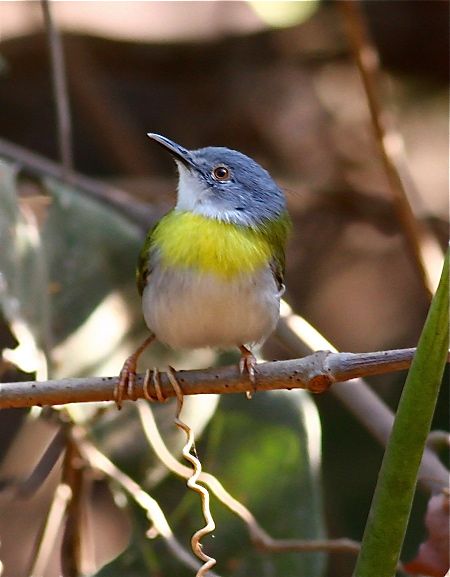
album_pic-10.php

Yellow-Breasted Apalis is the commonly encountered Apalis in the field especially if you are birding arid-semi arid areas of Kenya. Its widespread distribution makes it an easy target if you are also birding mid-altitude elevation and in this context it can be true for areas like Nairobi national park, Naivasha, Lake Nakuru, Masai Mara and Amboseli.

The much sort after Apalis is the Karamoja Apalis Apalis karamojae which is a range-restricted species, is found in Masai Mara national Reserve where acacia drepanolobium dominate the vegetation. Taita Apalis Apalis fuscigularis is a globally threatened species is endemic to Taita Hills in South East Kenya. Grey, Chesnut-throated and Black-throated Apalis are easy to pick species in montane dominated habitat of central Kenya e.g Mt.Kenya, Aberdare, Mau forest. While Buff-throated and Black-collared Apalis is commonly recorded in Kakamega forest, the only remnant tropical rain forest patch in Kenya.


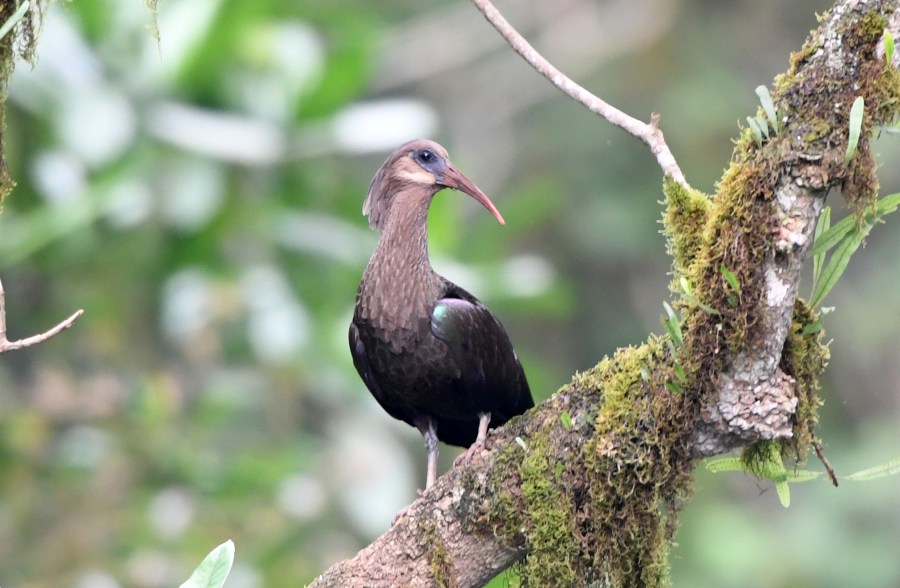
Olive Ibis (Bostrychia olivacea)

DSC_2253
Photo by Chin Tong Tan

African Green Ibis as it is mostly known is one of the most infrequent sighted among other species of Ibises we have in Kenya. Sacred, Hadada and Glossy Ibis are easy target to pocket. In Kenya, African Green Ibis is mostly restricted in Montane habitat of Mt.Kenya and Aberdare ranges. All my sighting of this species was in southern section of Mt.Kenya Forest Reserve mostly referred as Castle Forest, where Castle forest lodge is located.

They are mostly heard calling early in the morning and late in the afternoon where with luck you might be able to have some views of this incredible species. The bird photograph appearing above was taken at Castle Forest in June this year.

Kenya Big Year Birding with Arjan Dwarshuis

Arjan and Ethan 049

After Noah Strycker Big year in Kenya July Last year, Arjan Dwarshuis came for his Big Year in April 16-29 2016.His visit coincided with April rains and therefore,  everything was green and all the Whydahs,Bishops, Widowbirds and Weavers were all on their full breeding plumage. We were even lucky with some migrants on their way north. The trip was put together by African Birding Safaris and my friends Zarek Cocker and Stratton Hatfield were kind enough to have invited me to provided some guiding services to this experiences birder. joining Arjan in this trip  was Ethan Kistler from Birding Africa in South Africa, an exceptional birder who has done extensive birding in Democratic Republic of Congo, Rwanda, Uganda,Tanzania Ethiopia, South Africa and and Malawi. He was blessed with musical ears and for that reason we put him in judge of bird calls confirmation, a duty he diligently performed.

Our choice of destination included; Mt.Kenya, Shaba and Samburu game reserve, Aberdare National park, North Kinangop grassland, Lake Nakuru National park, Lake Baringo, Kerio Valley, Kakamega forest, Lake Victoria, Masai Mara national reserve, Tsavo West and East National park, Taita Hills and Arabuko sokoke forest, Mida Creek and Sabaki estuary

  In 16 days, we recorded 634 species, using our clement list, and some the highlights of the trip included; William’s Lark, Aberdare Cisticola, Sharpes Longclaw, Gray-crested Helmet Shrike, Boran Cisticola, White-crested and Black-billed Turaco, Blued-headed Bee-eater, African Broadbill, Yellow-crested Woodpecker, Amur Falcon, Karamoja Apalis, Bronze-winged Courser, Red-naped Bush-shrike, Sokoke Pipit and Sokoke Scops Owl. He is now in Uganda keeping up with the chase, and I wish him well, as you may know, Noah isn’t a pushover.