Turacos are medium-sized arboreal birds endemic to sub-Saharan Africa, where they live in forests, woodland and savanna.
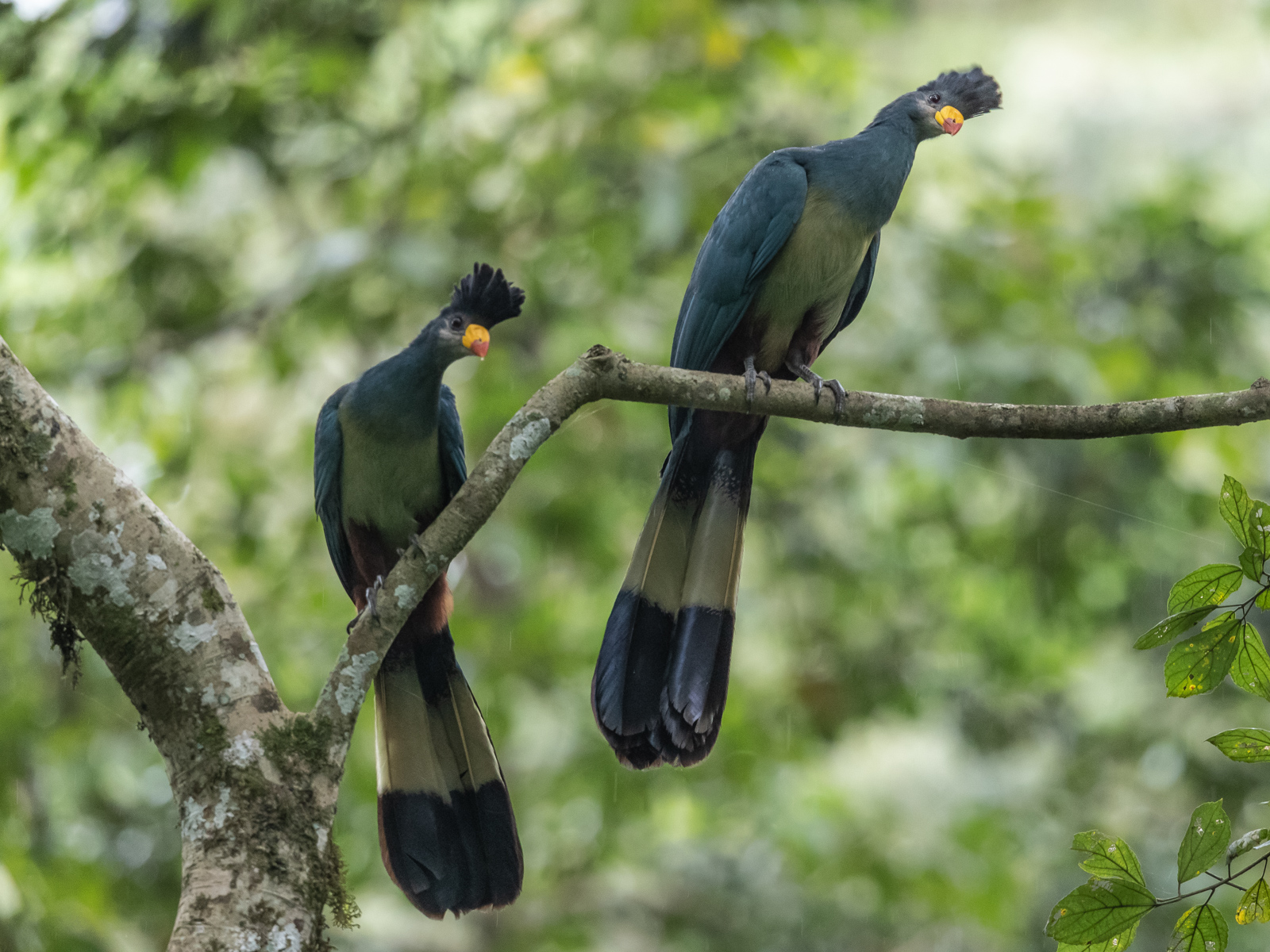
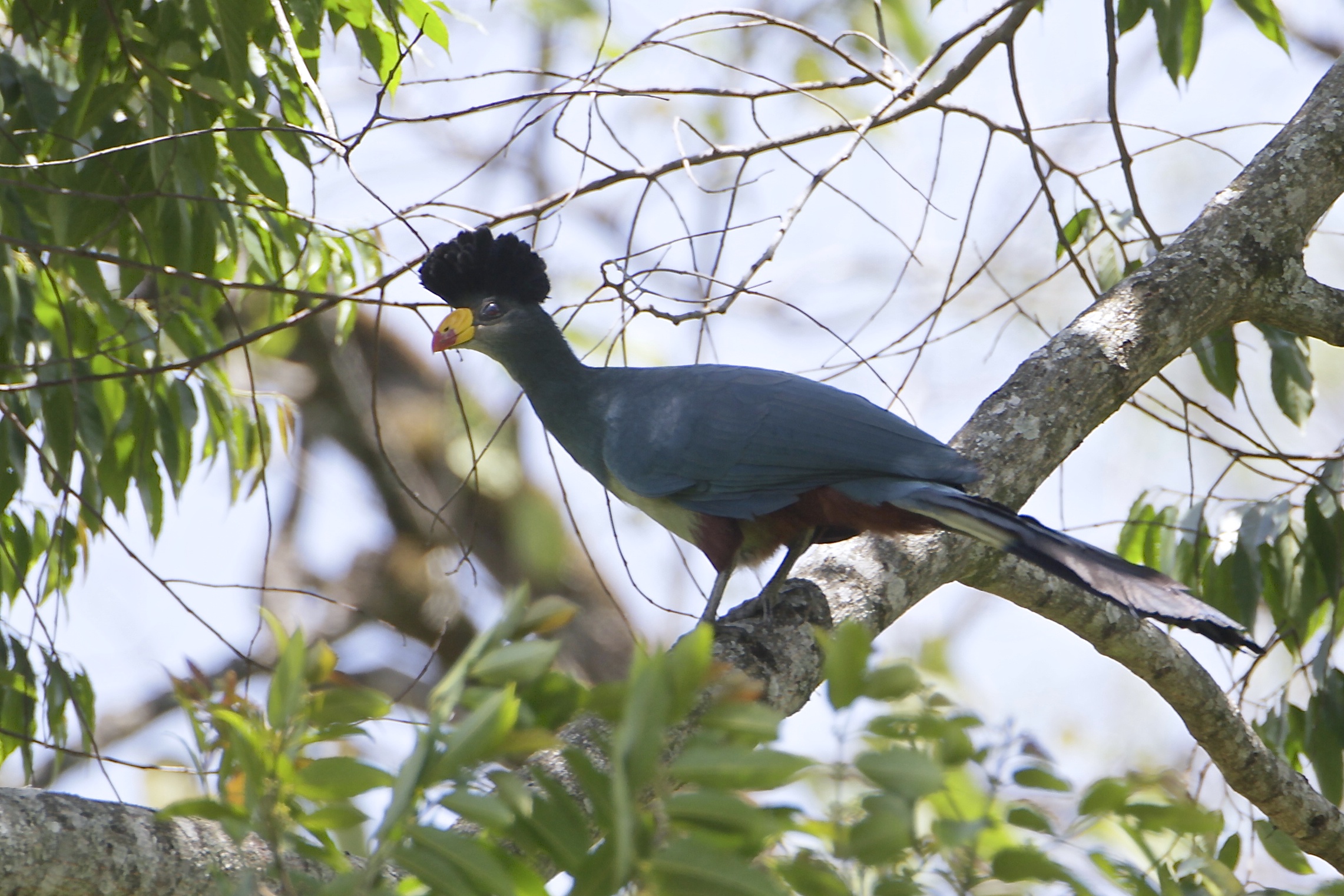
The Great Blue Turaco (Corythaeola cristata) is one of the most striking and charismatic birds of the African rainforest. With its vibrant colors, distinctive crest, and graceful movements, this bird holds a special place in the biodiversity of Central and West Africa’s tropical forests. Often called the “blue beauty of the canopy,” the Great Blue Turaco is not only a marvel of nature but also a key player in its ecosystem.
Great Blue Turaco.Photo by Jan F.L Van Duinen
Turacos acquire their crimson wings through specialized pigments called turacin, which contain copper. These pigments are unique to turacos and are responsible for the vibrant red coloration in their wings. Unlike most birds where red coloration is derived from carotenoids, turacos have these distinct pigments.Turacos spend most of their time in the forest canopy where they can be found in groups of up to 30 individuals.
The Great Blue Turaco is more than just a beautiful bird—it’s an important ecological player and a symbol of the rich biodiversity of African rainforests. Protecting its habitat ensures not only the survival of this stunning species but also the health of countless others that share its environment. As deforestation and habitat fragmentation continue to threaten tropical ecosystems, birds like the Great Blue Turaco remind us of the urgent need for conservation and sustainable land use.Keep birding!
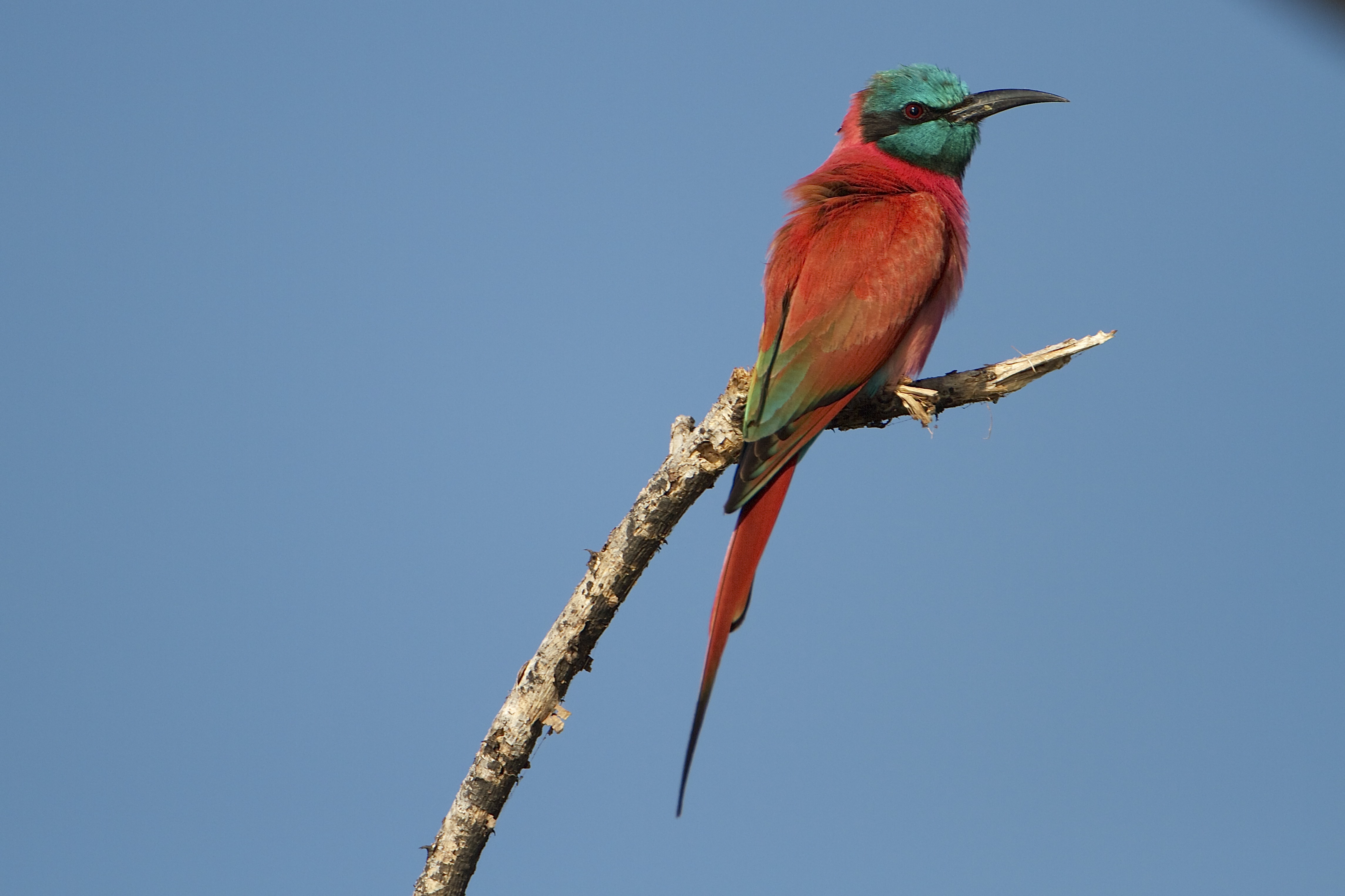
Northern Carmine Bee-eater are a brightly colored and easily distinguishable birds.Adults are rosy carmine-pink with a bright,light blue rump and upper and under tail coverts.The head is iridescent green-blue with a black eye-line,throat and beak. This species is sexually monomorphic.
In Kenya,they are normally seen around September-November as passage migrant to their breeding ground further north-west of Africa.Its habitat is found in wide range of African savanna,including desert,woodland and northern edge of rainforest zones, although avoiding densely wooded areas.They also frequent agricultural fields of open pasture,floods-plains, and marshes ,and have occasionally been seen searching for prey over large bodies of water.
The local birding site likely to see this species while on a birding trip to kenya includes;Lake Baringo,Tsavo East,Sabaki river estuary and the Kenyan coastal stretch.
Bee-eaters are beautiful birds to observe in the field, but the exhilaration among birders on sighting of a Blue-headed bee-eater is remarkable .Really attractive Bee-eater. This species is strictly restricted only to Kakamega and South Nandi Forest in Kenya. However, other isolated populations of this species are found in West Africa as well.
This brilliantly colored Bee-eater can be encountered on any birding walks around Kakamega forest with some efforts, local guides will be of great help, although you can really run into it with some luck.
Photo By Mario Liebschner
Usually Bee-eaters are gregarious, but not Blue-headed Bee-eater, I have not recorded more than three individuals at a go. They are arboreal birds that perch on exposed branches.
I learned with a lot of sorrow the passing on of my friend, colleague and a mentor David Ngala on Wednesday Morning 8th June,2022.It was very difficult for me to comprehend as I was with him on Monday morning of 6 June,2022 in my brief visit to Arabuko Sokoke forest,his home ground.
David Doing what he does best
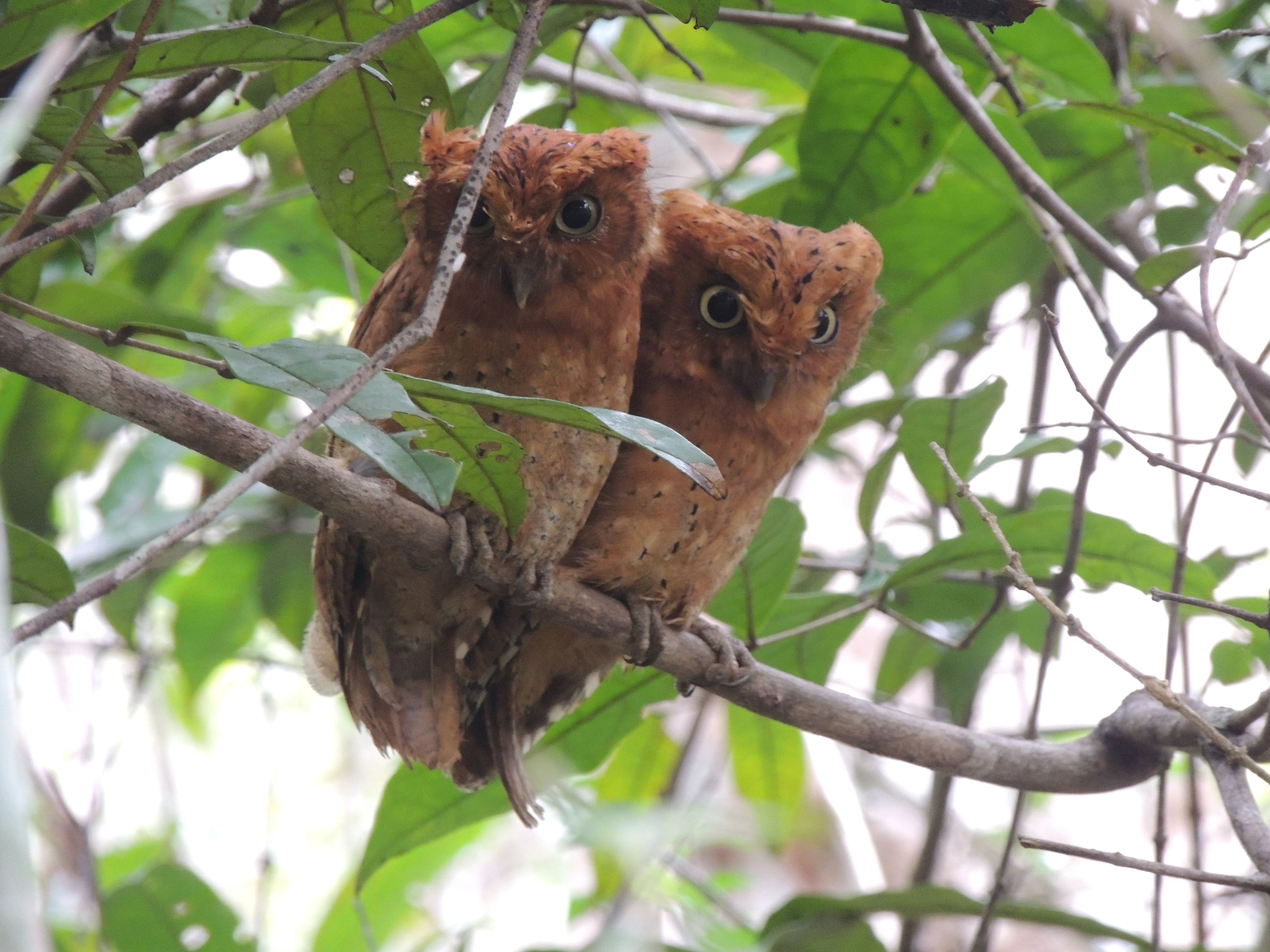
He did his work diligently like he always does and within one hour he had shown my clients two pairs of Sokoke Scops Owl,both grey-brown and rufous morph,before we were interrupted by some rains .It was like he was saying goodbye to me.
Our group birding Arabuko-sokoke forest with David Ngala just a day before I got the sad news
His knowledge of the forest is incomparable …he literally knew each and every sound emanating from that forest .He was a great teacher and I was privileged to have attended his classes for over 9 years. For a person of his stature he was a very humbled man and a great human being.
Photo Credit:Friends of Arabuko-sokoke forest
The global birding community will indeed miss his intoxicating smile and enthusiasm that David brought in every tour he guided. He was always willing to push further and he never stopped trying for a new species of birds that his clients had in their wish list. David’s patience with birders was extraordinary…..I am sure most birders who have had the opportunity to be guided by him will agree with me on this.
David Ngala treated us to this beautiful creatures on every visit to the forest.Impressive.
I cherish the good time that I shared with David and I will dearly miss him as a great friend and colleague.David Ngala good work for conservation of Arabuko Sokoke forest and disseminating knowledge to global scientists and nature lovers will forever be remembered.
Sokoke Scops-Owl.I doubt if would have seen them with David help!
Fare thee well David! You have fought a good fight,you have finished the race and kept the faith.Your memory will live on and sure enough we will be joining you soon when our time is up…..I hope that it will be a great reunion God willing.
Wattle-eyes are grouped in two distinct genera;Platysteira are medium-sized,flycatcher like and resembles batises,while Dyaphorophyia are much smaller,dumpy and short-tailed.Both genera have broad strong bills and conspicuous fleshy,colorful wattles above their eyes.
Photo By Juhani Vilpo
Now most of this family species are named after the females plumage, like the widespread Brown-throated Wattle-eye appearing above is named for the throat colour of the female.They are found in pairs,family groups or with mixed-species flock,usually in forest.
In Kenya,five species occurs, with three of them restricted to the tropical rain forest remnant of Kakamega.Brown-throated and Black-throated Wattle-eye are frequently encountered at the right habitat,but Jameson’s, Chestnut and Yellow-bellied Wattle-eye are a hard nut to crack in Kakakmega forest.
Watching Wattle-eyes for the first time foraging in the thick undergrowth of Africa tropical rain forest is an extraordinary experience.It will thoroughly blow your mind away.
If you are visiting Nairobi for a business meeting or joining one of those international conference that happen in this city frequently or basically just started a new job in town then this is your best option of getting started with birding and safaris around the country.In this case long overnight trips aren’t absolutely necessary for great birding in Kenya. Oh yes, they can help and, for some places and birds, are necessary and awesome but they aren’t the only options. “Good birding” is where the habitat is, it’s what you want to see and how you feel like doing your birding. Long distance twitches can however arrange special expeditions to see rare birds in their wish list within this locality by emailing us through joe.aengwo@gmail.com or residentnaturalist@gmail.com .If you have a personal birding goals,we will be more than willing to arrange a personalized birding itineraries that will suit your goals.
The following are some of the options you have for day trips birding tours if you are stationed in Nairobi. I will always suggest an early start and if possible order a packed lunch if you plan to venture out for the whole day.
1. Nairobi National Park.
Nairobi national park lies only 7 kilometers from the city centre,and thus provides a useful starting place for any birdwatcher based in Nairobi.Although the park is only about 117 square kilometers in area it offers a wide variety of habitats which attract an excellent selection of birds .These habitats can be divided into natural and man-made dams and ponds,Open grassland plains,bush country and rock gorges,riverine woodland and highland forest.
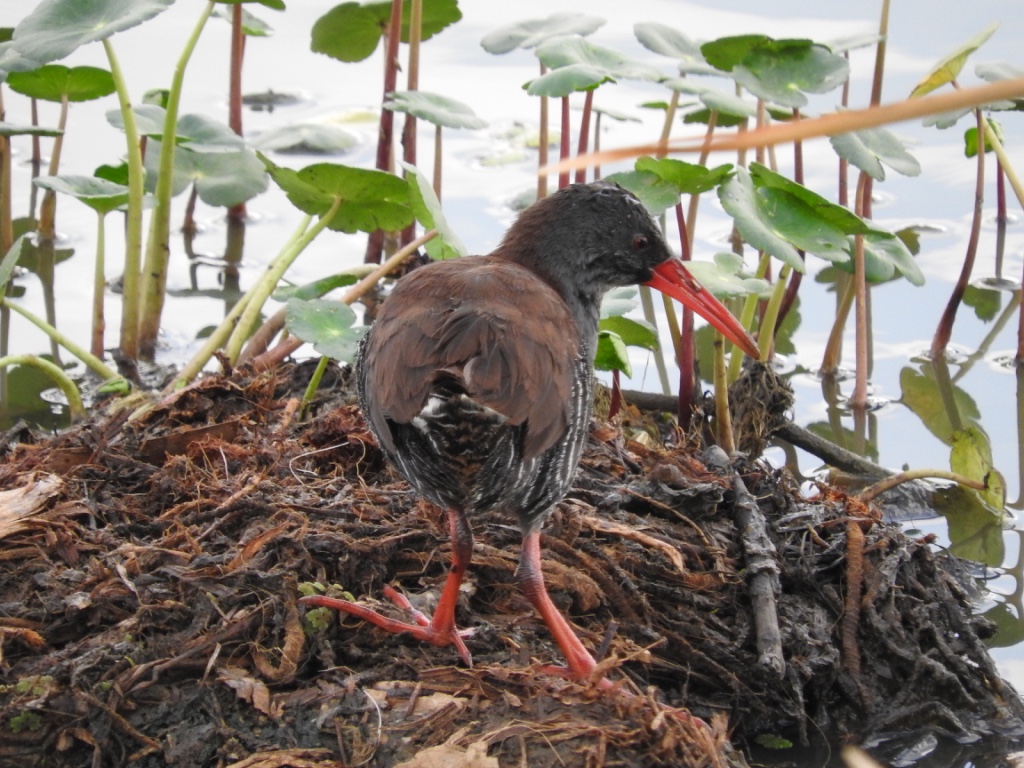
African Water Rail. Photo by Joe Aengwo
With a good resident ornithologist (Guide)with a proper strategy you can easily see over 150 species of birds in a day visit to the park. Other than the great birding experience, the park also offer an incredible introduction to Africa big game and wildlife where you can easily see Zebras, Elands, Impalas, Heartbeest Lions, Buffalos,Giraffes, Rhinos, Leopards and with great luck Cheetahs.
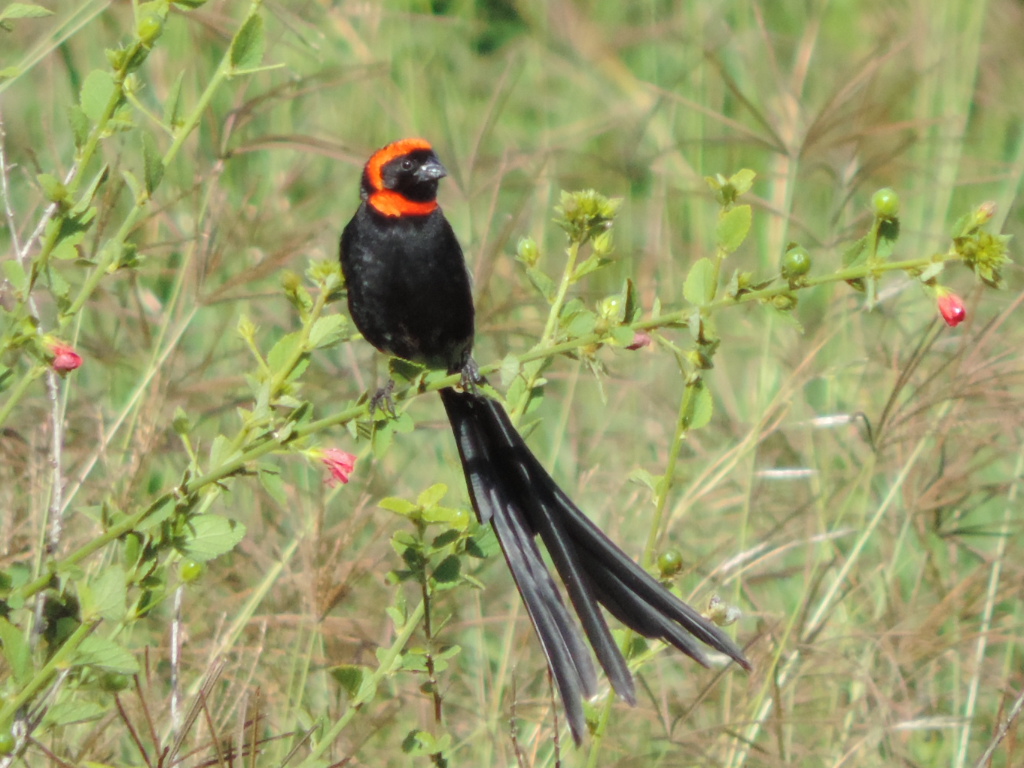
Red-collared Widowbird. Photo by Joe Aengwo
2. Magadi Road,Olorgesailie Prehistoric Site and Lake Magadi
This is one of the most outstanding routes within a day’s drive of Nairobi both ornithologically and scenically.The 115 kilometers to lake magadi is on a good tarmac throughout.After leaving the Nairobi uplands the road crosses the end of the Ngong Hills before dropping down the side of the Rift Valley.The upland grassland habitat of the Ngong Hills gives way to the semi-arid bush country below. Frequent stops from now on will turn up an excellent selection of birds,particularly at the seasonal waterholes which attract large numbers of weavers,whydahs and finches.
Red-fronted Tinkerbird. Photo by Joe Aengwo
Olorgesailie Archaeological site is well signposted to the left 65km from Nairobi,shortly after Oltepesi.Apart from its archaeological interest the site and immediate area hold good selections of birds.Large flocks of weavers and finches are attracted to a water bath set next to the rest area,and trail around the perimeter of the site is good for coursers,larks,and Ashy Cisticola .
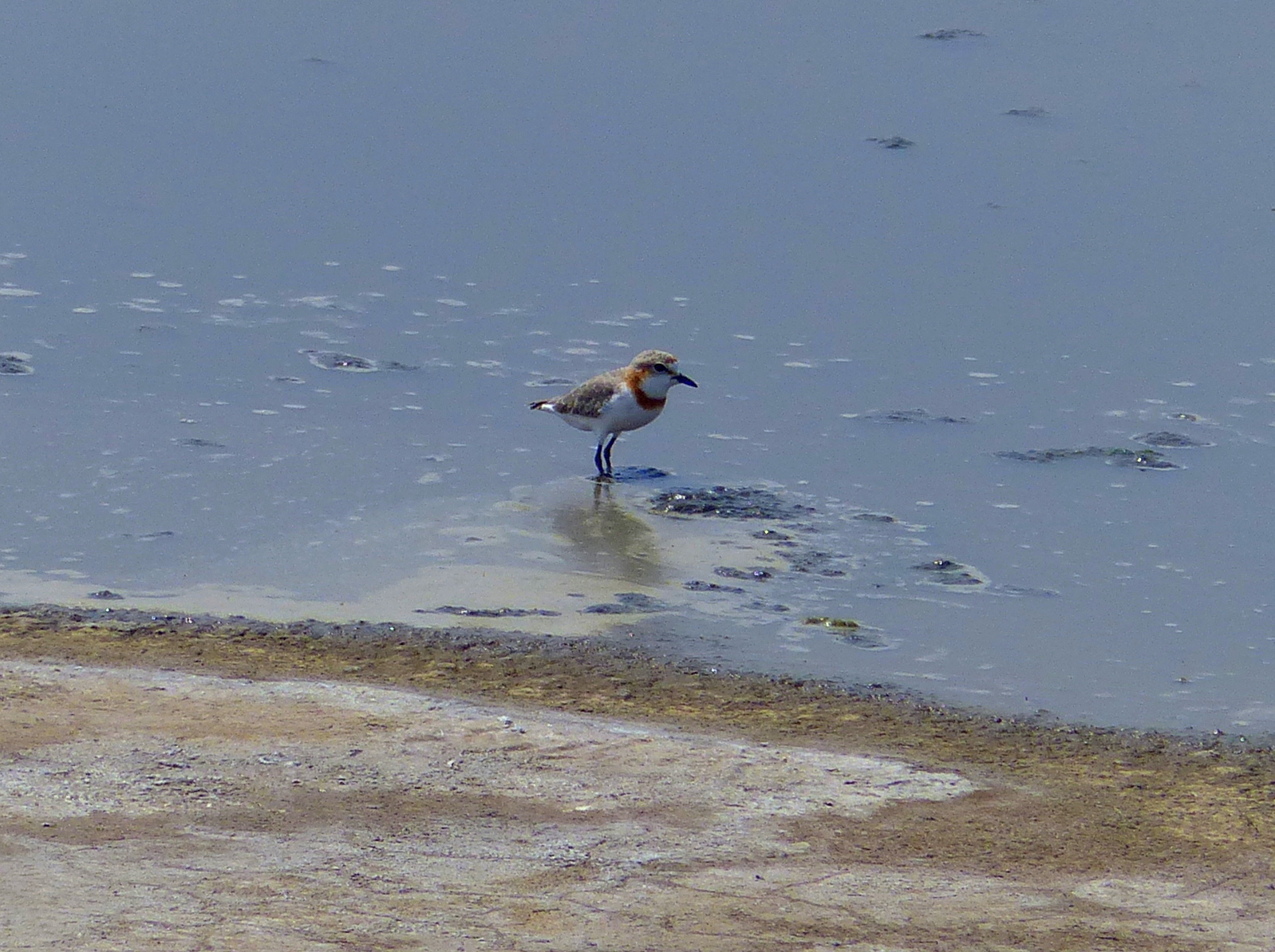
Chestnut-banded Plover
Lake Magadi is a classic example of a Rift Valley soda lake,which being so close to Nairobi ,is a recommended place to visit.A certain proportion is worked by the Magadi Soda Company,but most of the lake is totally undisturbed.Large number of water birds congregate around the southern edges of the lake,flamingos being the most obvious,although many passage waders may be present.Lake Magadi is one of the best site to see the tiny Chestnut-banded Plover in Kenya.
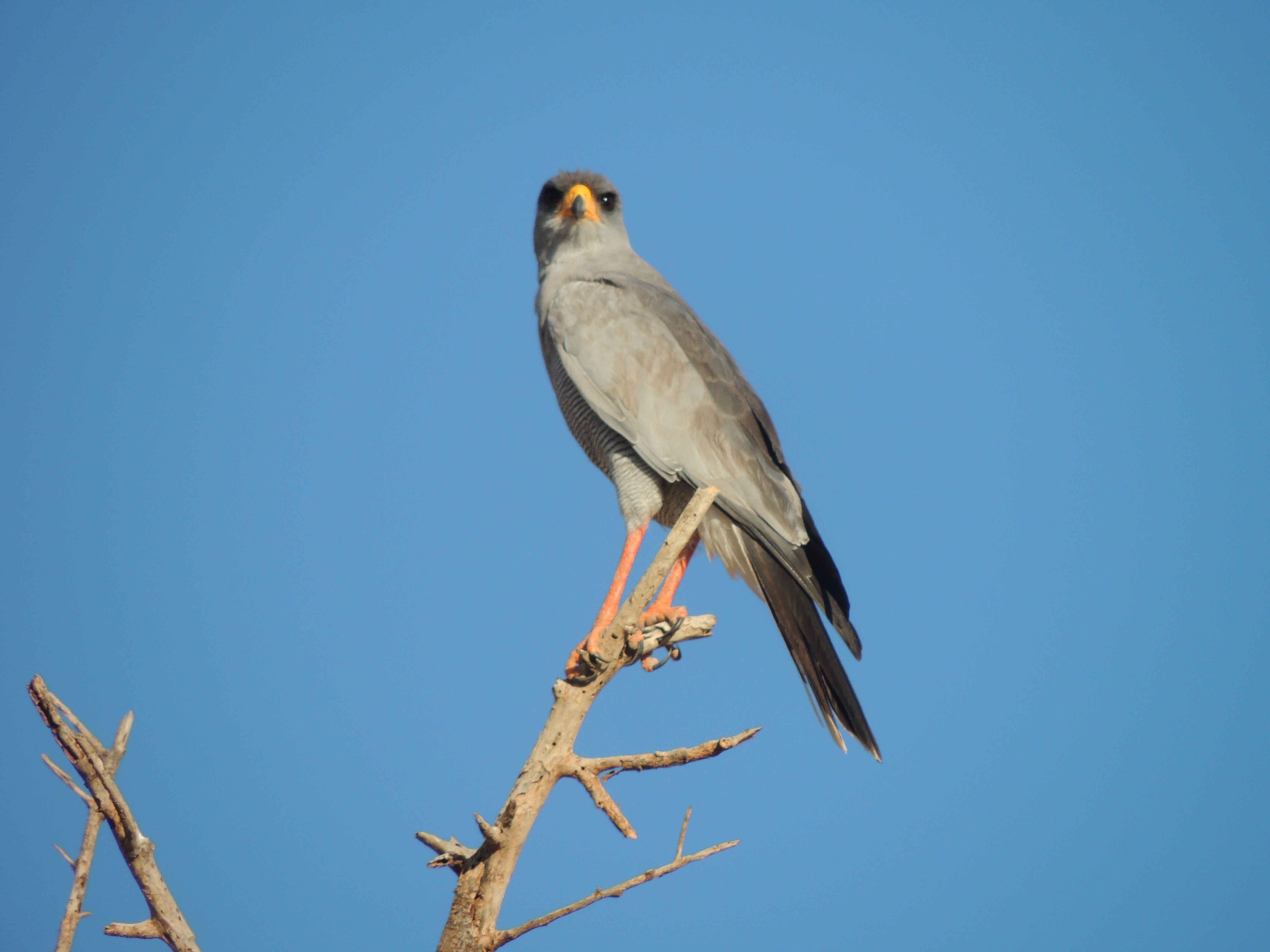
Eastern Chanting-Goshawk.
3. Gatamaiyu Forest,Manguo Pond,Limuru and Kinangop Grassland.
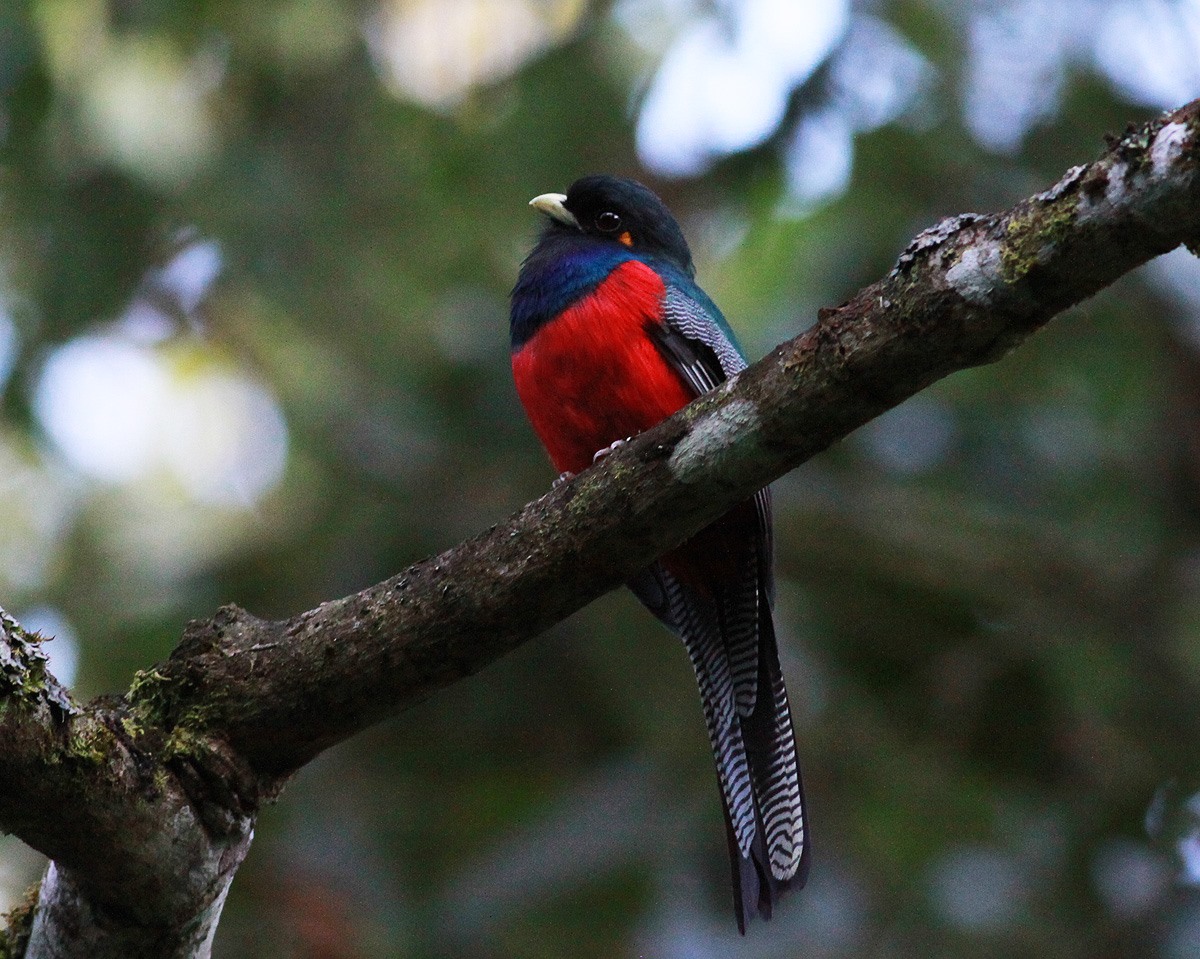
This forest lies north of Nairobi at an altitude of 2200m,just beyond Gatamaiyu village . This forest provide a typical montane habitat and it can be cold and rainy sometimes, so a rain jacket and something warm cloths is a must.Examples birds likely to be seen in this forest includes; White-headed Wood Hoopoe,Abott Starling,Ayre’s Hawk Eagle,Bar-tailed Trogon, African Black Duck,Hartlaub’s Turaco Chestnut-throated Apalis and Cinnamon Chested Bee-eater among others.
Photo@Raymond Galea
Bar-tailed Trogon
Manguo Swamp (Limuru Pond) is a fairly extensive are of water thickly lined with reeds along one side.Large numbers of duck congregate here between October and February,many being migrants such as Pintail,Garganey and Shoveler.Maccoa Duck are regular breeders, along with Red-billed and Hottentot Teal.The reeds hold a good selection of herons,crakes and warblers,whilst the boggy margins attract migrant waders such as snipe and Green Sandpiper.Large numbers of swallows regularly feed over the pond,and often include more unusual species like Banded Sand and Plain Martin,Mosque and Grey-rumped Swallows.In addition, the scrub around the pond can be good for sunbirds,cisticolas and Finches.
Hartlaub’s Turaco
Kinangop grassland is around 2300 meters above the sea level and can be incredibly windy and cold sometimes of the year.The flat,raised plains extend for miles as far as the Southern Aberdare in the east. The original tussock grasses and swamps that are found in this plains have been greatly reduced by extensive farming going on in this very productive agricultural area,but the landscape still supports a variety of bird species not easily seen elsewhere. The most sought-after of these are Long-tailed and Jackson’s Widowbirds and the endemic Sharpes’s Longclaw.
Golden-winged Sunbird.
4. Lake Naivasha and Hell’s Gate National Park.
Lake Naivasha is a large freshwater Rift Valley lake situated some 80km north-west of Nairobi.Huge floating masses of papyrus continually changes the appearance of this lake,as do the fluctuations in the water level.The present high level has led to the loss of much of the interesting lakeside vegetation,but in turn has produced temporary muddy margins which can be excellent for wading birds.The lake is also invaded by water hyacinth Eichhornia crassipes ,Coypu and Louisiana Red Crayfish which were introduced into the lake way back 1950’s.
Great White Pelican. Photo by Hans Aeschlimann.
Despite these changes, Lake Naivasha is still one of the most exciting bird-watching spots in Kenya.A wealth of water birds are to be found here throughout the year,but more especially during the winter months when good numbers of palaeactic ducks,waders,and terns can be present. Almost all the land bordering the lake is privately owned,but more than sufficient access is provided to birders.
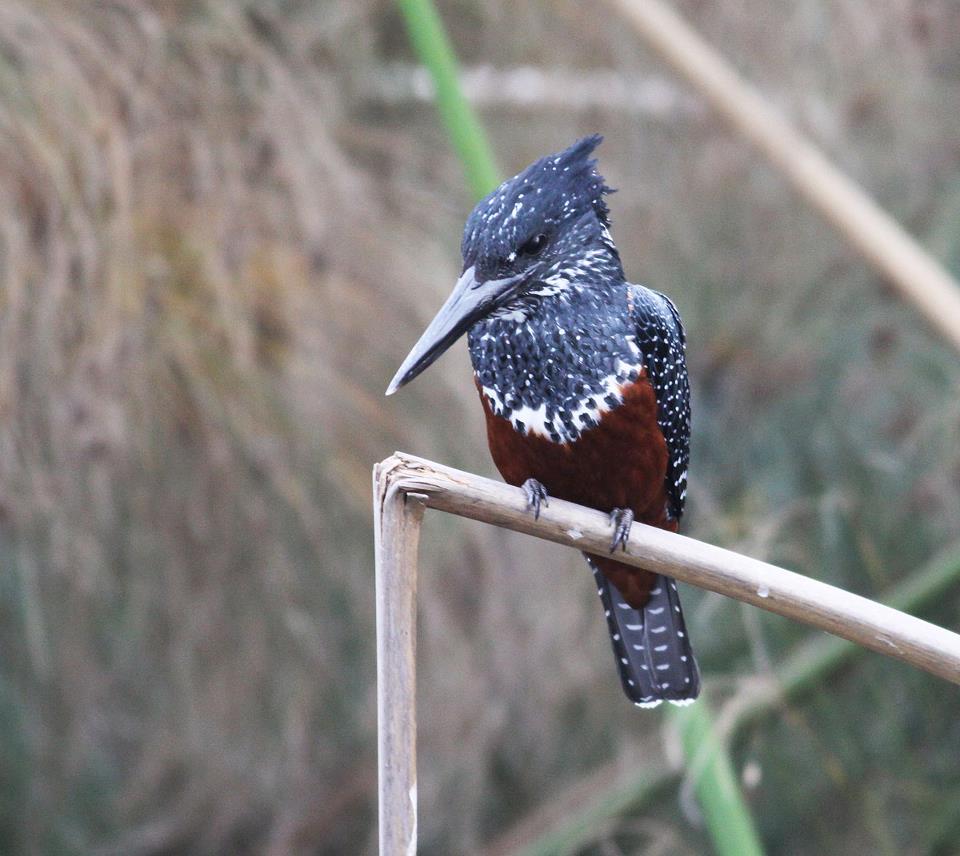
Giant Kingfisher.
Hell’s Gate National Park is the only park in Kenya where walking and cycling is permitted .Its habitat consist of a number of sheer columnar basaltic cliffs overlooking open grassland and thick bush.Augur Buzzard,Peregrine Falcon and Ruppell’s Griffon Vulture all breed here,along with large colonies of mottled and Nyanza Swifts.The Scrub below the cliffs holds several species of Cisticola,and Arrow-marked Babbler,whilst the grassland is good for Pipit and Schalow’s Wheatear. Herbivores are also plenty in this park. So Zebras,Giraffes,Elands,Impalas and both Thomson’s and Grant’s Gazelle are present.
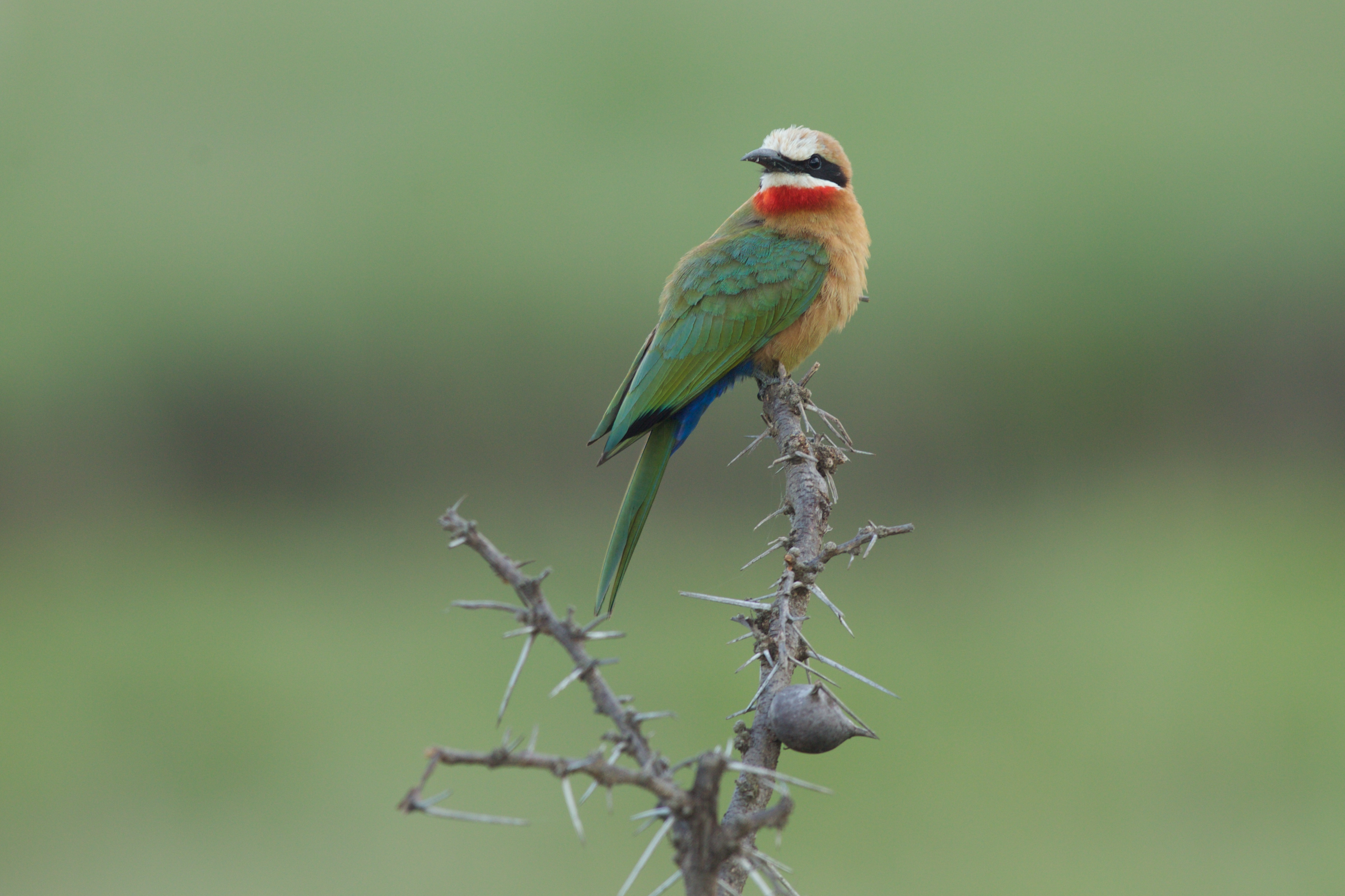
White-fronted Bee-eater. Photo by Hans Aeschlimann
Baringo, a shallow freshwater Lake, lies 110 km north of Nakuru town. 500 species of birds are one of its biggest draws. Baringo’s bird population rises and falls with the seasons. The dry season is normally the leanest time for birders, but the lakeshore resounds with birdsong at most times of year.
The shoreline is bursting with birds and photography is prime here because the birds quite approachable. Egrets, Herons, Kingfishers and Bee-eaters are the stars here.
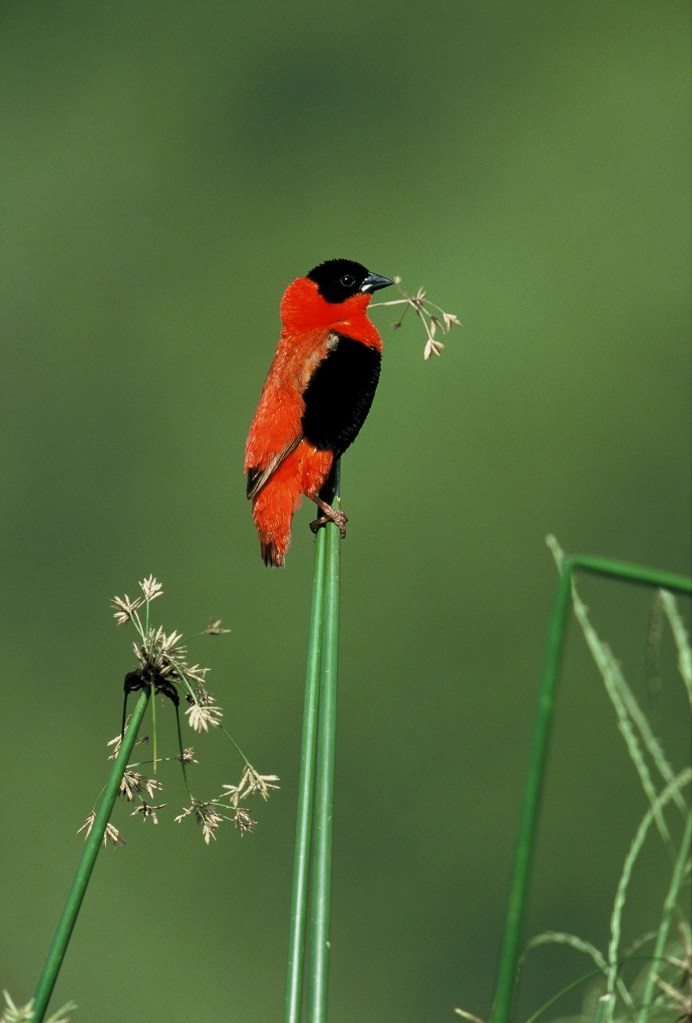
If you are in the area at the right time of the year when the male Northern Red Bishop is on its full breeding plumage, you have the privilege to witness its courtship flight. Photographic opportunities are immense as the polygamous male tries to impress the females.
This species is sexually dimorphic and polygynous, with the males being particularly larger than the females. The genus Euplectes is notorious for sexually selected characteristics, including elaborate displays and elongated tail feathers. The bright orange-to-yellow plumage with a contrasting dark black pigment is for attracting mates.
Northern Red Bishop inhabits tall open or bushed grassland. It closely associated with giant grasses and a tall crop like millet and sorghum, but also occurs in open habitats with ranks weedy vegetation. At night it roost in thicket or tall grass. Enjoy your birding.
The tall, pink flamingos are an instantly recognizable group of birds, which have been known from earliest times and often celebrated in popular stories. They belong to one of the bird families, dating back at least 30 millions years, when their range extended to North America and Australia.
Photo By Jan F.L Van Duinen
All species have a long, slender neck and tall, spindy legs, a fairly small body, and large, specially adopted, drooping bill. Their plumage varies between pale and deep rose-pink, with crimson and black wings.
Flamingos are extremely sociable and usually occur in large flocks. At times, they form the biggest concentration of non-passerine birds: on occasions, more than a million gather at feeding sites. The birds forage by wading knee-deep at the edges of alkaline or saline lakes and lagoons.
They turn their head upside down and sweep the bill through the water, sucking in mouthfuls. As they squeeze out excess water with their tongue, comb like structures called lamellae trap tiny particles of food.
Photo by Jan F.L Van Duinen
Flamingos breed in large colonies at the edge of lakes or on island. In East Africa, the only reliable breeding site is Lake Natron in Northern Tanzania. The nest is circular mound of mud baked hard by the sun, into which the female lays on white egg. The chicks look like fluffy duck-lings on hatching, and are fed on a milky mash regurgitated by their parents.
After a few days, they join a large group of youngsters within the colony, but continue to be fed by their parents for about 10 weeks longer, until they can fly and become fully independent.
Widespread and locally common in higher rainfall areas up to 3000m, though generally uncommon above 2000m. Long-crested Eagle is an adaptable woodland and forest edge species which is especially common in areas partially cleared for agriculture, even when heavily settled. It takes large numbers of rodents and his generally considered beneficial to man.
Long-crested Eagle adult is dark brown or black. It has long white
patches at the joint of the wings, visible when perched, forming white
lines on each side of the breast. Underwing coverts are white, with
black spots. It has broad dark tail strongly barred of white. Tarsi are
whitish. Wings are long and broad.
Hooked bill is yellow with dark tip. Eyes are golden or reddish-brown. Feet are yellow with slender talons.
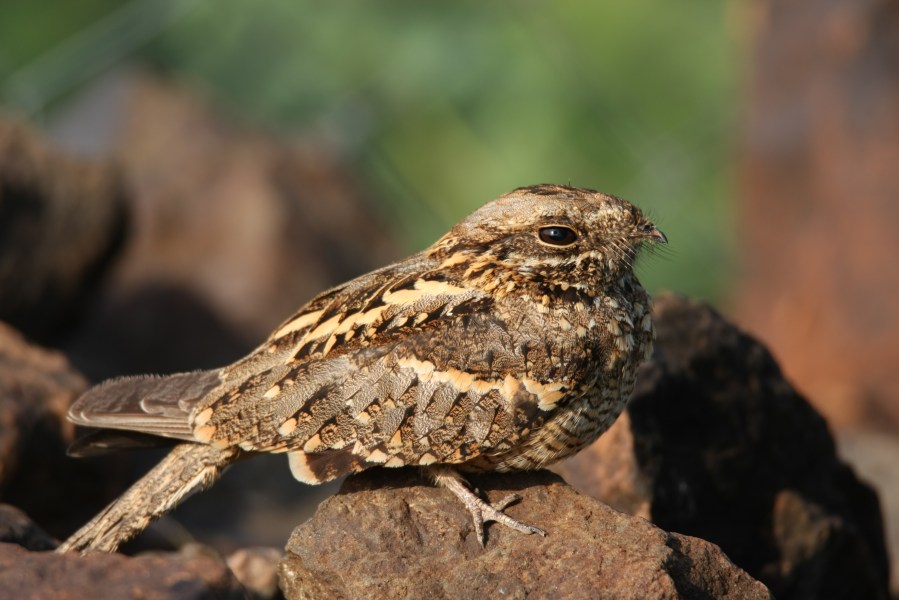
Nightjars are largely nocturnal family. They look like owls, with large heads and eyes and a cryptic plumage. The family name caprimulgidae was given to them after some superstitious belief that because of their wide mouths, the birds suckled goats.
Photo@Joe Aengwo
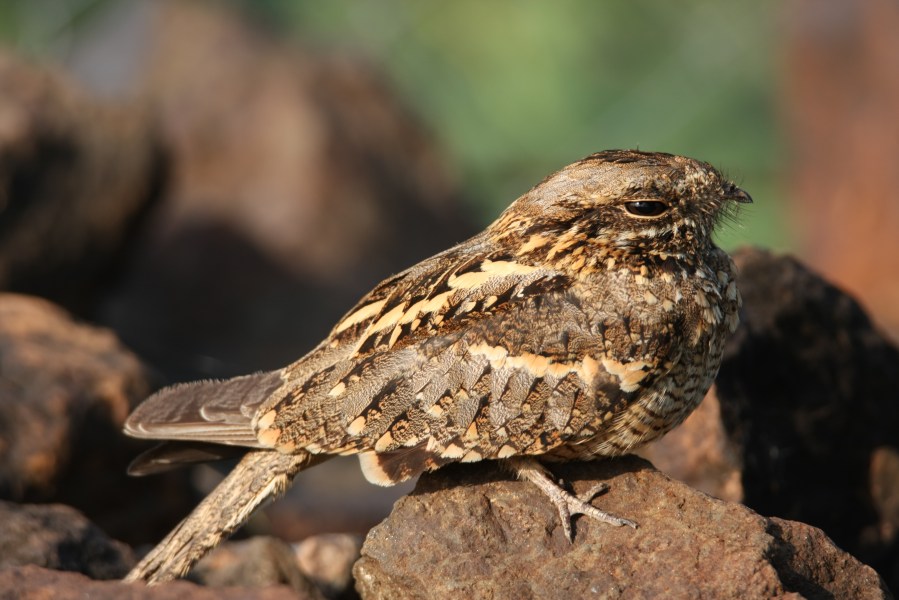
In Kenya we have 13 different species of Nightjars, wide spread in different habitats across the country. The photo appearing above was taken at a rocky countryside of Lake Baringo. Most species are nocturnal or active at dusk, and are solitary and retiring . They concentrate their foraging bouts during twilight hours.
Photo@ Joe Aengwo
By day, they roots on exposed grounds or rocks, in leaf litter, or on branches. When roosting , they adopt a horizontal posture, in contrast to owls.
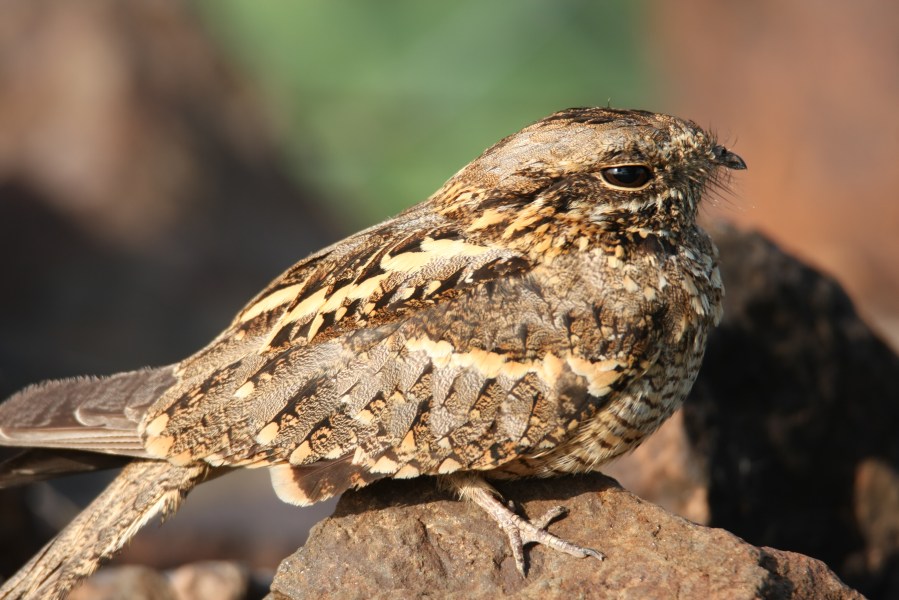
Photo@Joe Aengwo
Nightjars have very large eyes, adopted to low light condition. They eye have a tapetum, a reflective membrane that increases the amount of light entering the eyeball. Its presence causes reflective “eye-shine” when the eye are illuminated by artificial light.














 Kenya Birding