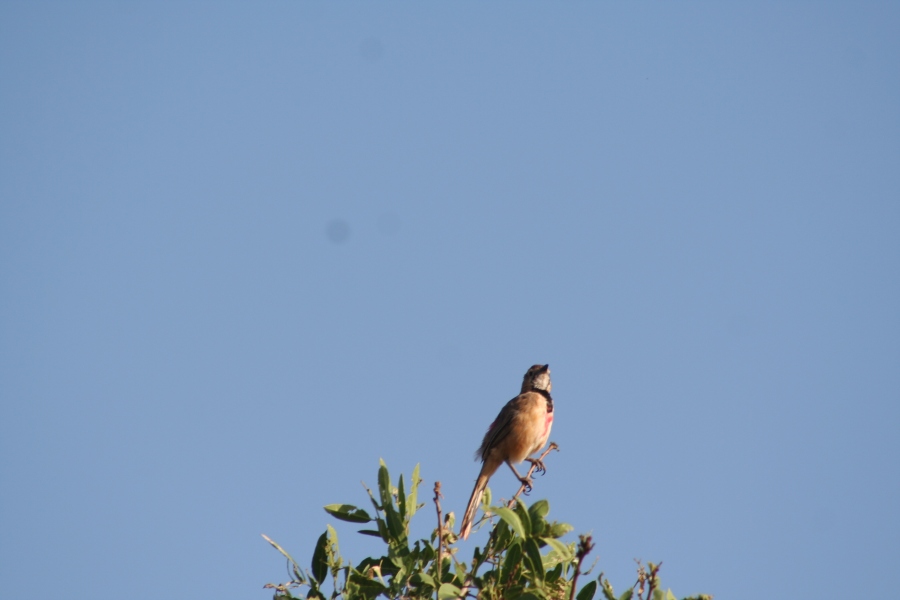
3 March, 2012:Rosy-Patched Bush Shrike (Rhodophoneus cruentus)

188

Photo@Joseph Aengwo

Rosy-patched Bush Shrike is a beautiful bird!it is locally  common in bushed grassland, bushland and scrub in arid and semi-arid plateau country up to altitude of about 1600 meter.Two races occur, apparently without intergrades: hilgerti in northern and eastern Kenya from Turkana, Ileret, Marsabit and Moyale to Baragoi, Isiolo and Athi .While the race Cathemagmena is in south Kenya in areas around Tsavo west and East National park.

While birding in those areas mentioned, this bird should be hard to see as they always like singing on top scrub bushes.They are never shy as such.

Kenya’s Important Bird Areas

A few important resources about Kenya’s Important Bird Areas.

Kenya's Important Bird AreasA fantastic map of Kenya’s Important Bird Areas from Nature Kenya.

Also, from KenyaBirds, a listing table of the Important Bird Areas, Locations, Habitats, and threatened species.

Coming up soon, a Bird of the Week with a song I recorded while birding recently.

Joe

The African Fish Eagle: endangered by pesticide

Through my work with the Lake Baringo Biodiversity Conservation Group and growing up in the region, I have directly witnessed the decline and endangerment of the African Fish Eagle. This spectacular bird that feeds on fish is being poisoned by farmers and agricultural uses.

We at Lake Baringo Biodiversity Conservation Group were concerned about information received about a decline in the population of Fish Eagles for no clear reason and a huge increase in the water level in the lake. Whether this water level increase was good or bad for the general welfare of this vital wetland ecosystem, is a question that we cannot answer with precision without seeking the opinion of a biologist and receiving data to support our hypothesis .The researchers suggest that the decline of the Fish Eagle population in Lake Baringo is being driven by poisoning.

Munir Virani, who is director of Peregrine funds Africa programmes, has been carrying out research in this area, and has blamed this decline in the use of Furadan by farmers to poison crocodiles. Farmers occasionally lace the bodies of dead fish with a toxic pesticide called Furadan. This appears to be aimed at crocodiles that kill their livestock. Farmers use the fish to entice crocodiles into their death, however, not all poisonous fish are eaten by crocodiles, and some end up being eaten by Fish Eagles. If this is done rampantly it can easily wipe out the whole Fish Eagle population in Lake Baringo.

Additionally, the Fish Eagles in Lake Baringo have been trained to be eating dead fish by the local boat operators. They did this deliberately to allow tourists to have a closer view of this spectacular raptor picking up the fish. However, with farmers putting dead poisonous fish into the lake, Fish Eagles trained to eat dead fish subsequently consume these as well. Although the practice of enticing Fish Eagles with dead fish for tourism purposes has no direct detrimental effects on the species, due to the farmer’s practices this has become a serious concern. Unfortunately, no government institution mandated to protect wildlife has intervened to halt the practice of releasing dead poisonous fish into the lake.

Many members of LBBCG run boat excursion businesses for tourists, and have been trying to educate their clients of the risk that such practices pose to these birds of prey. We have subsequently, written to Nature Kenya and Kenya Wildlife Service informing them of the urgent need of an appropriate intervention.
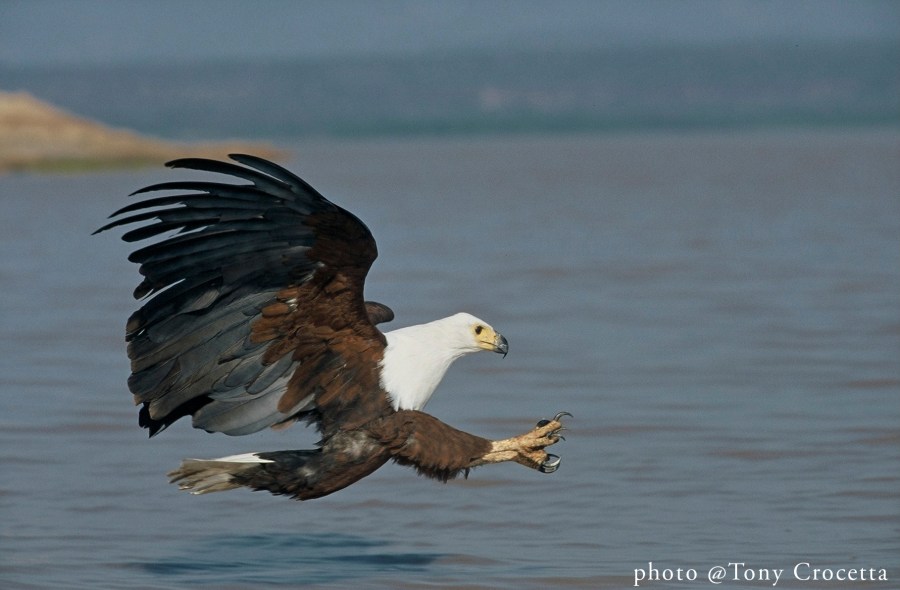
African Fish Eagle Lake Baringo

Furadan, an insecticide, is an extremely toxic to mammals (including Humans!), invertebrates, fish and birds.

The plight of the African Fish Eagle and other wetland birds is being documented by Stop Wildlife Poisoning and WildLifeDirect.

In 2009, Dr. Richard Leakey at WildLifeDirect addressed the potential ban of Furadan in Kenya and FMC’s (Furadan manufacturer) withdrawal from the Kenyan market and its buy-back programme following the poisoning of lions in the Maasai Mara. Although in a follow-up article, the legality of the toxic insecticide in Kenya was still up for debate, and the death of wetland birds in Bunyala due to Furadan poisoning is still being observed in 2011.

Stop Wildlife Poisoning has geared up its awareness campaign and regularly posts about the use of pesticides in Kenya and the poisoning of birds due to Furadan. A video was produced for International Vulture Awareness day on September 2, 2011, and many other images and videos regarding the poisoning of Kenya’s birds can be viewed on Stop Widlife Poisoning’s website.

This disturbing and unacceptable use of pesticides needs to be addressed by the Government of Kenya and its East African neighbours.

– Joe

Important reading & resources:

Stop Wildlife Poisoning: Furadan in Kenya

Bird Life International: Furadan

Africa Conservation: Why the fish eagle is under threat

Lake Baringo Birding

Lake Baringo is a fantastic location for bird watching in Kenya. I grew up in Lake Baringo, where I developed my interest in birding and I never get tired of going out to observe all the species in my backyard. Yesterday, with my friend Wilson Tiren, down by the shore of the lake and at the rocky cliff we spotted some impressive species! There are approximately 500  bird species in and around the lake. We spent a full day birding and managed to come up with this list of species for those keen birders who are wondering what can be seen in this area of the Great Rift Valley.

  1. Cattle egret
  2. Intermediate Egret
  3. Hammerkop
  4. Green-backed heron

    Green backed Heron
  5. Hadada ibis
  6. Glossy ibis
  7. Sacred ibis
  8. Grey heron
  9. Egyptian goose
  10. Black-shouldered kite
  11. Imperial eagle
  12. Fish eagle

    African Fish Eagle
  13. Black-chested snake eagle
  14. Eurasian mash harrier
  15. Dark chanting goshawk
  16. Gabar gashawk
  17. Shikra
  18. African harrier-hawk
  19. Verreaux’s eagle
  20. Common kestrel
  21. Pygmy falcon
  22. Lanner falcon
  23. Crested francolin
  24. Black crake
  25. Purple swamphen
  26. African jacana
  27. Spotted thick-knee
  28. Heuglin’s courser
  29. Common sandpiper
  30. Emerald-spotted wood dove
  31. Namaqua dove
  32. Laughing dove
  33. African mourning dove
  34. Brown parrot
  35. White-bellied go-away-bird
  36. Black and white cuckoo
  37. Diedrik’s cuckoo
  38. White-browed coucal
  39. Pearl-spotted owlet
  40. Little swift
  41. Blue-naped mousebird
  42. Pied kingfisher
  43. Striped kingfisher
  44. Grey-headed kingfisher
  45. Woodland kingfisher
  46. Malachite kingfisher
  47. Little bee-eater
  48. Northern carmine bee-eater
  49. Lilac-breasted roller
  50. Rufous-crowned roller
  51. Green wood-hoopoe
  52. African hoopoe
  53. Eurasian hoopoe
  54. Jackson’s hornbill
  55. Red-billed hornbill
  56. Hemprich’s hornbill
  57. D’arnaud’s barbet
  58. Red and yellow barbet
  59. Black-throated barbet
  60.  Lesser honeyguide
  61. Greater honeyguide
  62. Scaly-throated honeyguide
  63. Nubian woodpecker
  64. Grey woodpecker
  65. Rock martin
  66. Red-rumped swallow
  67. Barn swallow
  68. Common bulbul
  69. Northern brownbul
  70. Cliff chat
  71. Isabelline wheatear
  72. White-browed scrub robin
  73. Spotted morning thrush
  74. Olivaceous warbler
  75. Northern crombec
  76. Yellow-bellied eromomela
  77. Red-fronted warbler
  78. Pale prinia
  79. Grey-wren warbler
  80. Yellow-breasted aplis
  81. African-grey flycatcher
  82. Pygmy batis
  83. African paradise flycatcher
  84. Brown-babbler
  85. Northern grey-tit
  86. Beautiful sunbird
  87. Hunter’s sunbird
  88. Eastern violet-backed sunbird
  89. Brubru
  90. Slate-coloured boubou
  91. Sulphur-breasted bush-shrike
  92. Grey-headed bush-shrike
  93. Northern white-crowned shrike
  94. Drongo
  95. Black-headed oriole
  96. Red-billed oxpecker
  97. Greater-blue-eared starling
  98. Superb starling
  99. Yellow-spotted petronia
  100. Grey-headed sparrow
  101. White-browed sparrow weaver
  102. White-headed buffalo weaver
  103. White-billed buffalo weaver
  104. Black-headed weaver
  105. Lesser-masked weaver
  106. Vitalline masked weaver
  107. Northern masked weaver
  108. Jackson’s golden-backed weaver

Protect the Lesser Flamingo – save Lake Natron!

With this week’s bird of the week being the Flamingo, it reminded me of an important environmental and conservation concern regarding this spectacular pink bird: SODA ASH (sodium carbonate). The Eastern Rift Valley is home to Lake Nakuru, Lake Bogoria, Lake Elementaita, Lake Magadi, and Lake Natron – all soda lakes, famous for providing the habitat of the near-threatened Lesser Flamingo.

Sodium carbonate is used in many household and industrial products and is being harvested in Lake Magadi, Kenya by TATA Chemicals, who are also proposing to set up a new environmentally devastating plant at Lake Natron, Tanzania.

The introduction of a soda ash plant into Lake Natron would have catastrophic effects on the already near-threatened Lesser Flamingo. Not only would the plant lead to habitat degradation and species loss, but its development would also be detrimental to East African tourism, and the livelihood of the Maasai community living in the surrounding area.

Bird Life International highlighted these concerns in April 2011 with their article “Fresh concerns as President orders Lake Natron soda ash mining fast tracked

“Lake Natron is the only regular breeding site for Lesser Flamingos in Eastern Africa. The 1.5-2.5 million Lesser Flamingos – which represents three quarters of the world population – breed only at Lake Natron. ………Noise from the heavy equipment, the presence of people and a network of pipes will chase away the birds which are highly sensitive to disturbance while breeding”

Lessons learned in Lake Magadi highlight that little to no economic or development benefits have come from harvesting soda ash in the magical waters home to the flamingo.

“Soda ash mining at Lake Magadi has left local communities disillusioned with little to show for the 100 years of mining. The environment has been damaged and fresh water nearly depleted”

With the re-emergence of the issue recently, the Star published an environmental commentary, ‘Don’t Fund Lake Natron Mining’ advocating halting the development of a soda ash factory on Lake Natron.

Let this be a call to bird enthusiasts, ornithologists, conservationists, environmentalists, and tourism professionals to come together and advocate for the protection of Lake Natron, the rehabilitation of Lake Magadi and the security of our precious Lesser Flamingo.

Watch the amazing documentary The Crimson Wing and find inspiration to see these Flamingos continue their flight between the Rift Valley soda lakes.

The stunning movie trailer: The Crimson Wing

Other important articles and resources:

Bird Life International – Think Pink

RSPB: Lake Natron

Bird Life International – Serengeti Highway and Lake Natron

Stop the Serengeti Highway

Joe

Flamingos in Lake BogoriaFlamingos in Flight Lake Bogoria

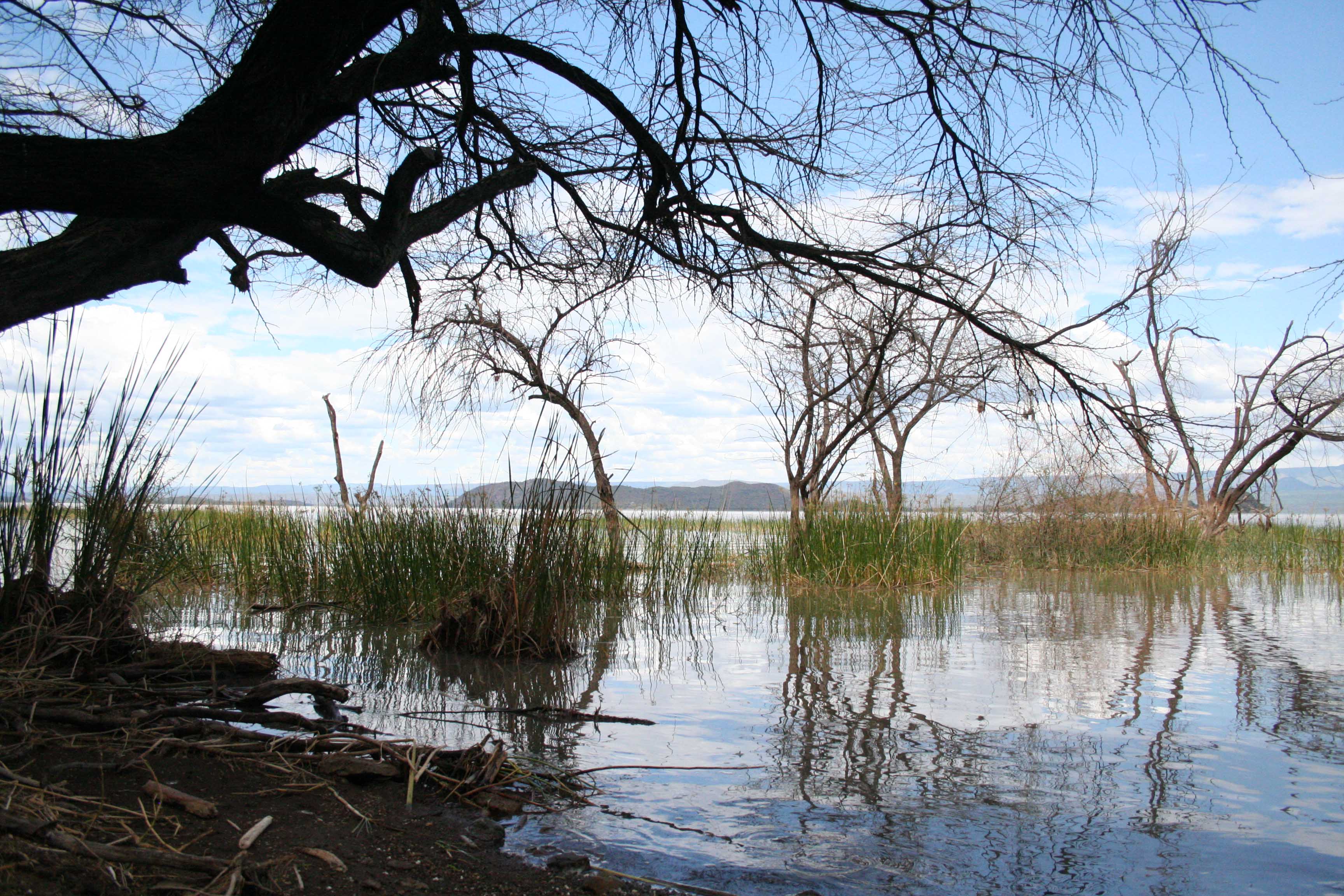
Bird watching on the shores of Lake Baringo, Kenya

An early morning birding at the shore of Lake Baringo and the adjacent bushes nearby resulted in an impressive species list, and the most exciting one were:
Lake Baringo
Birding on the shores of Baringo
1.Yellow-crowned Bishop,  Euplectes afer
2.Northern Red Bishop,  Euplectes franciscanus
3.Northern Masked Weaver,  Ploceus taeniopterus
4.Brown Babbler,  Turdoides jardineii
5.Pale Prinia,  Prinia somalica
6.Grey Wren-Warbler,  Calamonastes simplex
7. Red-fronted Warbler, Heliolais erythroptera
and the bird of the day…..
Magpie Starling,  Speculipastor bicolor
– Joe

Saiwa Swamp National Park, Kenya Bird Watching

In a recent tour to Saiwa Swamp National Park I managed to spot over 70 species of bird in a period of 48 hours. I stayed at the a self-catering Tree Top House which was quite unique. Just after I checked in, from the balcony, I had brilliant view of a female Sitatunga with a young baby!! That was the better way to begin birding and in a few minutes of observation I had recorded: Little Rush Warbler, Grey-crowned Crane and Chubb’s Cisticola. That evening I did a long walk to platform (Tower) 4 where I was lucky enough to see the male Sitatunga and Yellow-billed Duck. The next day I hiked to Tower 5 route, Acacia Nature trails and Bushback observatory tower. It will be unfair not to mentioned the great view I had of a group of endagred De Brazza monkey and the curious looking Colobus Monkey. It is indeed a great place to spend a weekend and as for birders and Twitchers, it is a must visit place.

Below is the list of birds I observed:

Bird List for Saiwa Swamp National Park seen on 28th to 30th October 2011

  1. Long-tailed Cormorant
  2. Little Bittern
  3. Goliath Heron
  4. Grey Heron
  5. Yellow-billed StorkYellow-Billed Stork
  6. Hamerkop
  7. Sacred Ibis
  8. Hadada Ibis
  9. Yellow-billed Duck
  10. Great Sparrow hawk
  11. African Hawk-Eagle
  12. Long-crested Eagle
  13. Grey-crowned CraneGrey-crowned Crane
  14. Spur-winged Lapwing
  15. Common Sandpiper
  16. Blue-spotted wood-Dove
  17. Tambourine Dove
  18. Ring-necked Dove
  19. Ross’s Turaco
  20. Black-and-white Cuckoo
  21. African Cuckoo
  22. Klaa’s  Cuckoo
  23. African Emerald Cuckoo
  24. Blue-headed Coucal
  25. Woodland Kingfisher
  26. Malachite Kingfisher
  27. Lilac-breasted Roller
  28. Crowned Hornbill
  29. Yellow-rumped  Tinkerbird
  30. Lesser Honeyguide
  31. Cape Wagtail
  32. African pied Wagtail
  33. Yellow-whiskered Greenbul
  34. Cabanis’s Greenbul
  35. White-headed Saw-wing
  36. White-starred Robin
  37. Grey-winged Robin-Chat
  38. African Thrush
  39. Little Rush Warbler
  40. Cinnamon Bracken Warbler
  41. Chubb’s Cisticola
  42. Tawny-flanked Prinia
  43. Grey-capped Warbler
  44. Grey-backed Camaroptera
  45. Black-collared Apalis
  46. African Dusky Flycatcher
  47. Swamp Flycatcher
  48. Black-throated Wattle-eye
  49. African Paradise-flycatcher
  50. Yellow White-eye
  51. Green-headed Sunbird
  52. Northern Double-collared Sunbird
  53. Green-throated Sunbird
  54. Ludhers’s Bush-shrike
  55. Pringle’s Puffback
  56. Marsh Tchagra
  57. Forked-tailed Drongo
  58. Eurasian Golden Oriole
  59. Lesser Blue-eared Starling
  60. Grey-headed Sparrow
  61. Grosbeak Weaver
  62. Northern Brown-throated Weaver
  63. Fan-tailed Widowbird
  64. Yellow-mantled Widowbird
  65. Black-bellied Firefinch
  66. African Firefinch
  67. Common Waxbill
  68. Black-crowned Waxbill
  69. Pin-tailed Whydah
  70. Thick-billed Seedeater
Birding in Saiwa Swamp
Birding from Tree Top House in Saiwa Swamp National Park