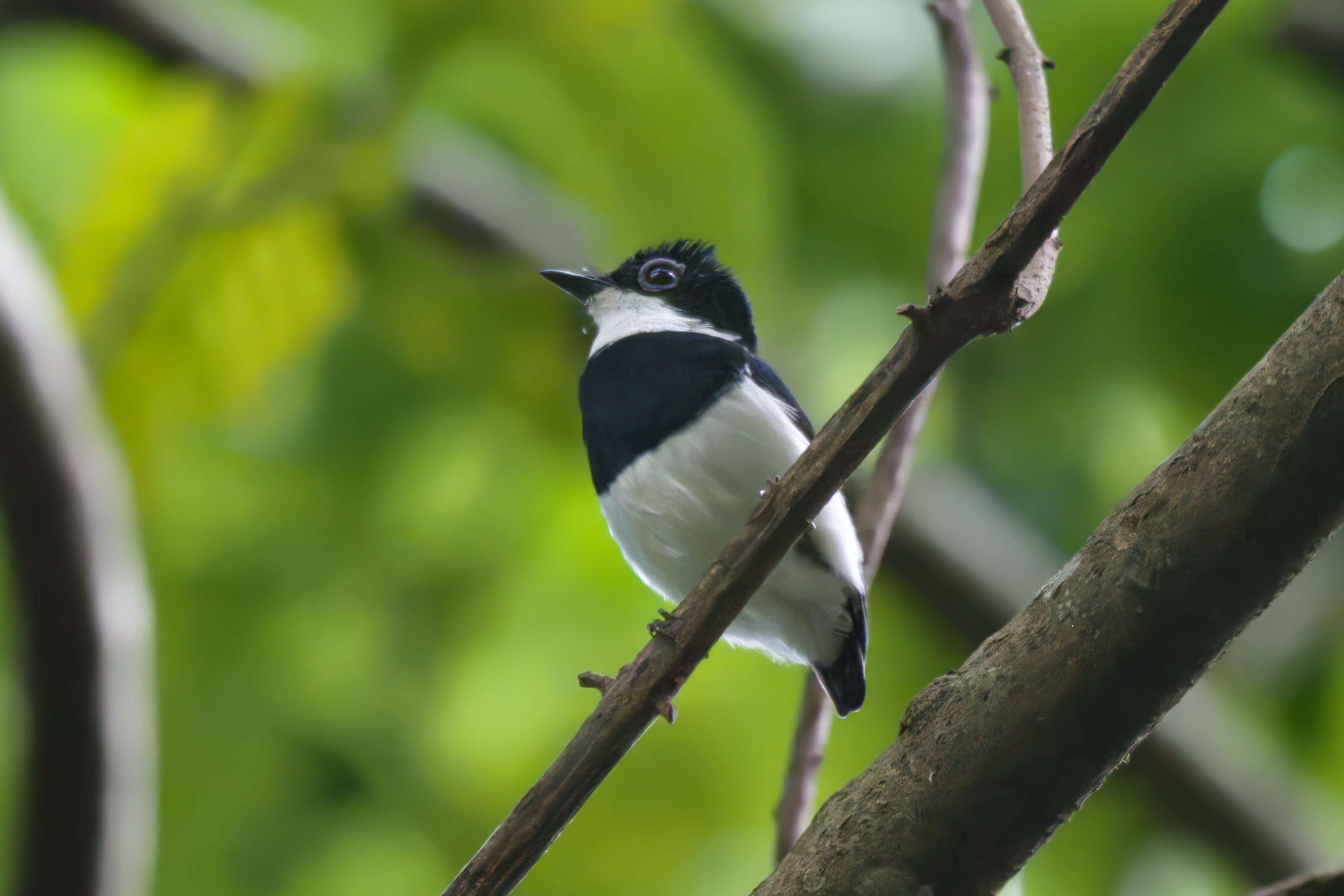
Wattle-eyes belongs to the family Platysteiridae.This family also carries Batises and Shrike-flycatcher.Wattle-eyes are dimorphic and most of this birds derive their name from the more appealing females.
Other than Chestnut Wattle-eye, we also have Yellow-bellied ,Jameson’s and Brown-throated Wattle-eyes in Kakamega forest .On a very productive day,all the fours species can be seen.Their presence is detected by their behavior of audibly flicking their wings and snapping their beaks.
The photograph appearing above was taken by my client Giuseppe Citino.
Spotted Ground-Thrush (Geokichla guttata) at Arabuko Sokoke Forest in August,2024.Photo by Joe Aengwo.
Getting lifers in an area that you have birded quite extensively is not easy,seasoned birders will definitely agree with me on this assumption, but on Saturday last week,our local guide Jonathan Baya (An excellent guide in Arabuko Sokoke forest ) managed to find two lifers for me and my clients in less than an hour after entering the forest.
African Pitta and Spotted Ground-Thrush were our big catch for us.Both birds are rarely seen and have localized movement within Africa.
We saw one Pitta on the floor of the leafy forest ground. The bird was extremely shy and moved around on the ground within dense cover and once in a while standing motionless. We got excellent views before we decided to allow the bird enjoy its peace.Very attractive bird indeed.
Now,it is with Jonathan excellent birding skills that were helpful in located the Spotted Ground-Thrush.Very camouflage and standing still for a while. Large brown-backed thrush with heavy spotting below and white wingbars, very beautiful bird!. This bird also rare and localized endangered species,with most records coming from this coastal forest
That was a very productive morning for us and the memories of that day we will forever cherish!!.
Photo Courtesy of Juhani Vilpo,a Finnish Wildlife Photographer.
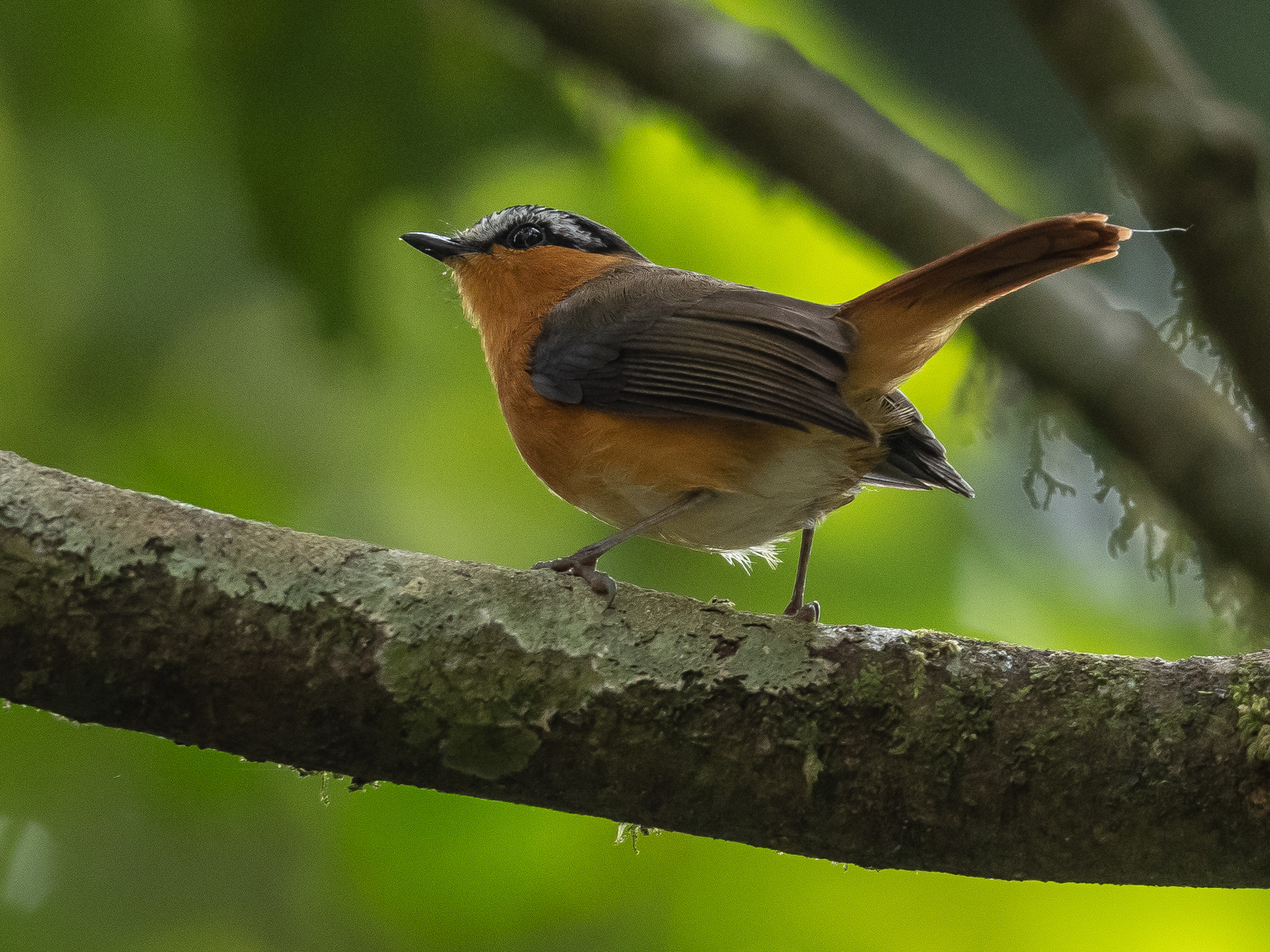
Any guided birding trip to Western Kenya (Kakamega forest,South Nandi Forest,Saiwa Swamp and Mt.Elgon national park) is mostly designed with an intention of seeing as many forest specialties as possible.Top among this are forest Robins which includes species such as Blue-Shouldered, Grey-Winged, Snowny-crowned and Equatorial Akalat.Other expected species includes; Illadopsis, Greenbuls,Wattle-eyes,Bluebills,Turacos and Sunbirds.
On our recent birding trip there,we got some decent views of the above published Grey-winged Robin-Chat and managed to steal some few photos, though not crystal clear the photo,you can clearly how impressive the robin-Chat is.Enjoy!
Photo by Juhani Vilpo,a Finnish Wildlife Photographer
Barbets are often brightly coloured and easily recognisable since they are pretty active birds and mostly found around fruiting fig trees along rivers edges and forest.They are mostly frugivores and usually swallow fruit whole.With the long time it takes for the fruit to digest,barbets are therefore very effective dispersers of seeds in their respective habitat.
Globally,Barbets are holes nesters either on the trees,termites hills and in the ground and for that reason,their destribution in the local habitat are generally influenced by the presence of suitable trees,particularly those with soft,dead branches,which are much easier to peck out.
Yellow-spotted Barbet,is mostly found in the tropical rain forest of Kakamega in Kenya and extensively in Uganda and Congo.While on the similar habitat here you also have the chance of seeing Hairy-breasted,Grey-throated and Yellow-billed Barbets and all of the extremely beautiful to watch.
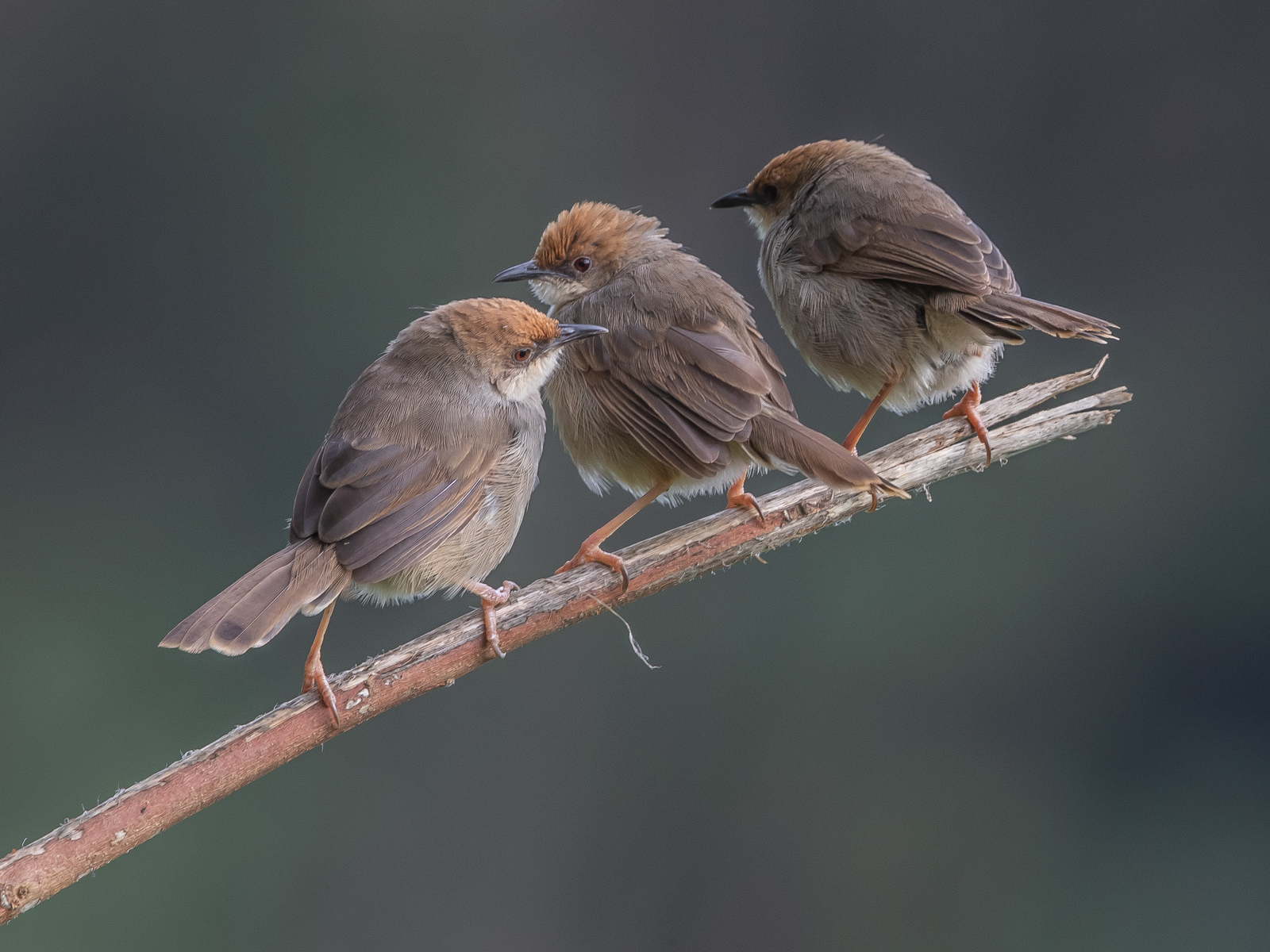
Chubb’s Cisticola.Photo by Juhani Vilpo, a Finnish Wildlife Photographer.
Cisticolas are African warblers which are mostly found in grassland savannas and moist forest habitat of all elevations.Out of 50 species listed,36 of them are found in East Africa and it is known for its field identification nightmares especially if you are birding Africa for the first time.For better identification,it is better to rely on your ears than your eyes….so musical ears and better memory are invaluable assets in this case.
The above photo was taken while on a birding trip to Kakamega forest which is the reliable site to see them in Kenya.
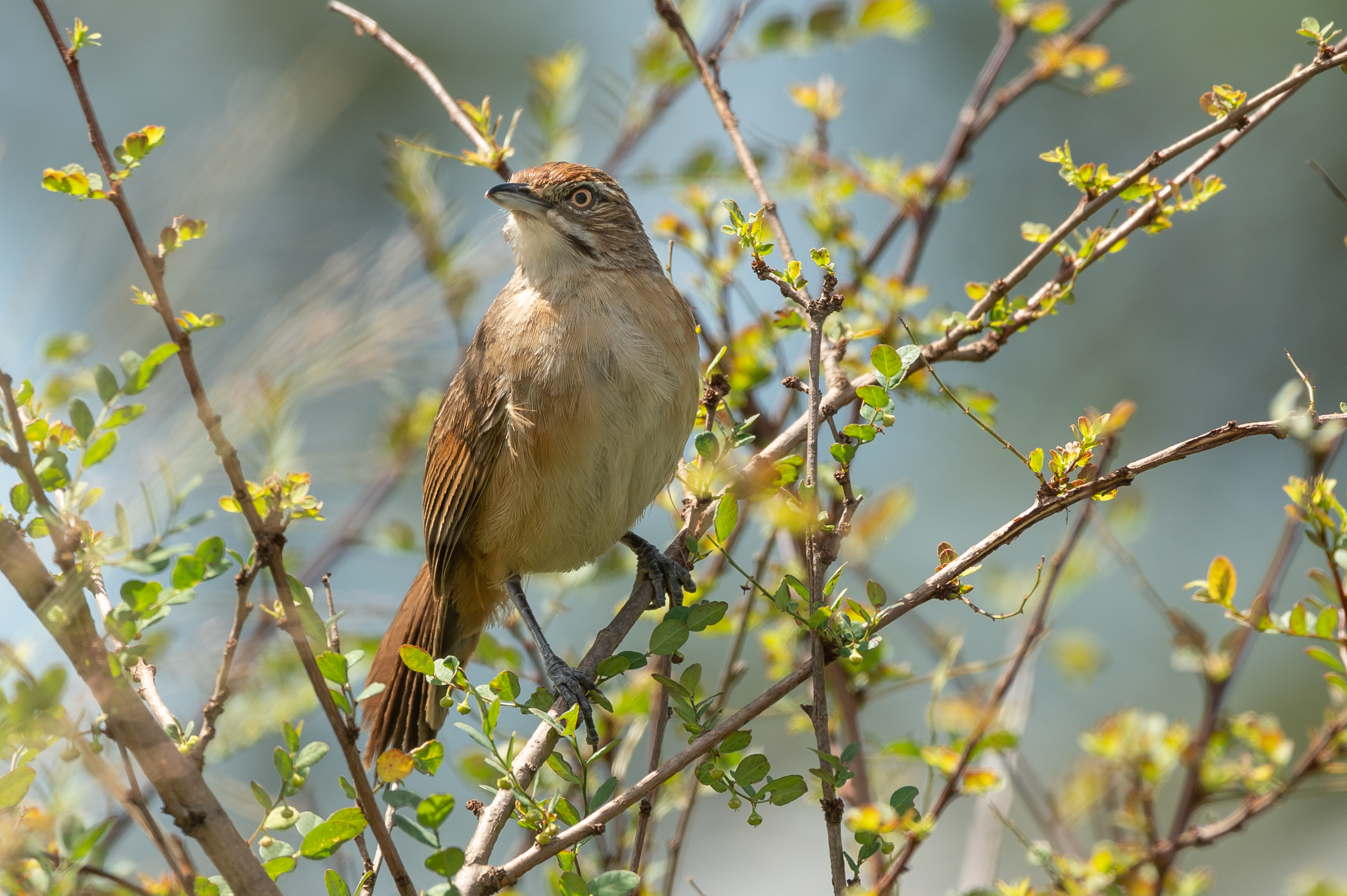
Photo by Scott Stoner-EbyPhoto by Scott Stoner-Eby
This species is easily encountered while birding moist grassland savanna like Nairobi national park,Masai Mara national reserve,Amboseli and the expansive Tsavo West and Tsavo West. The photo appearing above was taken in Nairobi national park.
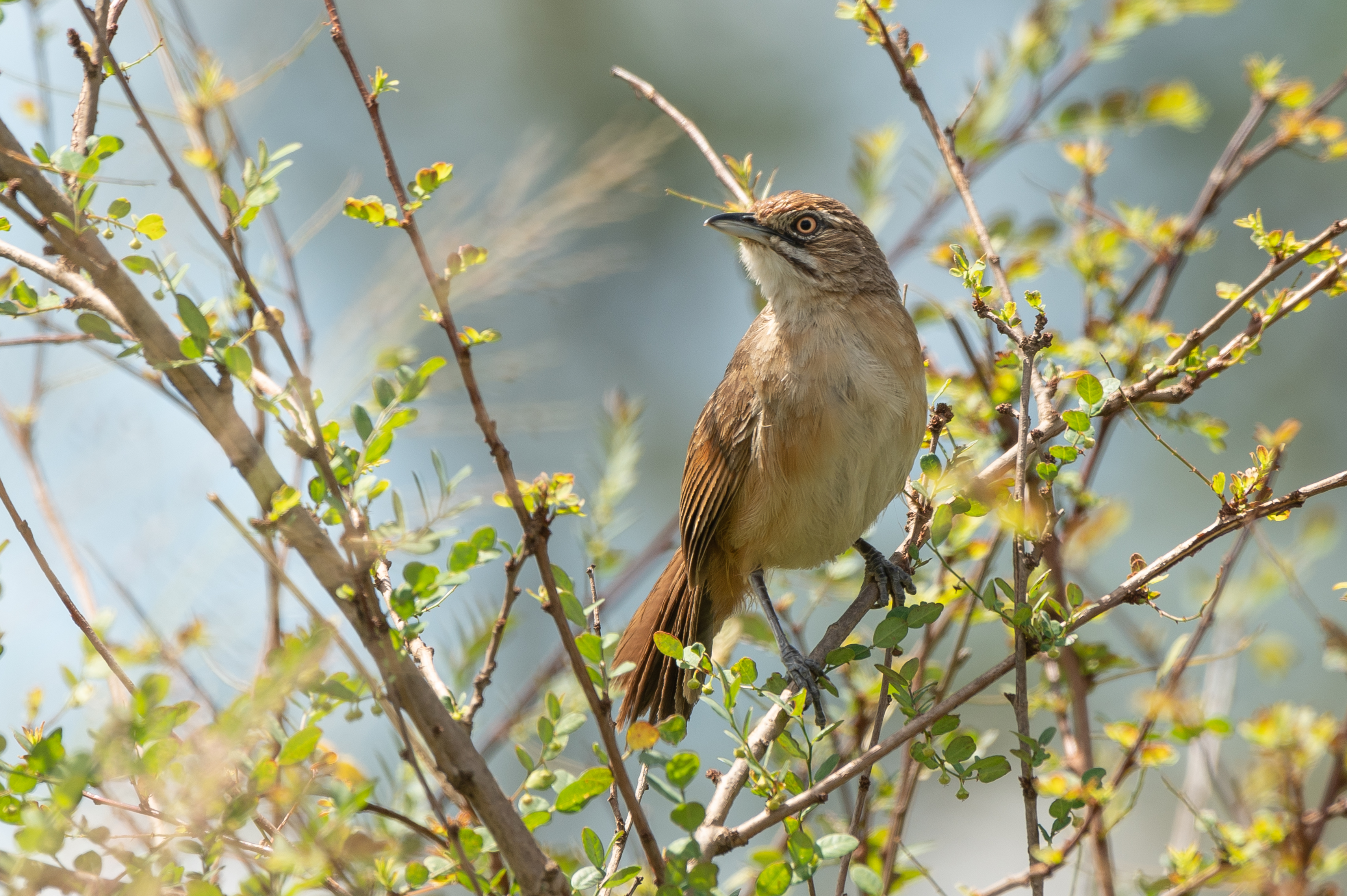
Large, unusual brown warbler with a black tail, pale eye, and black “moustache” mark. Found in patches of tall, thick grass within savanna and scrub habitats. Generally skulking, and most often seen when it sits up to sing. The song is a chatty, warbling jumble with a distinctive fast cadence. Similar in overall shape and habitat to Fan-tailed Grassbird, but much larger, with a pale eye and black facial streak.
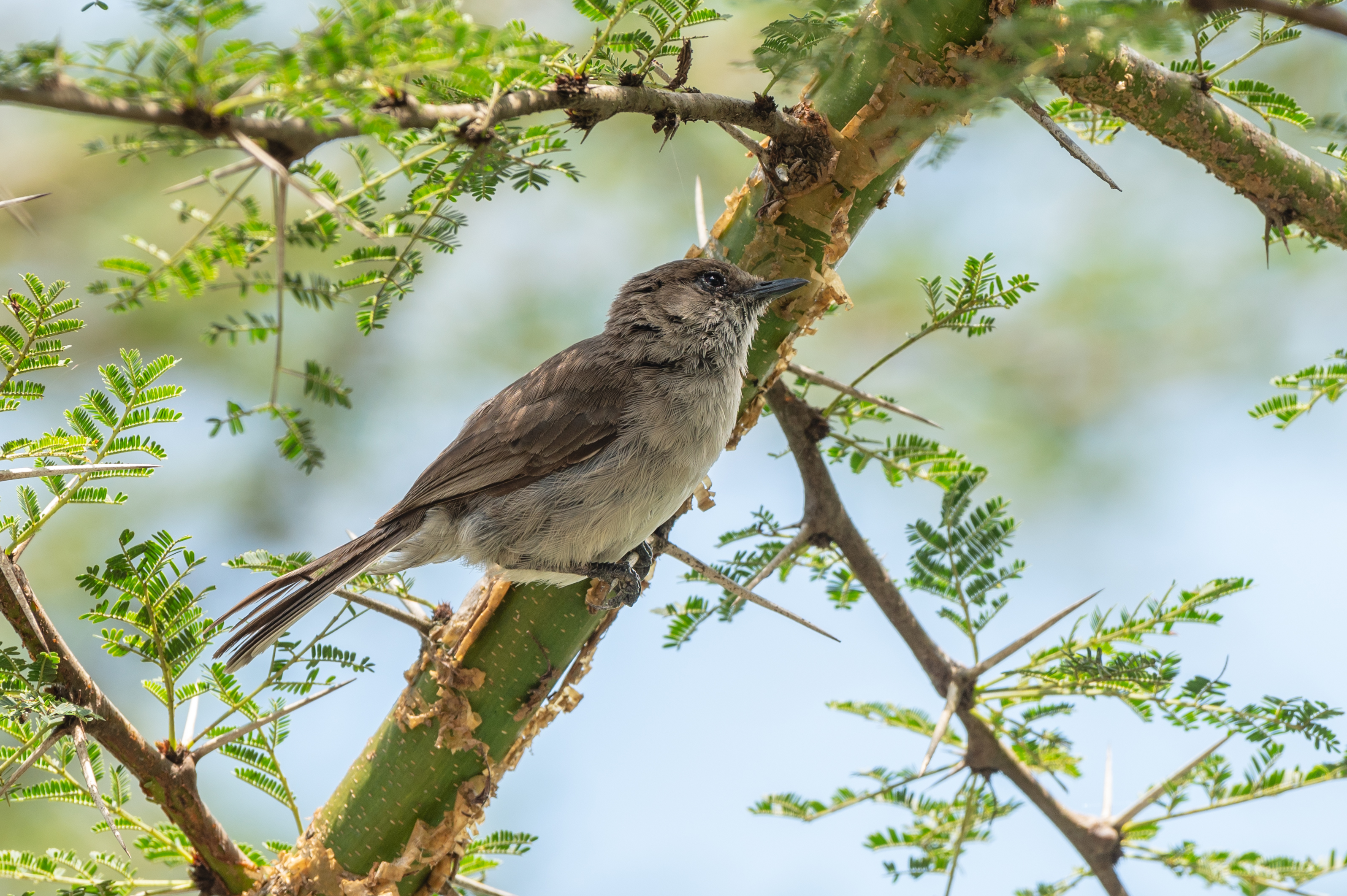
Brown Warbler as it is sometimes referred to is Remarkably plain brown warbler whose most outstanding features are a finely speckled throat and a white outer tail. Found in the canopy of acacia trees at middle or high elevations. Slow-moving and inconspicuous. Usually seen singly or in pairs.
We observed this bird last Saturday when Scott and I went birding Nairobi national park for a half a day which was quite successful.Other than the Brown Parisoma which I love always love to watch,we also managed to pick-up species like Hartlaub’s Turaco,Singing Cisticola,African Yellow Warbler,Red-throated Tit and Sulphur-breasted Bush-shrike just to name a few.
Other than Nairobi national park,this bird can be seen in Aberdare national park,Western escarpment of the Rift Valley and Masai Mara .Have a remarkable birding week!
Eastern Grey Plantain-eater, Crinifer zonurus,is a huge Turaco found mostly in areas around Lake Victoria and its environs.It is a relatively common and noticeable bird,and unlike their forest counterparts,they lark radiant co lours.Their plumage is overall grey above spotted with brown. The head, erectile crest, neck, and breast are brown streaked with silver. The underparts are whitish, and heavily streaked with brown.Eastern Grey Plantain-eaters have a thick bright yellow bill and show a white wing bar in flight.
In Kenya it is a very easy bird to see around Kisumu city at the shores of Lake Victoria,Ahero rice plantations,Busia,Homabay,Kongolai valley and Migori.
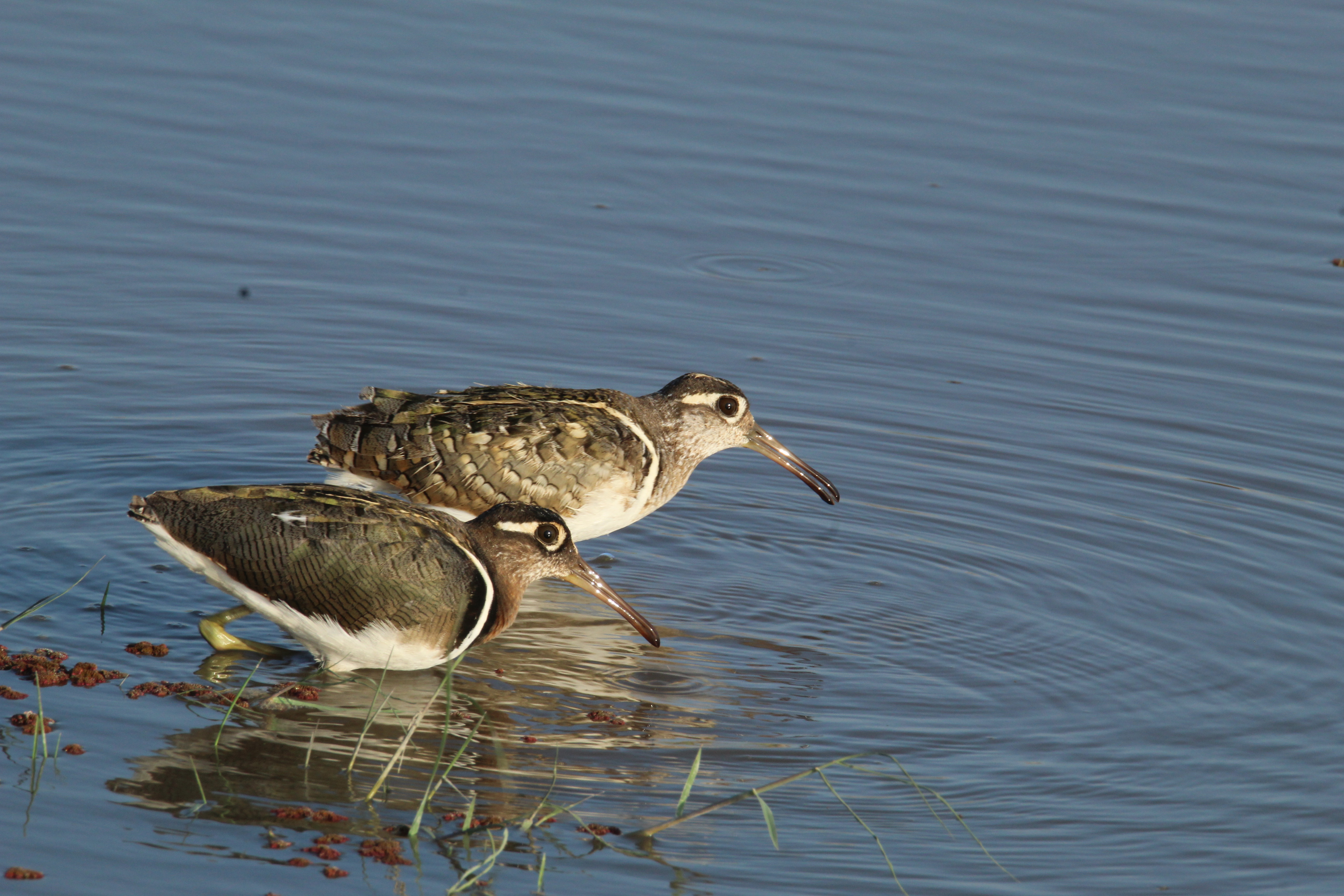
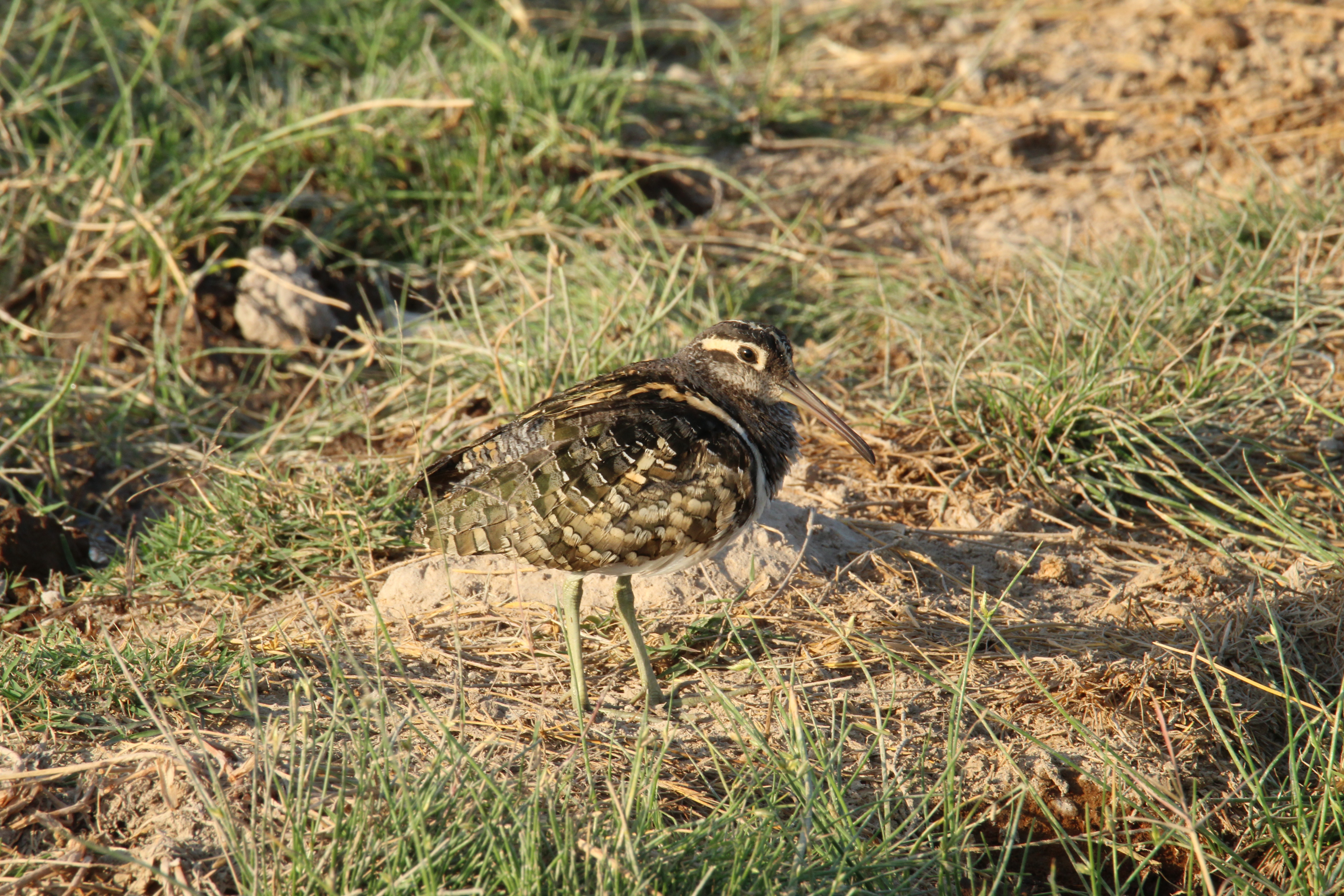
Males are more colorful or ornamented than females in most, but not all, bird species.The female Greater Painted-snipe is striking compared to the male.This two were photographed at Amboseli national park at Enkongo causeway which is also good for watching Blue-billed and Cape Teal,Southern Pochard,White-backed Duck,Saddle-billed Stork and giant looking Goliath Heron.
Greater Painted-snipe.Photo by Joe Aengwo.
This species can also be found at Mwea rice field,Lake Nakuru national park,Masai Mara and Nairobi national park.

Fischer’s Turaco is a commonly recorded species along the East Africa coast.Birders will surely encountered the species when birding subtropical or tropical moist lowland forest of Arabuko Sokoke forest,Shimba Hills national park and Amani nature reserve located in Eastern Usambara mountains.
Fischer’s turacos have amazing shades of green feathers marked with touches of red and white. Easy to distinguish with its crimson crest, nape, and primaries and inner secondaries. The crest is tipped with black at the tallest part, white on lower portion. The upper parts are green- blue to violet-blue, with lower belly being much darker. The red bill has white lines both above and below the black lore area; bare orbital skin is red and the eyes are brown. The wings are rather short and rounded; tail is long. Turacos are noted for peculiar and unique pigments, giving them their bright green, blue and red feathers.





 Kenya Birding