
Spotted Ground-Thrush and African Pitta Spotted in Arabuko Sokoke Forest located along the Kenyan Coast.

Spotted Ground-Thrush (Geokichla guttata) at Arabuko Sokoke Forest in August,2024.Photo by Joe Aengwo.

Getting lifers in an area that you have birded quite extensively is not easy,seasoned birders will definitely agree with me on this assumption, but on Saturday last week,our local guide Jonathan Baya (An excellent guide in Arabuko Sokoke forest ) managed to find two lifers for me and my clients in less than an hour after entering the forest.

African Pitta and Spotted Ground-Thrush were our big catch for us.Both birds are rarely seen and have localized movement within Africa.

We saw one Pitta on the floor of the leafy forest ground. The bird was extremely shy and moved around on the ground within dense cover and once in a while standing motionless. We got excellent views before we decided to allow the bird enjoy its peace.Very attractive bird indeed.

Now,it is with Jonathan excellent birding skills that were helpful in located the Spotted Ground-Thrush.Very camouflage and standing still for a while. Large brown-backed thrush with heavy spotting below and white wingbars, very beautiful bird!. This bird also rare and localized endangered species,with most records coming from this coastal forest

That was a very productive morning for us and the memories of that day we will forever cherish!!.
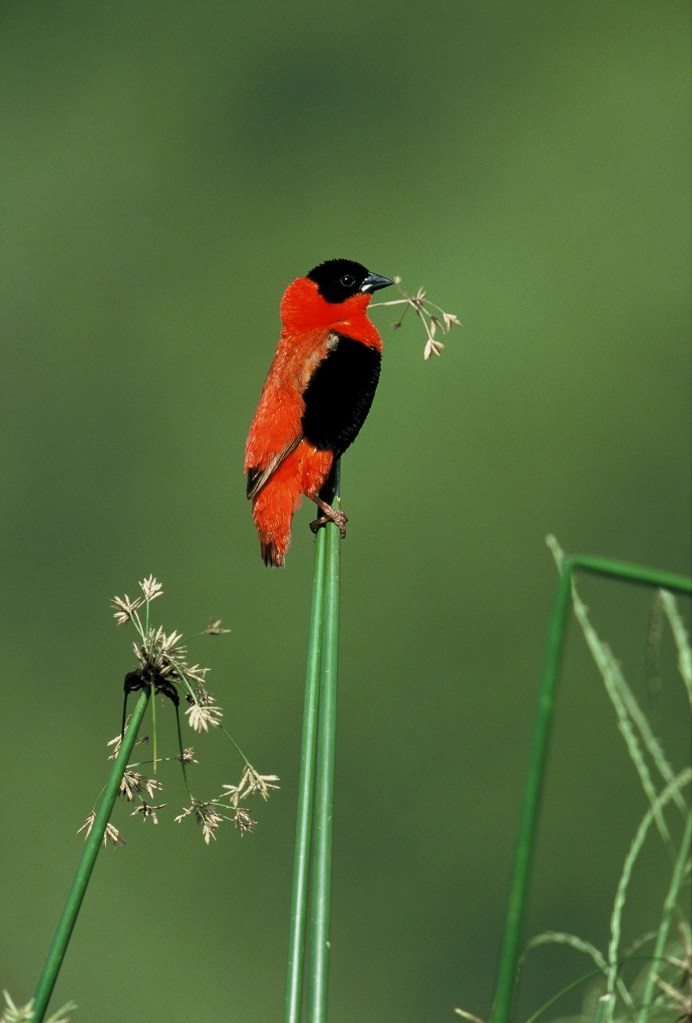
Northern Red Bishop, the scarlet beauty found on the shores of Lake Baringo.

Photo by Tony Crocetta

Baringo, a shallow freshwater Lake, lies 110 km north of Nakuru town.  500 species of birds are one of its biggest draws. Baringo’s bird population rises and falls with the seasons. The dry season is normally the leanest time for birders, but the lakeshore resounds with birdsong at most times of year.

The shoreline is bursting with birds and photography is prime here because the birds quite approachable. Egrets, Herons, Kingfishers and Bee-eaters are the stars here.

If you are in the area at the right time of the year when the male Northern Red Bishop is on its full breeding plumage, you have the privilege to witness its courtship flight. Photographic opportunities are immense as the polygamous male tries to impress the females.  

This species is sexually dimorphic and polygynous, with the males being particularly larger than the females. The genus Euplectes is notorious for sexually selected characteristics, including elaborate displays and elongated tail feathers. The bright orange-to-yellow plumage with a contrasting dark black pigment is for attracting mates.

Northern Red Bishop inhabits tall open or bushed grassland. It closely associated with giant grasses and a tall crop like millet and sorghum, but also occurs in open habitats with ranks weedy vegetation. At night it roost in thicket or tall grass. Enjoy your birding.