
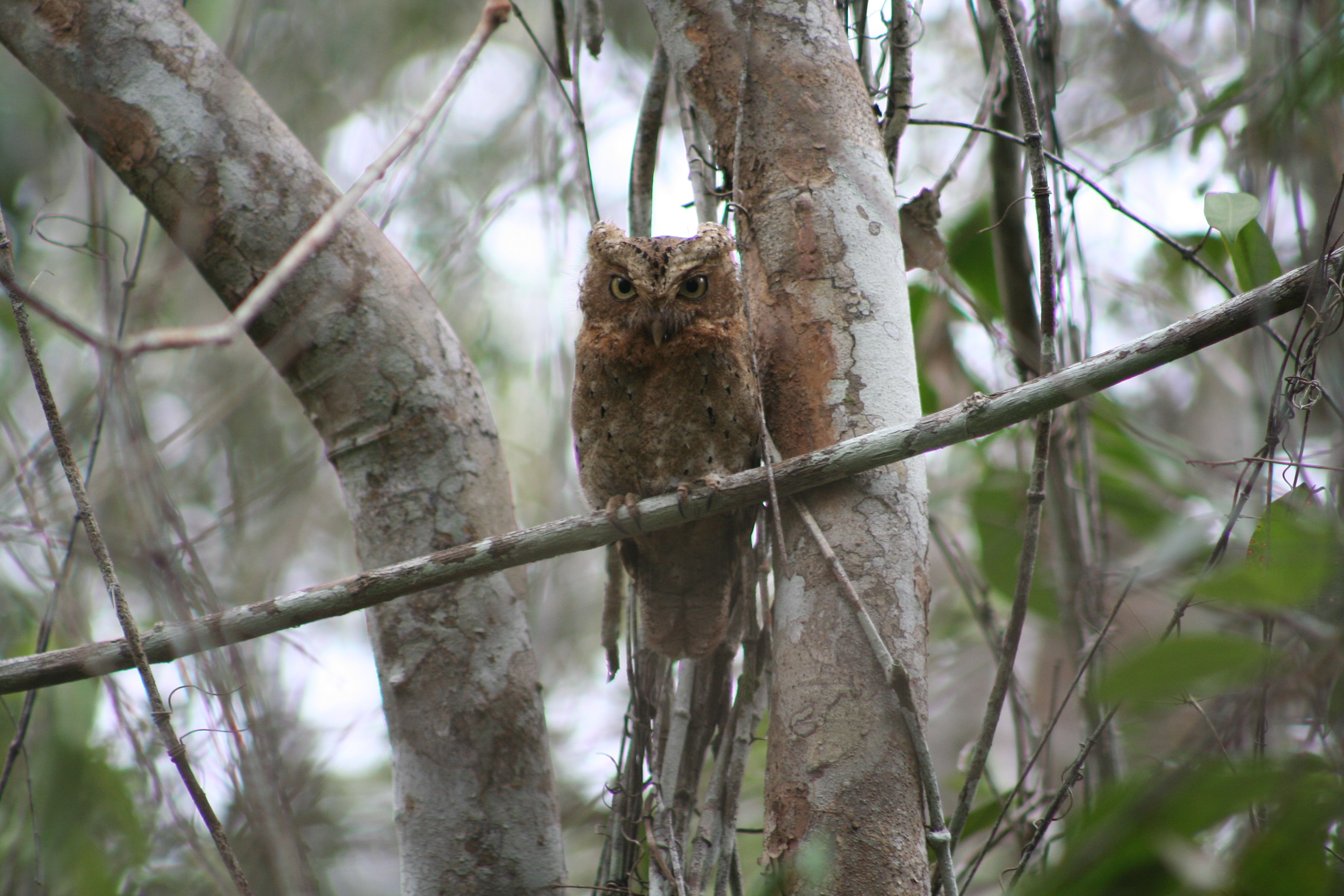
I captured this owl recently in Arabuko Sokoke Forest while traveling with guests in Kenya.

I captured this owl recently in Arabuko Sokoke Forest while traveling with guests in Kenya.
In Kenya, two species exist. African and Lesser Jacana. African Jacana which is our today subject of discussion is a diurnal bird which is a very common species in all wetland habitats and is widely distributed across the country.This birds are well-known for their ability to walk on floating vegetation , hence their commonly referred “Jesus bird”.This adaptation is made possible by their extremely long toes with long straight claws.

Adult bird has a striking chestnut body colour with a bright blue frontal shield which extend to the bill. The front neck is white that covers the ear coverts and runs all the way to the breast, while the hind-neck is black. The species exhibit no sexual dimorphism.
Perhaps the most interesting phenomenon about African Jacana is their Polyandrous lifestyle where the responsibilities of incubating and bringing up the chicks are singularly done by the male. Ladies have good time here!!!
This Greyish Eagle Owl was formerly classed as a race of Spotted Eagle Owl, with the latter found in the southern part of the equator , while former is located in northern part of the equator, this is as far as my Kenyan distribution knowledge is regarding this species.
It is a medium to large greyish (grayish) brown owl with dark eyes. Finely vermiculated above and densely so below with barring.

All my records of this species has been from Lake Baringo, Lake Bogoria National Reserve and Kerio Valley. I have been informed of records from Samburu and Meru too.
Stay tuned as I return later next week from a tour and will be preparing a tour report, new photos, bird songs and much more!
– Joe,
have a happy birding week
The Eastern Paradise Whydah is a small, widely occurring bird of eastern Africa. It gathers in flocks but separates into pairs during the mating season.Easten Paradise Whydah is a species specific brood parasite with its target being the Green-winged pytilia.
This bird is both dichromatic and dimorphic during the breeding season. When in “breeding mode”, the male has black plumage along its back and tail, with a yellow nape and chestnut colored lower breast and belly. It also grows new long- tail feathers. During the non-breeding season, it loses its striking black and yellow coloration, becoming brownish in color with black streaks on its head. The female has grayish, black-streaked upper-parts with a brown-colored head. Its breast is pale gray and its belly is white.
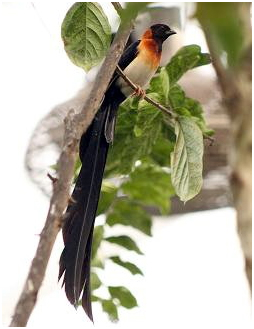
The Eastern Paradise Whydah feeds on grass seeds such as millet and wild oats, but will occasionally take termites and grubs.
It inhabits dry thorn scrub and open or woodland savannahs throughout eastern Africa. Fairly common after heavy rains both as a resident and a wonderer , appearing usually near watering areas. Well distributed in the area of Samburu, Meru, Lokichokio, Turkana, Tsavo and Amboseli National park.
A few important resources about Kenya’s Important Bird Areas.
 A fantastic map of Kenya’s Important Bird Areas from Nature Kenya.
Also, from KenyaBirds, a listing table of the Important Bird Areas, Locations, Habitats, and threatened species.
Coming up soon, a Bird of the Week with a song I recorded while birding recently.
– Joe
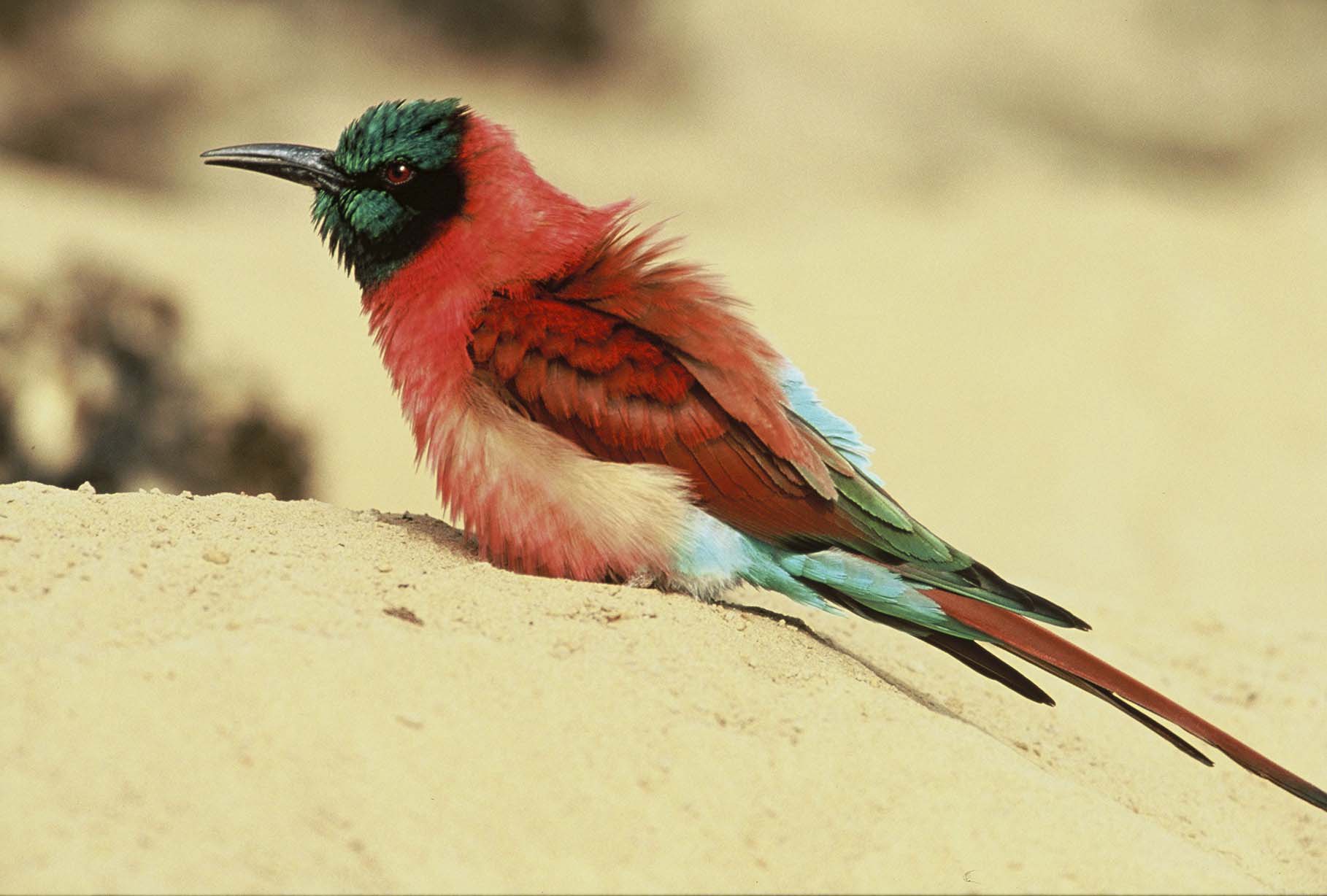
November 30, 2012 bird is Northern Carmine Bee-eater Merops nubicus (photo@ tony crocetta)
Carmine Bee-eaters are carmine in color, except for its greenish blue head and throat, and the bold black mask-like stripe across their eyes. Their eyes are red and they have a black pointed de-curved beak. Their central tail feathers are elongated. Their legs and feet are blackish brown. The sexes are similar in appearance. It is one of the largest species of Merops at 35cm long. Young birds lack the elongated central tail feathers and are pinkish brown on the mantle, chest to belly, and flanks.
In Kenya they are passage migrant in the area and its distribution is found in the north western part of Kenya, extending all the way to coast, in areas around Watamu, Tsavo east, Meru national park, Turkana, Nasolot, Kerio Valley and Lake Baringo.
Northern Carmine bee-eaters hunt mainly by keeping watch for flying insects from a perch. The insect is snapped up in the bill, then the bird returns to the perch, where it beats the prey against the perch until it is inactive. A stinging insect is held near the tip of its tail and rubbed on the perch to be relieved of the venom and sting before being swallowed whole. Besides branches, Carmine Bee-eaters use the backs of game or cattle and even large birds, such as Jacksons Bustard or Storks as animate perches, waiting to catch any insects that they disturb. Carmine Bee-eaters also fly freely to bush fires to prey upon fleeing insects.
For the last 10 years of my birding life, I have never came across any species of bee-eater which fails impress!!! Have a great birding week.
– Joe
Lake Baringo is a fantastic location for bird watching in Kenya. I grew up in Lake Baringo, where I developed my interest in birding and I never get tired of going out to observe all the species in my backyard. Yesterday, with my friend Wilson Tiren, down by the shore of the lake and at the rocky cliff we spotted some impressive species! There are approximately 500 bird species in and around the lake. We spent a full day birding and managed to come up with this list of species for those keen birders who are wondering what can be seen in this area of the Great Rift Valley.


Slender-tailed nightjar is a common and widespread species in dry areas below 2000 metres above the sea level. Very similar to Gabon (Square-tailed) nightjar, but the tail is often paler and greyer, with central rectrices extending beyond the others.
It has a habit of flying low and alights on bare ground, rock or stump, often flying only on a short distance after being flashed. Commonly hawks insects around lights. It sings from the ground or from a low tree. Roosts on ground under scrub cover.
The Slender-tailed nightjar is common and widespread resident in dry bush and ranges throughout the coastal lowland, Rift Valley, Meru and Tsavo National Park.


