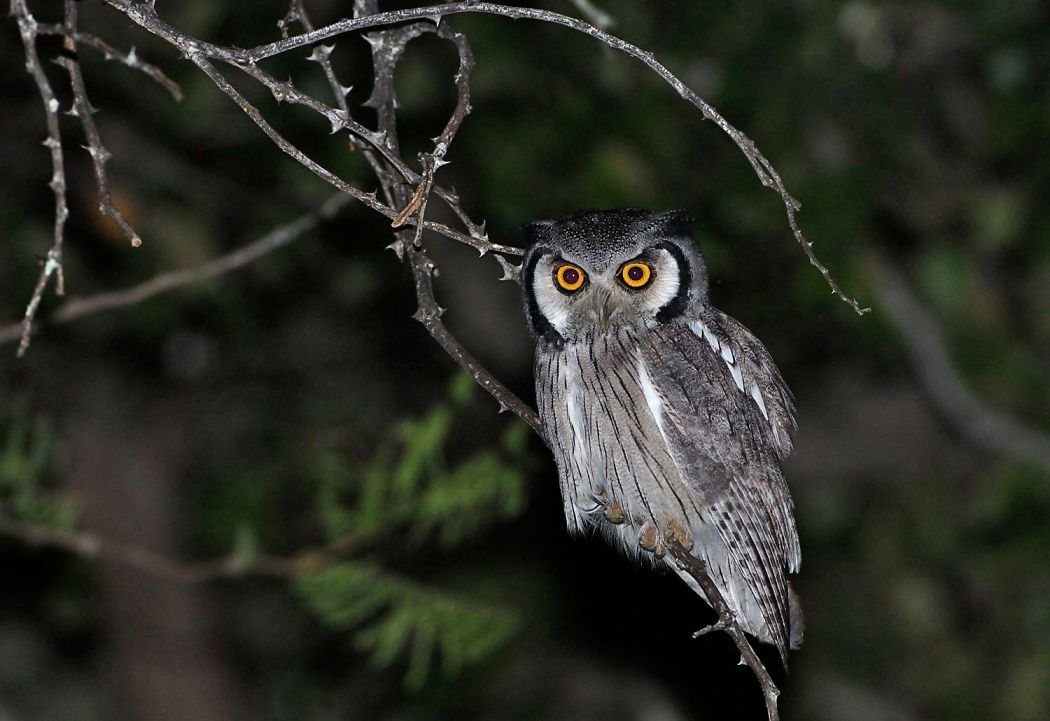
Northen white-faced scops Owl

Photo@Yan Van Duinne

The Northern White-Faced Scops Owl is a smallish owl easily recognizable by its very striking white facial disc, with a border of black plumage. It has large, bright orange eyes, which are also surrounded with black. (Juveniles have greyish plumage on their faces, and their eyes are yellow). These owls have prominent ear-tufts. Bigger than the Scops Owl, they are on average 25cms in height, weighing around 200gms. The feathers of their upper parts are mostly pale grey: their under parts are lighter and more streaked. The female of the species is larger than the male.Like so many other species of owl, northern white faced scops owl is a nocturnal. In Kenya they are found in Samburu and Baffalo springs  National reserve , Meru National Park, Kerio Valley, Lake Baringo and Bogoria .

This species is found singly or in pairs. The female will lay a clutch of 2 or 3 eggs in the old stick-nests of many other bird species, including small raptors such as goshawks and kites – or even herons, dove or crow’s nests. If these are not available, they will nest in natural tree holes. The 30 day incubation is mainly by the female, although the male may assist. Young chicks will start to fly at roughly 33 days, leaving the nest area two weeks thereafter.

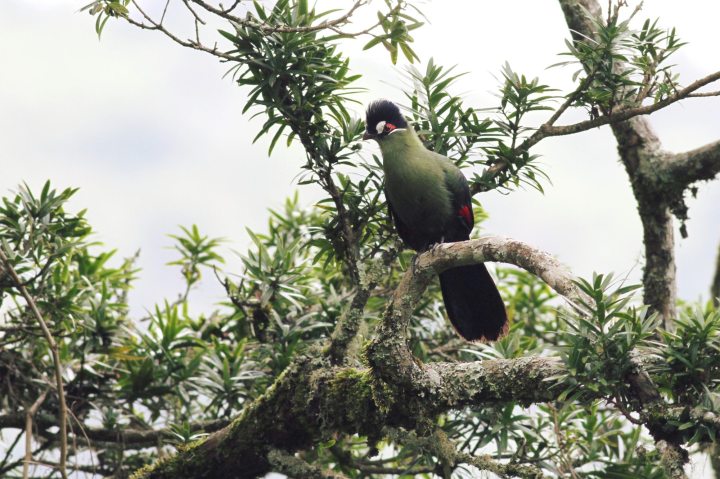
Crested Guinea Fowl (Guttera pucherani)

Photo@Raymond Galea

Crested Guinea fowl has a wide range in Kenya and northern Tanzania. In Kenya it is found mostly in western tropical rain forest remnant of Kakamega forest and Lake Manyara national park in Northern Tanzania, Body plumage is much like a typhical Guinea Fowl, with whitish spot; most recognizable features is the short, curly “mop” of black feathers on the head, the rest of the head and neck are bare with blue skin, red skin arond the eyes and on the neck;eyes are red;legs dark brown to black.The species is mono morphic.

Magpie Starling (Speculipastor bicolor)


The magpie starling is a northeast African endemic and an occasional non-breeding visitor to northeastern Tanzania. The male is black and white; the female, brown and white both with bright red eye which aid identification a great deal. The best place to see them in Kenya is Lake Baringo where is frequently spotted feeding in big fig trees along the cliffs.

Joe guided Nigel Marven of Animal Planet on a Kenya Birding Trip

photo@Joe Aengwo

Nigel Marven went Birding in Kenya

When Moses, a colleague of mine informed me that I was to guide a client from England for 8 days birding safaris, I had no idea that my client will torn out to be Nigel Marven, the famous Animal Planet natural history presenter.  We had good time birding together in Kakamega forest, Tugen hills,Lake Baringo, Bogoria, and Nakuru and finally Nairobi National Park. We managed to spot over 300 species of birds and lucky enough, we managed to see most of our sort after species with exception of four or five species.

Gabar Goshawk (Micronisus gabar)

Gabar Goshawk (Micronisus gabar)

Photo@Michael Sammut

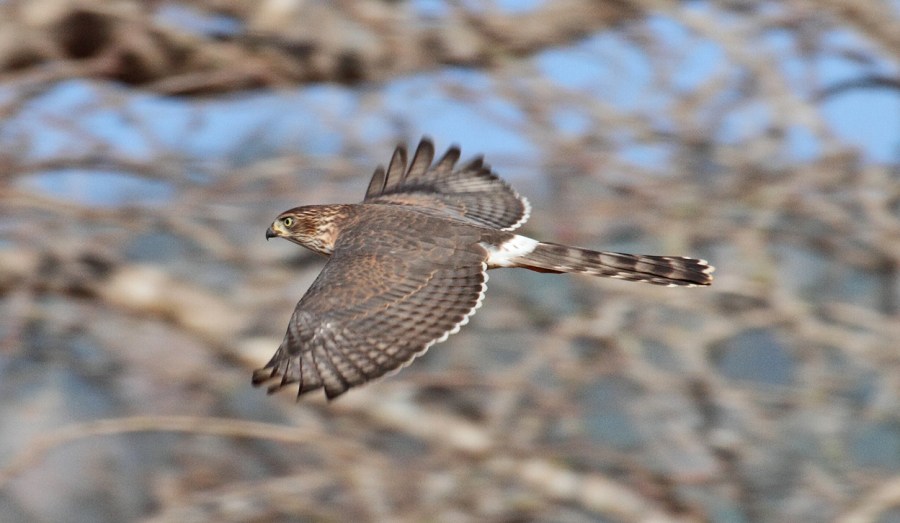
Gabar Goshawk is smaller than other Goshawks. We can observe two morphs, one grey and one almost black. This melanistic form represents about 6 to 25 % of population. The photo shown above is of a juvenile bird.

In typical grey morph, adult has plain grey upperparts and white rump. Tail is grey, barred with black.Underparts are plain grey on chest. Belly is white, barred with grey. Vent is white. Flight feathers are sooty-grey with very pale grey bars. Tail is white with broad dark grey bars.
Head is grey. Bill is black, with red cere and gape. Eyes are deep dark red. Long bare legs and stocky toes are bright red.

Gabar Goshawk lives in savannahs and semi-arid scrub with scattered trees. It avoids too dense forests and driest deserts. It is rather found in drier thorn savannah, and also along watercourses.In Kenya it is commonly seen in Lake Baringo and Bogoria, Tsavo West and East National and Samburu National Reserve.

White-headed Buffalo Weaver (Dinemellia dinemelli)

White-headed Buffalo Weaver (Dinemellia dinemelli)

Photo@Jurg Hosang

Hello birders!!Sorry, I was a way for some time birding with two birders from Indiana and New York state.For that reason, I did not post any bird of the week for the last two weeks!. I am back now with great pictures that I hope you will enjoy!!!for how beautiful are just birds!!.

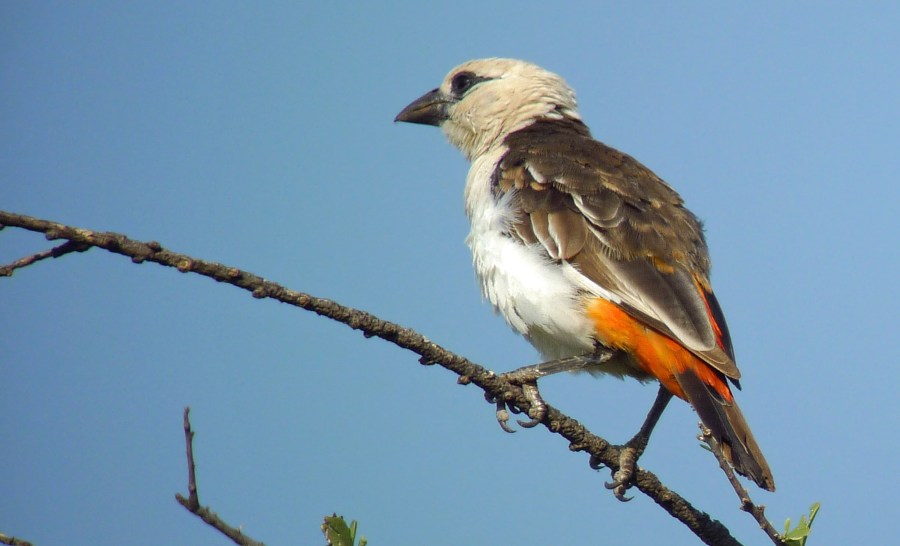
The white-headed Buffalo Weaver is confine to Eastern Africa, and it is brown and white with red rump and vent. Both are stout-bodied, heavy-billed bird. In breeding season the male’s bill become whitish and swollen at the base. Buffalo weavers live in dry regions, where they forage omnivorously on the ground in small noisy flocks, often in the wake of buffalo heards.The nest, a heap of thorny twigs, contains components for two or more pairs;several nest may occupy the same tree.

It is common and widespread in dry part of the arid and semi-arid areas of Kenya.

Rufous-crowned Roller (Coracias naevius)

Rofouse-crowned Roller

Photo@Yan Van Danne

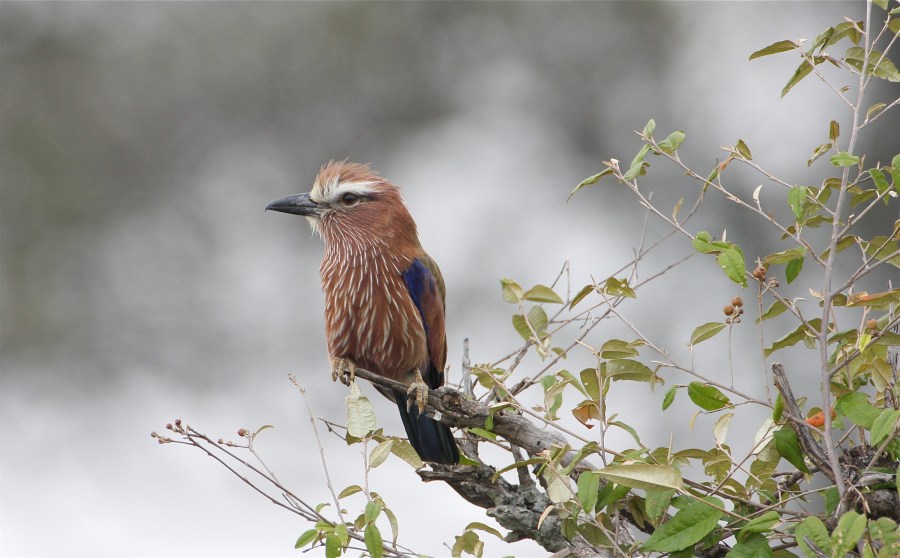
Rufous-crowned or Purple Roller has it is sometimes referred to is a very uncommon compared to other species of Rollers, with exception of Abyssinian Roller.It feed on big insect and it can be observed from one spot for some time as it scanned and goes for his prey and returning to the same location .

The bird is generally purple as the name suggest with violet tailed and a little spot on the wing shoulder.It is the biggest roller we have in East Africa, therefore identifying this bird should never be a problem at all.

It is very common in areas around Lake Baringo, Lake Bogoria, Kerio Valley, Kapedo, Samburu National reserve and Meru National Park.


Southern Ground Hornbill (Bucorvus leadbeateri)

Southern Ground Hornbill (Bucorvus leadbeateri)

Photo@Joseph Aengwo

Southern Ground Hornbill is a large, turkey sized terrestrial bird, black-plumaged except for white primaries, conspicuous in flight. Adult bird has a bright red bare skin around eyes and on the neck, where usually somewhat inflated;eyes pale yellow; bill back, with small casque at the base above.

Pairs or small groups walk about in search for insects and small vertebrates.It will tend to take flight only when disturbed or alarmed.Widespread but partially distributed in open grassland and savanna around Nairobi  National Park, Maasai Mara, Central Rift Valley a round Lake Nakuru and Naivasha and Kakamega forest, Mt.Elgon and Kapenguria.

25 March, 2012:Red-and-Yellow Barbet (Trachyphonus erythrocephalus)

25 March, 2012:Red-and-Yellow Barbet (Trachyphonus erythrocephalus)

Photo@Jurg Hosang

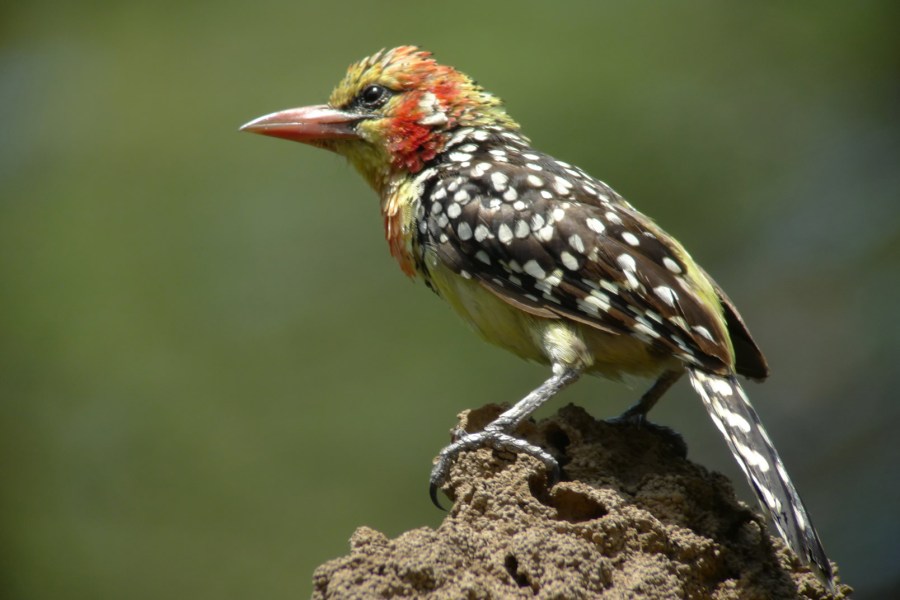
Red-and-Yellow Barbet like so all the other species of Barbet that I have come across are creatures of distinctive beauty. Barbet are closely related to tinkerbirds, woodpecckers,   honeyguides  and wrynecks. They are usually found alone or pairs.

This Barbet has a strong red billed, which is hooked and the face is generally red with bright white eared patches. The nominate race which is generally common is boldly white spotted above, with a black and white  speckled band across the yellow breast, yellow-white tail spots, and boldly barred outer tail feathers; rump yellow, upper tail coverts red and yellow; and under tail coverts red and yellow tips.

Very social species and always prefer hanging around termite mounds where they both derive their food stuff and build their nest is circular holes.

Locally common and widespread in dry bush,  savanna  and woodland scrub of Kerio Valley, Lake Baringo, Lake Bogoria , Meru national park, Olorgesaillie and Magadi road.