
The Narina Trogon:A Jewel of the African Forests.

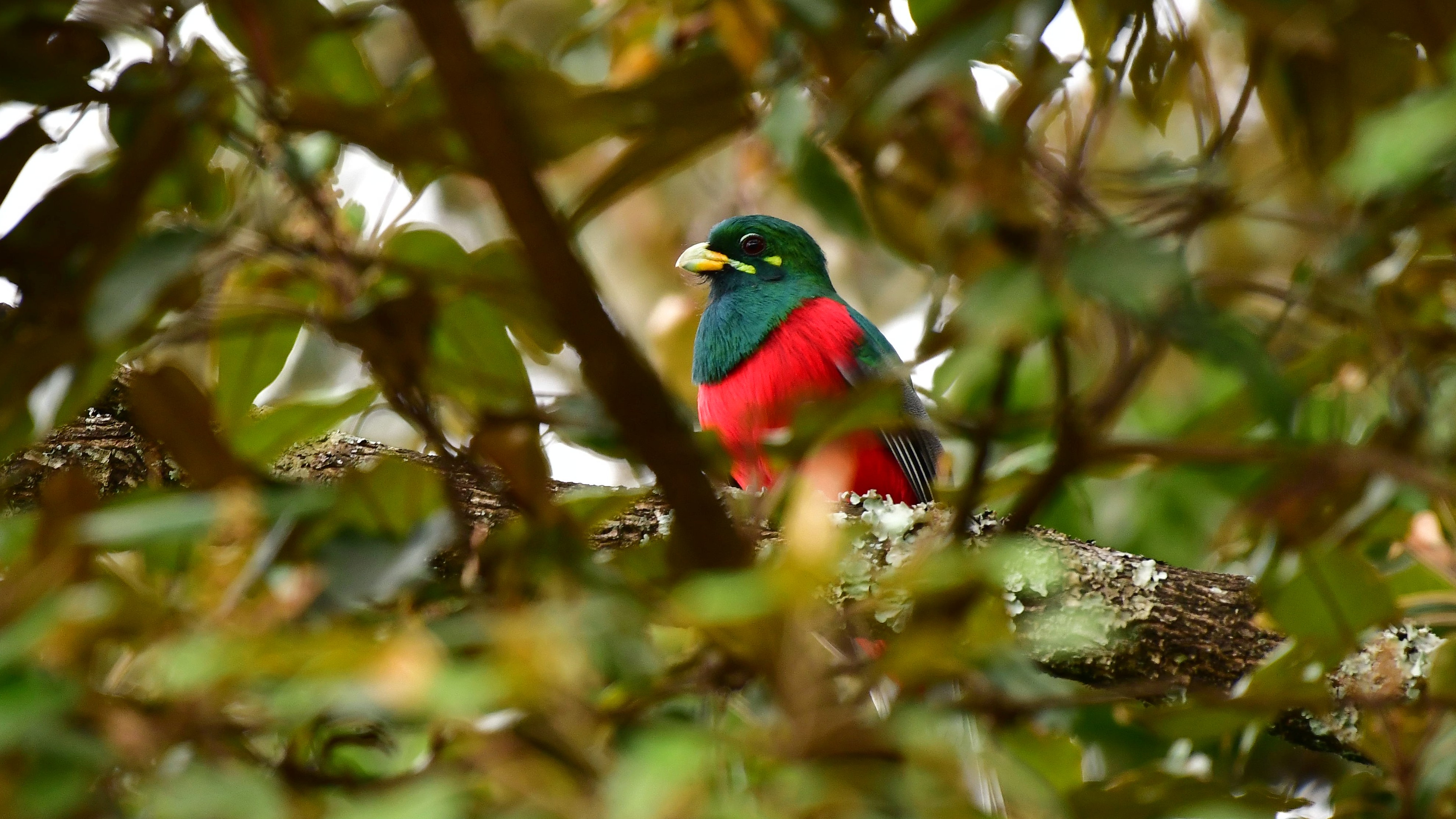
The Narina Trogon (Apaloderma narina) is one of Africa’s most striking and elusive bird species. Known for its vibrant plumage and shy behavior, the Narina Trogon is a member of the Trogonidae family, a group of birds renowned for their colorful appearance and preference for forested habitats. Found across a wide range of sub-Saharan Africa, this bird represents both the beauty and biodiversity of the continent’s woodlands and forests.

The Narina Trogon is a medium-sized bird, measuring about 32 to 34 centimeters in length. It is sexually dimorphic, meaning that males and females have different plumage. Males are particularly eye-catching with a vivid green back and head, a bright crimson belly, and a subtle iridescence that shimmers in sunlight. Females, though less vibrant, are beautiful in their own right, featuring olive or brownish-green upper parts and a duller red belly. Both sexes have a distinctive blue eye-ring and a long, graduated tail, adding to their elegant appearance.
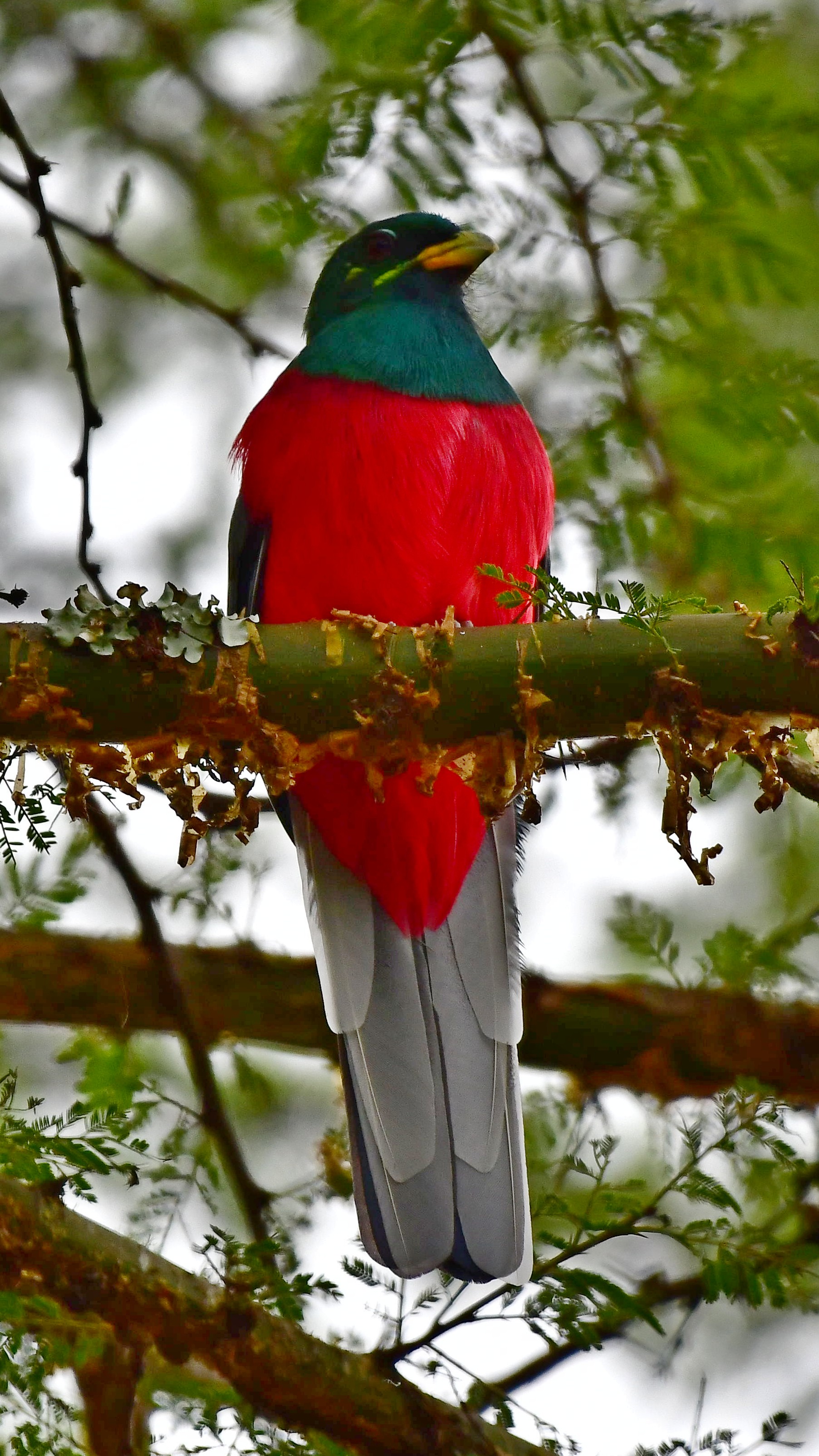
This species has a wide but patchy distribution throughout Kenya. It inhabits a variety of forest types, including tropical rainforests, montane forests, and riverine woodlands. The Narina Trogon prefers dense vegetation and is typically found in areas where tall trees and thick undergrowth provide both food and cover. Despite its broad range, it is rarely seen due to its secretive nature and excellent camouflage among the foliage.

The Narina Trogon is a symbol of the hidden treasures that Africa’s forests still hold. With its brilliant colors, elusive habits, and vital role in forest ecosystems, it reminds us of the importance of preserving natural habitats. Though not endangered, its reliance on undisturbed forest environments makes it vulnerable to human activity. Understanding and appreciating such species is the first step toward ensuring their survival for generations to come. Keep birding!
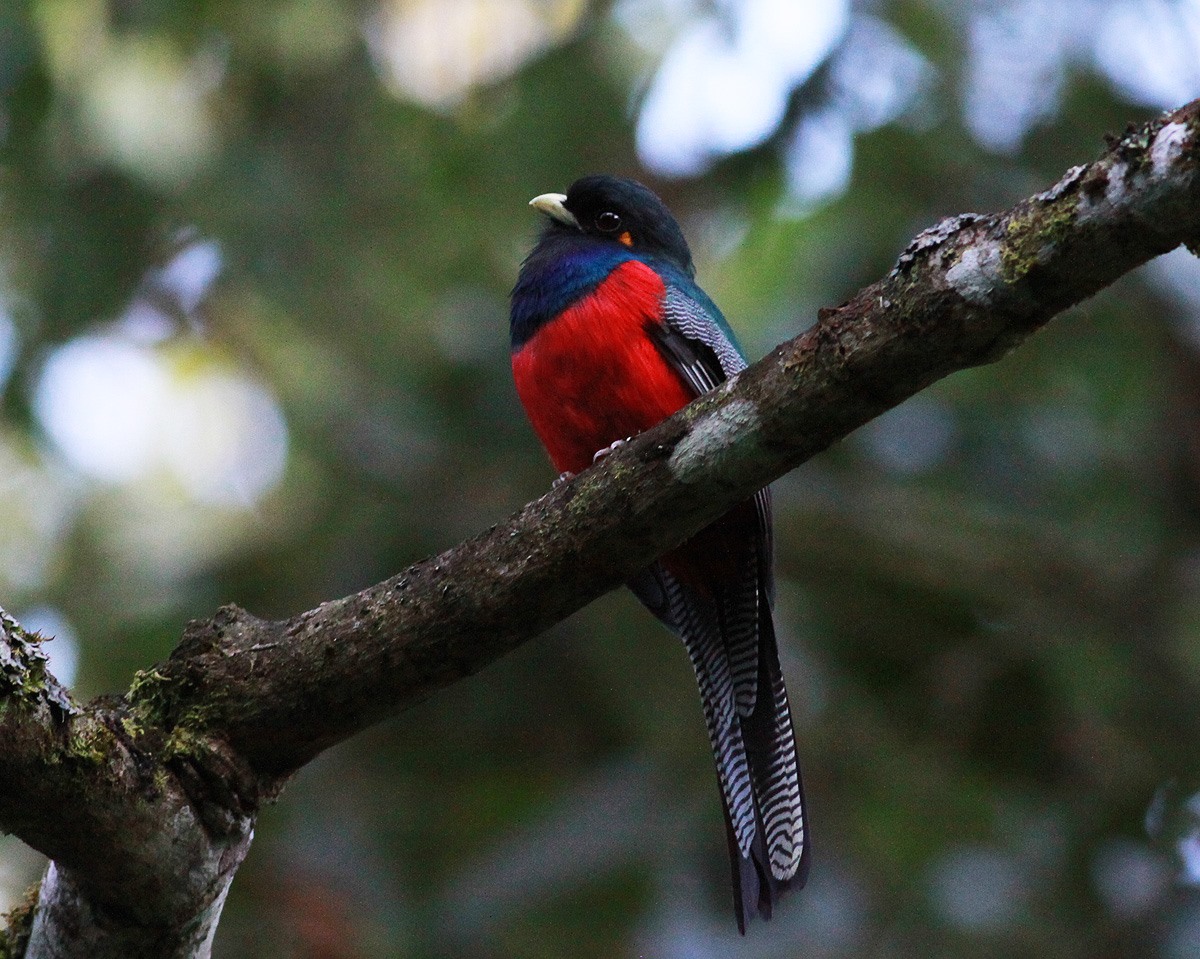
Bar-tailed Trogon at the Lower Slopes of Mt.Kenya.

Bar-tailed Trogon
Photo by Raymond Galea

On any bird watching excursion disappointment and  surprises happen all the time, so when my clients and I arrived at one of the forest block a long the lower slopes of Mt.Kenya, seeing a Bar-tailed Trogon was not really in our mind, I guess we had learned to manage our expectation.

On the main trail in the forest other things come by easily without much effort, Mountain Yellow and Brown Woodland Warbler, African Hill Babbler, Black-fronted Bush-Shrike, Yellow-crowned Canary, Abyssinian Crimsonwing, Hartlaub’s Turaco, African Crowned Eagle, Mountain Buzzard, Eastern Mountain and Slender-bill Greenbul, White-starred Robin, Ruppelle’s Robin-chat, Golden-winged and Tacazze Sunbird  among others were some of our priced collection.

Then the big moment come and voila we had some fantastic views of Bar-tailed Trogon. It begun by it calling from a nearby forest thicket  and its continuous calling betrayed its exact location and we had excellent photographic opportunities.

On such kind of trips, sometimes you lose and sometimes you win, but this time round we won in a big way.

Bar-Tialed Trogon (Apaloderma vittatum)

Bar-Tialed Trogon (Apaloderma vittatum)
Stratton Hatfield


The Bar-Tailed Trogon is a stunning secretive long tailed forest bird that sits motionless for long periods often high in the canopy.It is similar to the more widespread Narina Trogon  found both in Forest and bushlands, but with blue breast band and barred tail.

The Bar-Tailed Trogon has the following features that aid identification.The adult bird has dark green and red plumage with a blue band across the breast.From behind the Bar-Tailed Trogon has a narrow tail with black and white edges while underneath the tail is entirely barred.That’s where it gets its name from.The adult female has dull brown head and breast while the immature ones have pale-tipped wing coverts. Due to its secretive nature, the bird is rarely seen in location like Kakamega forest, Kieni Forest, Mt.Kenya and Aberadare National Park.