This is an adult male fan-tailed widowbird, Euplectes axillaris, a member of the avian family Ploceidae, the weaver birds. One of its cousins is the red-billed quelea, Quelea quelea, the most abundant bird in the world.This species has an extremely large range, so incidence of you spotting it while birding in Kenya is very high. They exhibit sexual dimorphism and female appears brown, with the distinctive red-shoulders which clear when the bird air-bone.
In Kenya this species is mostly seen in Masai Mara, mostly a long the northern part of the reserve around the Musiara Swamp.
Spotted Eagle-Owl is medium to large owl with prominent ear tufts. Upper-parts dusky brown with pale spots, under-parts whitish and finely barred. Facial disk whitish to pale ochre. A more rufous morph exists in more arid areas.It very similar to Greyish Eagle-Owl, only that has bright-yellow eyes, and in Kenya is mostly found in the southern part of the equator. It prefers Savannah, rocky outcrops, scrub, open and semi-open woodland, semi-deserts.
Birding hotspot where this species can be recorded include;Amboseli, Tsavo West and East National Park, Meru, Kitui, Maasai Mara and the greater area of Lake Victoria.
The Hammerkop (Scopus umbretta), about the size of a small egret, is entirely brown, with a robust crest which gives its head a hammer-like appearance. This pronounced head crest makes it unmistakable. The bill is long, laterally compressed, blade-like and tipped with a sharp hook. Its legs are strong and endowed with narrowly webbed toes.
This bird is related to the storks but is different enough to be placed in a separate family (Family Scopidae) of which it is the only member species.Perhaps what the hammerkop is knowned for is massive nest built mostly on a tall V-shaped branched acacia tree.Hammerkops feed mostly on frogs,fish and tadpoles, and they also take small crustaceans, grasshoppers, and aquatic insects. They often rest during the day and become active at twilight, when they are most often encountered, often alone. They range throughout Kenya.
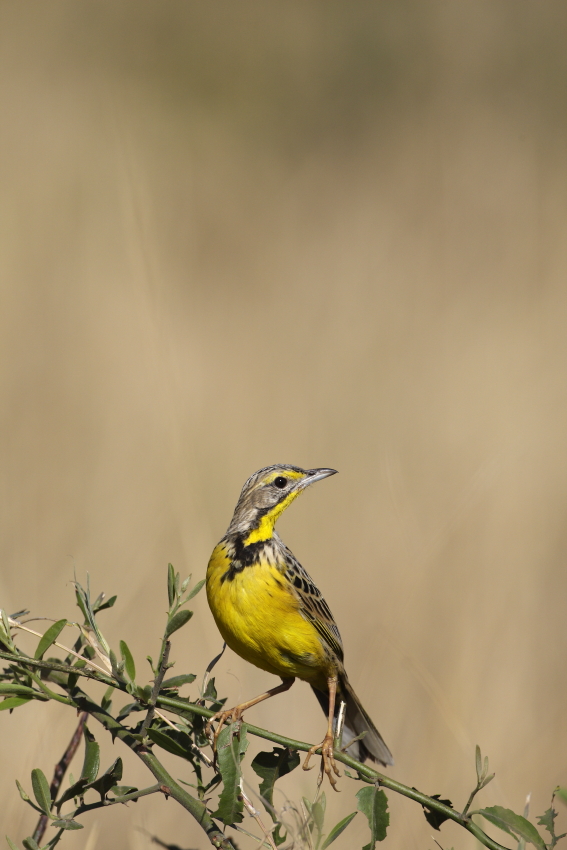
Yellow-throated Longclaw is a stocky grassland bird, that has a tendency of up and down when flushed out, exposing the conspicuous white edged tail.When perched the bird has a V-shaped black band white a bright yellow throat.The head and the upper part of the bird is all brown with little white on the upper neck.Young birds appear more buff yellow with band of indistict short streak on the breast.In Kenya it is widely distributed in areas like Aberdare park, Solio Ranch, Nairobi National park and Masai Mara national reserve.
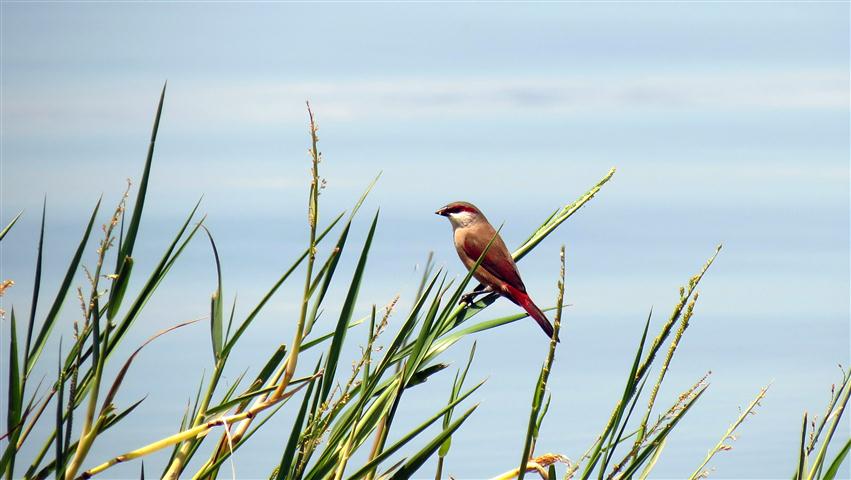
Crimson-rumped Waxbill is a typical firefinch type of a bird who most of the time prefer spending its time within the grass top close to wetland habitat.The photo above was taken in Teddy bear Island at Lake Baringo. A Red-rumped waxbill has a slate-grey or black bill. This species is monomophic. Adult bird is warm brown above, with indistinct narrow barring;rumped and upper taile-tailed coverts red;tiled dusky brown, with central feathers tinged crimson, as are the wing-coverts. Broad red streak from bill through the eye. Juvenile bird is similar to an adult bird but lacks red streak through the eye.
Black-necked Weaver appear in two races, P.n. nigricollis and P.n.melanoxanthus. Both species are widespread in moist secondary growth of western Kenya in area around Kakamega, Bunguma, Lake Victoria and Masai Mara Game reserve.While spp menaloxanthus is uncommon in dry bush and woodland of Tsavo west and east, Amboseli,Lake Magadi, and Samburu. Male has deep golden-yellow head with black eyes;throat patch and nape also black with red-brown eyes with a back bill.Female has a prominent yellow supercilliary stripes and not throat patch . Black-necked weaver is very similar to Dark-backed weaver (forest weaver) and Baglafecht Weaver.
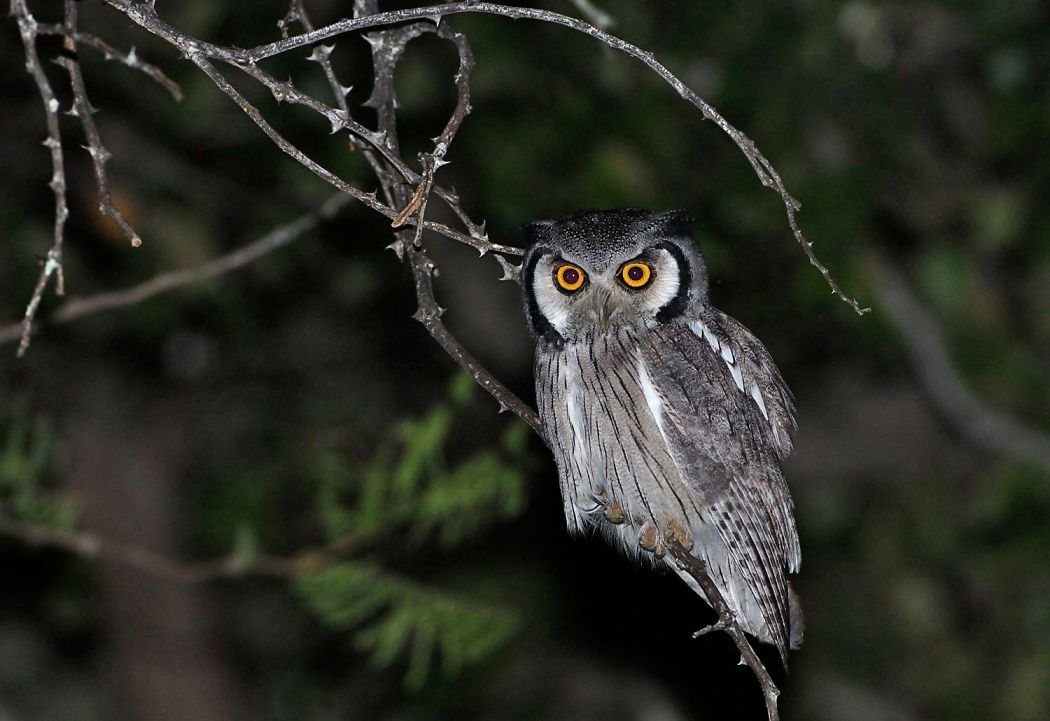
The Northern White-Faced Scops Owl is a smallish owl easily recognizable by its very striking white facial disc, with a border of black plumage. It has large, bright orange eyes, which are also surrounded with black. (Juveniles have greyish plumage on their faces, and their eyes are yellow). These owls have prominent ear-tufts. Bigger than the Scops Owl, they are on average 25cms in height, weighing around 200gms. The feathers of their upper parts are mostly pale grey: their under parts are lighter and more streaked. The female of the species is larger than the male.Like so many other species of owl, northern white faced scops owl is a nocturnal. In Kenya they are found in Samburu and Baffalo springs National reserve , Meru National Park, Kerio Valley, Lake Baringo and Bogoria .
This species is found singly or in pairs. The female will lay a clutch of 2 or 3 eggs in the old stick-nests of many other bird species, including small raptors such as goshawks and kites – or even herons, dove or crow’s nests. If these are not available, they will nest in natural tree holes. The 30 day incubation is mainly by the female, although the male may assist. Young chicks will start to fly at roughly 33 days, leaving the nest area two weeks thereafter.
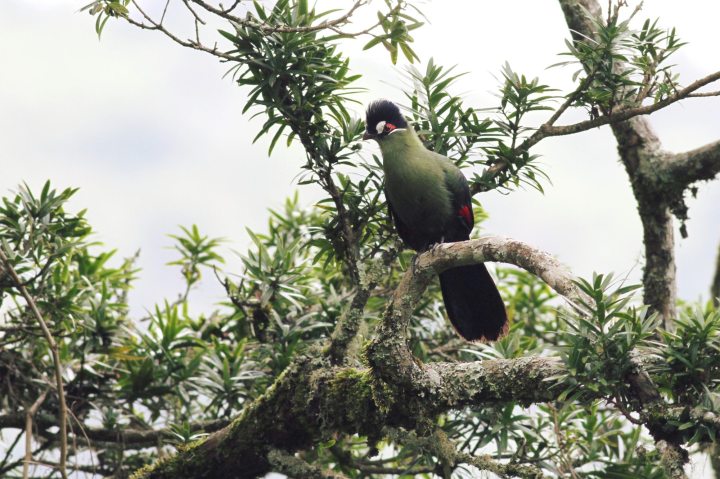
Hartlaub’s Turaco (Tauraco hartlaubi) is a medium sized turaco, an endemic family to sub- Sahara Africa. In Kenya it is a resident breeder in the Montane forests of the central part of the country.
Golden-winged Sunbird has a bright yellow tail and wings, the shoulders are dark gray, the dark gray extending to the nape and throat, while the head and downturned beak are lighter gray. The tail is long and ends in two long, very narrow parallel feathers.These birds are found in East Africa; Kenya, Tanzania, and Uganda.Golden-winged sunbirds live in grassland, bamboo thickets, and tropical mountain forest.
In Kenya this species if found in Lake Nakuru and Naivasha,Nyahururu,Mt.Kenya and Aberdare National Park.
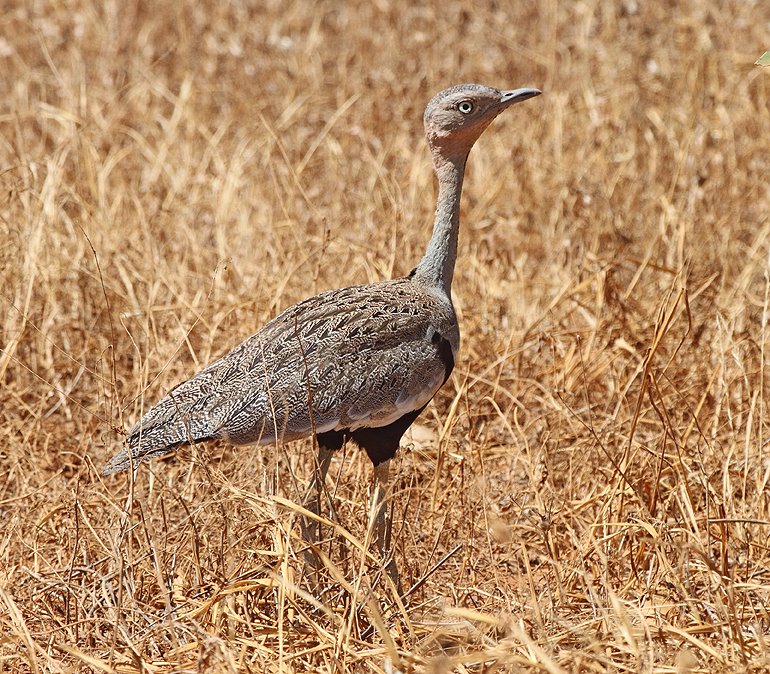
Photo@Raymond Galea.Taken in Samburu National Reserve.
Buff-crested bustards are small in size compared to other species that we have in Kenya. They are cryptically colored to help them blend into their environment. They also are sexually dimorphic. Male buff-crested bustards have an olive colored crown, a black stripe down the front of the neck, and a black chest and belly. The upper feathers contain light orange-brown coloration. The females have brown heads, a much reduced crest, and are buff colored in the throat, chin, and breast area.The buff-crested or crested bustard prefers drier acacia scrub and woodland of northern arid and semi-arid regions of Kenya, especially in regions like Samaburu and Meru National park, Lake Baringo and Bogoria and further north in areas like Kapedo.





 Kenya Birding