Common Snipe, a Wintering Visitor to East Africa Wetlands!

Photo by Joe Aengwo at Amboseli national park,Kenya.

The Common Snipe (Gallinago gallinago) is a migratory bird that is well known for its long migrations and distinctive behaviors. It is a member of the Scolopacidae family, which includes other waders and shorebirds.They typically migrate from their breeding grounds to Africa via a southwest route, traveling through the Mediterranean and then continuing southward across the Sahara desert, often arriving in tropical and southern parts of Africa.

Photo by Joe Aengwo at Amboseli national park,Kenya.

During their migration, Common Snipes seek wetlands areas for their wintering habitats. These include marshes, mudflats, riverbanks, and floodplains, where they can find ample food sources, such as insects, worms, and other small invertebrates.In East Africa, the Common Snipe is a common wintering migrant in wetland areas. During the non-breeding season, they are often found in countries like Kenya,Uganda and Tanzania. They tend to frequent marshes,riverine wetlands and sometimes rice paddies.

Photo by Joe Aengwo at Amboseli national park.

The Common Snipe’s ability to navigate vast distances and adapt to a variety of wetland environments makes it an interesting species to study, especially in relation to its migratory behavior and wintering ecology in Africa.

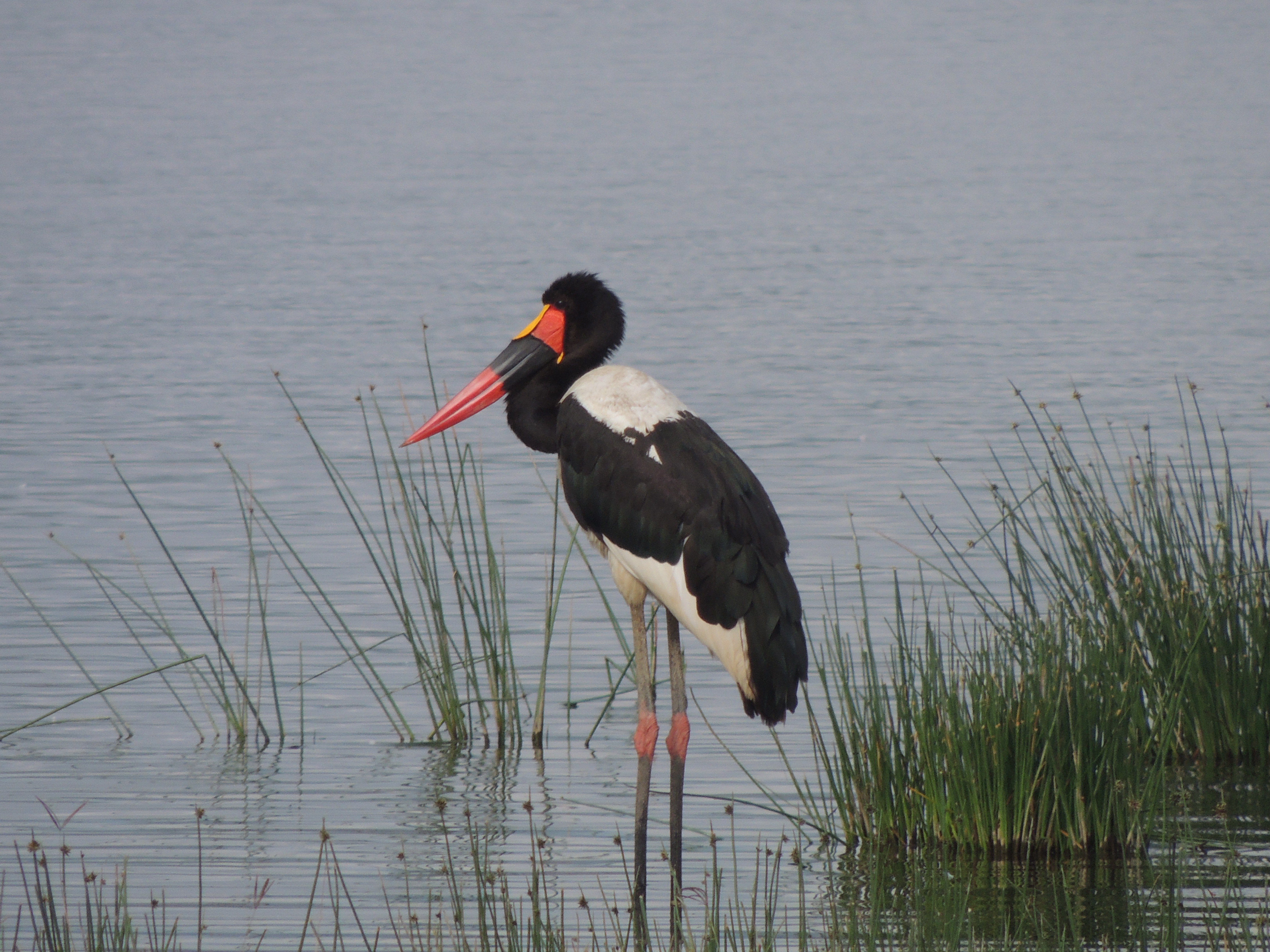
The Saddle-billed Stork is a majestic and resilient species, whose stunning appearance and specialized behaviors make it one of the most remarkable birds of sub-Saharan Africa.

Photo by Joe Aengwo

The Saddle-billed Stork is one of the largest storks in the world, standing up to 1.5 meters (5 feet) tall. It is easily recognizable due to its unique black and white plumage, bright red legs, and the large, bicolored bill, which has a black base and a yellow section resembling a saddle. The bill’s distinctive shape helps the bird forage for fish and amphibians, which make up a large part of its diet. This bird also exhibits sexual dimorphism, with males typically being slightly larger than females.

They prefer shallow, slow-moving waters where they can wade and forage for food. The stork is usually solitary or found in small groups, although some may form pairs during the breeding season. They often choose to nest in tall trees near water, constructing large, conspicuous nests that are used year after year.

Saddle-billed Storks form monogamous pairs during the breeding season, which typically occurs during the rainy season, when food is abundant. They build large nests in tall trees, and both parents share the responsibility of incubating their eggs. The female typically lays one or two eggs, and both parents take turns keeping them warm for about a month. Upon hatching, the chicks are fed a diet of regurgitated food from both parents until they are able to forage on their own.Though they are not yet considered endangered, the Saddle-billed Stork faces threats from habitat destruction, particularly the draining of wetlands for agriculture and development.

They also face threats from hunting in some areas and the disturbance of their nesting sites.By continuing to protect its wetland habitats, we can help ensure that future generations will be able to admire this iconic and important bird species.Keep birding!.

Yellow-spotted Barbet,one of the six species of forest Barbet found in Kenya.

Photo by Juhani Vilpo,a Finnish Wildlife Photographer

Barbets are often brightly coloured and easily recognisable since they are pretty active birds and mostly found around fruiting fig trees along rivers edges and forest.They are mostly frugivores and usually swallow fruit whole.With the long time it takes for the fruit to digest,barbets are therefore very effective dispersers of seeds in their respective habitat.

Globally,Barbets are holes nesters either on the trees,termites hills and in the ground and for that reason,their destribution in the local habitat are generally influenced by the presence of suitable trees,particularly those with soft,dead branches,which are much easier to peck out.

Yellow-spotted Barbet,is mostly found in the tropical rain forest of Kakamega in Kenya and extensively in Uganda and Congo.While on the similar habitat here you also have the chance of seeing Hairy-breasted,Grey-throated and Yellow-billed Barbets and all of the extremely beautiful to watch.

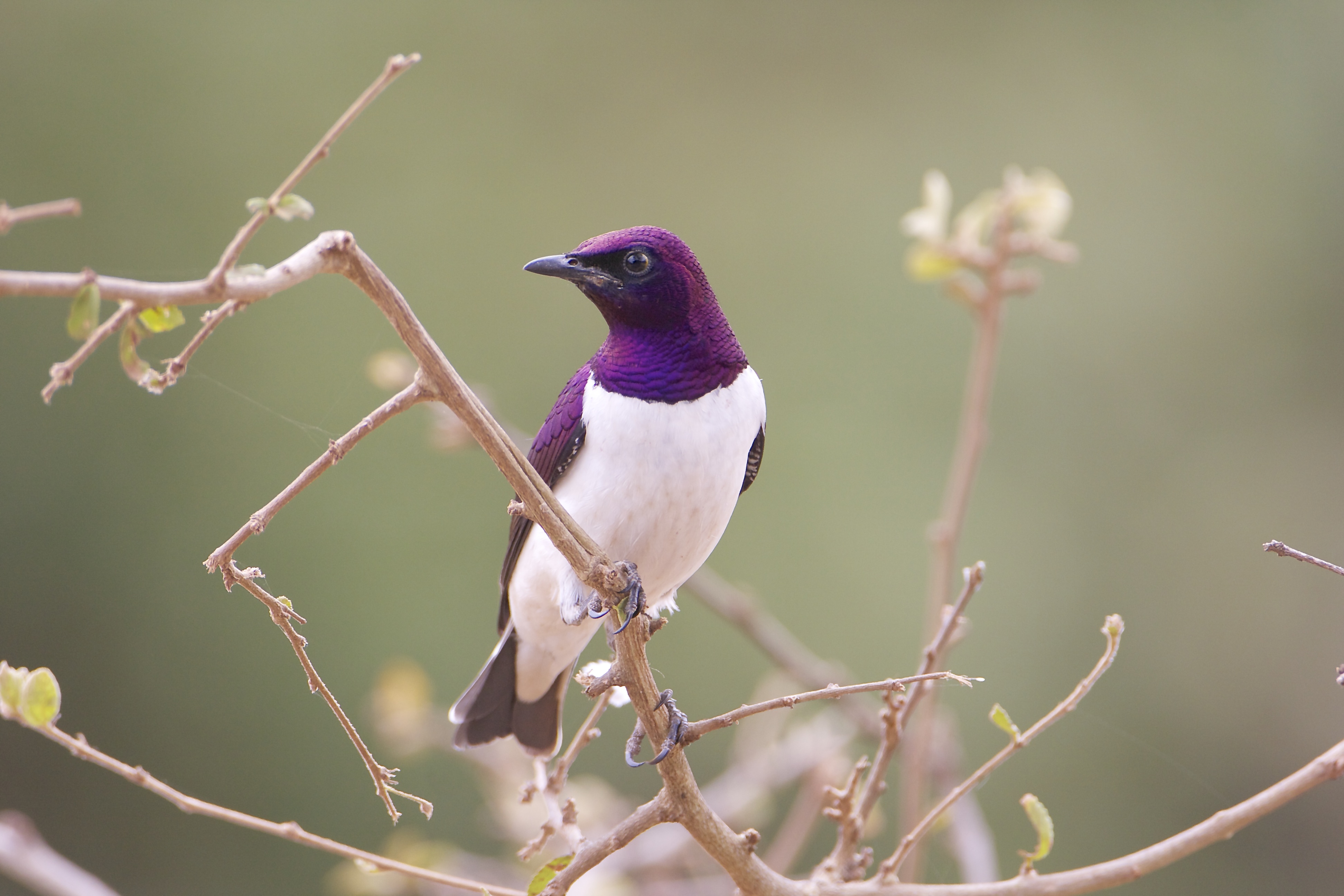
violet-backed starling (Cinnyricinclus leucogaster)

Violet-backed Starling.Maanzoni.
Photo@Jan F. Van Duinen

The Violet-backed Starling  belongs to the family of birds classified as Sturnidae. This species, also known as the Plum-coloured Starling or Amethyst Starling, is the smallest of Kenya starlings, reaching only about 18cm in length. It is a successful breeder, and is fortunately not listed as a threatened species.

The sexes are strongly sexually dimorphic, meaning that there is a distinct difference in the appearance of the male and female. The breeding male is brilliantly coloured, with feathers an iridescent shining plum violet colour along the length of is back, wings, face and throat, contrasting with bright white on the rest of the body. Females (and juveniles) are a streaky brown and buff colour, and can easily be mistaken for a thrush.

Less noisy than other starlings, this bird is a monogamous species, and will remain so unless its mate dies. Under those circumstances it will seek a new mate in replacement. These starlings are normally seen in small flocks in summer, just before the breeding season when they will break off into pairs to nest.

Violet-backed starlings will nest in cavities such as tree holes high off the ground, holes in river banks, even in old hollow fence posts, lining the nests with dung, leaves and other plant material. They have been known to reuse nests in successive breeding seasons

In Kenya, they are found a long riverine vegetation in big dead tree trunks in Machakos, the low areas of Tugen hills, Lake Nakuru and Nairobi national park.


Buff-crested Bustard (Eupodotis gindiana)

Photo@Raymond Galea.Taken in Samburu National Reserve.

Buff-crested bustards are small in size compared to other species that we have in Kenya. They are cryptically colored to help them blend into their environment. They also are sexually dimorphic. Male buff-crested bustards have an olive colored crown, a black stripe down the front of the neck, and a black chest and belly. The upper feathers contain light orange-brown coloration. The females have brown heads, a much reduced crest, and are buff colored in the throat, chin, and breast area.The buff-crested or crested bustard prefers drier acacia scrub and woodland of northern arid and semi-arid regions of Kenya, especially in regions like Samaburu and Meru National park, Lake Baringo and Bogoria  and further north in areas like Kapedo.


African Hawk Eagle (Aquila spilogaster)

Photo@Michael Sammut

African Hawk Eagle (Aquila spilogaster) are large birds of Prey  that occur naturally in Kenya, where they inhabit wooded hills.In Kenya they mostly seen in birding hot spot like Masai Mara,Tsavo West and East,Nairobi National Park,Hell’s Gate, and Lake Nakuru National Park.

African Hawk Eagles are large eagles that measure about 55 – 65cm in length.The plumage above is blackish. Below they are mostly white, heavily streaked with black. Theunderwing feathers are white with a black trailing edge. The wings below are blackish with white spots.Males and females look alike, but young birds are brown above and rufous colored below.

Their large platform nests are built out of sticks and are about 3 meters in diameter.They are typically placed in the forks of large trees.The average clutch consists of one or two eggs.

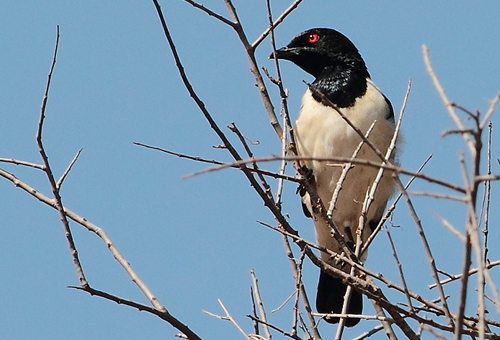
Magpie Starling (Speculipastor bicolor)


The magpie starling is a northeast African endemic and an occasional non-breeding visitor to northeastern Tanzania. The male is black and white; the female, brown and white both with bright red eye which aid identification a great deal. The best place to see them in Kenya is Lake Baringo where is frequently spotted feeding in big fig trees along the cliffs.

Trip Report: January 25 – February 8, 2012

Hello my fellow birders!

I’ve finally posted my trip report under Birding Trip Reports for January 25 – February 8, 2012. I will be updating it with photos shortly.

Here is an excerpt from the report! Click the link above to view the full report.

Trip Leader Joseph Aengwo

Participants: 5 Clients

Bird Species Recorded: 445

Animal Species: 34

For many bird people across the globe, the beginning of the year is a wonderful time. Yearly lists can start anew, and who knows what the next twelve months will bring? While rarities whet the appetite of any birder, the expected birds are much more frequently counted. And this was not any different for us when we started our 14 days birding trip that took us to birding hotspot found in eastern and coastal part of Kenya.

There were of course numerous avian highlights during our grand tour of that part of the country and of the nine or ten Kenyan endemics we encountered four, namely;

  1. Taita Thrush
  2. Taita Apalis
  3. Taita White-eye
  4. Clarke’s Weaver

We also saw rarities and restricted-range species such as:

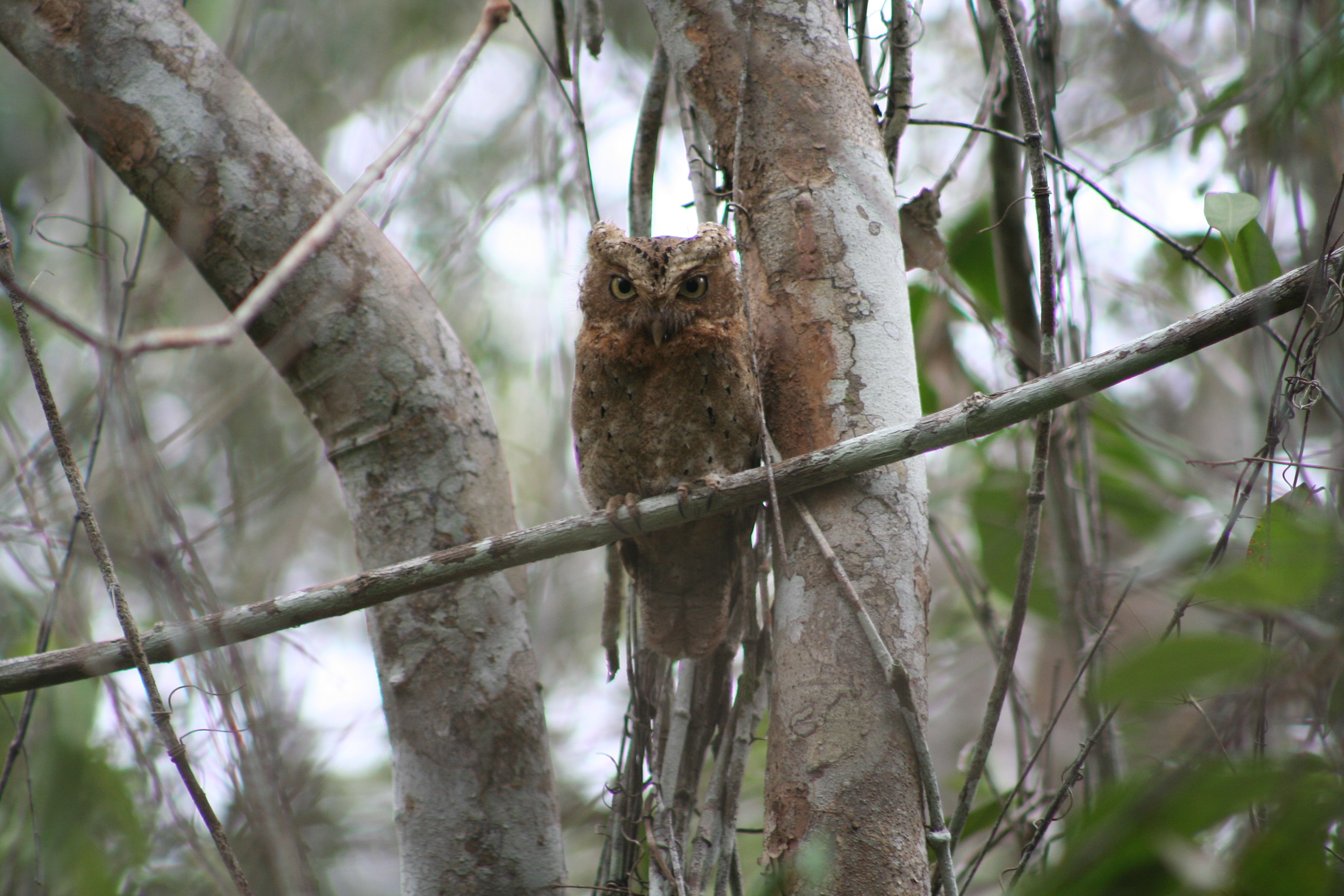
  1. Sokoke Scops Owl
  2. Friedmann’s Lark
  3. Malindi and Sokoke Pipits
  4. Golden Palm and Taveta Golden Weavers

Of the other near-endemics and specials rarely recorded on other tours we also managed to record the following:

  1. Somali Ostrich
  2. Mountain Buzzard
  3. Shelley’s Francolin
  4. Vulturine Guineafowl
  5. Somali Courser
  6. Sooty Gull
  7. Black-faced Sandgrouse
  8. Fischer’s and Hartlaub’s Turacos
  9. African Barred Owlet
  10. Montane Nightjar
  11. White-headed Mousebird
  12. Eastern Green Tinkerbird
  13. Brown-breasted, White-eared, Red-and-yellow and D’Arnaud’s Barbets
  14. Pallid Honeyguide
  15. Mombasa and African Grey-headed Woodpeckers
  16. Fawn-coloured, Pink-breasted and Red-winged Larks
  17. Fischer’s Sparrow Lark
  18. Golden Pipit
  19. Pangani Longclaw
  20. Stripe-cheeked Fischer’s and Tiny Greenbuls
  21. Northern Brownbul, Dodson’s Bulbul, Scaly and Northern Pied Babblers
  22. East Coast Akalat
  23. Ashy Cisticolas
  24.   Quil-Plover
  25. Somali Long-billed and White-browed Crombecs
  26.   Red-throated Tit
  27. Little Yellow Flycatcher
  28. Forest Batis Long-tailed
  29. Taita  Fiscal
  30. Three-streaked Tchagra
  31. Black-fronted Bush-shrike and Rosy-patched Bush-shrikes,
  32. East Coast Boubou
  33. Hildebrandt’s,  Fischer’s and Magpie Starlings
  34. Plain-backed, Amani, Eastern Olive, Mouse-coloured, Hunter’s, Tsavo Purple-banded Sunbird,
  35.  Parrot-billed,
  36. Kenya Rufous Sparrow
  37. Zanzibar Red Bishop
  38. Jackson’s Widowbird
  39. Black-cheeked Waxbill
  40. African Silverbill
  41. Village Indigobird
  42. Steel-blue and Straw-tailed Whydahs
  43. African Citril and White-bellied  Canary

February, 14 2012:African Jacana (Actophilornis africanus)

In Kenya, two species exist. African and Lesser Jacana. African Jacana which is our today subject of discussion is a diurnal bird which is a very common species in all wetland habitats and is widely distributed across the country.This birds are well-known for their ability to walk on floating vegetation , hence their commonly referred  “Jesus bird”.This adaptation is made possible by their extremely long toes with long straight claws.

Photo @ Tony Crocetta

Adult bird has a striking chestnut body colour with a bright blue frontal shield which extend to the bill. The front neck is white that covers the ear coverts and runs all the way to the breast, while the hind-neck is black. The species exhibit no sexual dimorphism.

Perhaps the most interesting phenomenon about African Jacana is their Polyandrous lifestyle where the responsibilities of incubating and bringing up the chicks are singularly done by the male. Ladies have good time here!!!